Florence Nightingale: The rebel who changed medicine forever
Picture this: a wealthy young woman in 1844 England, expected to marry well, host dinner parties, and live prettily in a country estate.
Florence Nightingale: The rebel who changed medicine forever
Picture this: a wealthy young woman in 1844 England, expected to marry well, host dinner parties, and live prettily in a country estate.
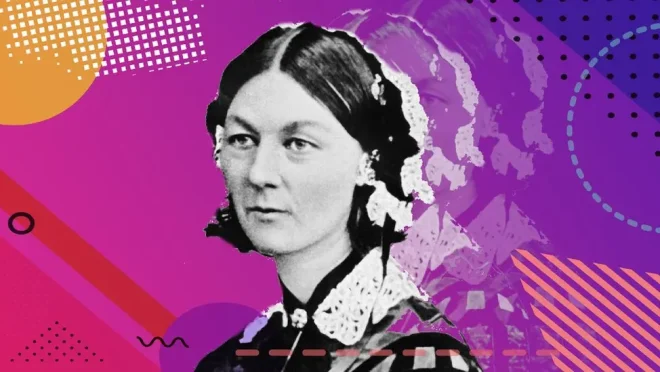
Instead, she tells her family she wants to work among the sick and the dying. The family is horrified. Her mother weeps. Her father initially says no. Florence Nightingale says yes anyway.
That stubborn, quiet refusal to accept the life she was handed would go on to reshape the entire world of medicine.
More than a lamp
Born on 12 May 1820 in Florence, Italy, a city whose name she carried her whole life, Nightingale was privately educated, sharp in mathematics, and deeply spiritual. She believed she had a calling. Not just a career. A calling.
When the Crimean War broke out in the 1850s, the British government sent her to a military hospital in Scutari, Turkey. What she found was not a hospital. It was a horror: rotting animal carcasses outside, sewage piled inside, soldiers dying not from battle wounds but from preventable infections. She and her team of 38 nurses immediately set about cleaning, disinfecting, and reorganising everything in sight. Within six months, the mortality rate dropped from 42.7% to just 2.2%.
But Florence was not simply a good nurse. She was a scientist. She invented what we now call the polar area diagram, a circular chart, to visually show government officials exactly why soldiers were dying. She knew that powerful people respond to pictures more than to paragraphs. She was right. Policy changed.
In 1860, she used funds donated in her honour to open the world’s first secular nursing school at St Thomas’ Hospital in London. It formalised nursing as a real profession, not domestic service, not charity work, but a discipline requiring training, discipline, and expertise.
She wrote Notes on Nursing, the first textbook of its kind, still referenced today. She was also the first woman elected to the Royal Statistical Society. She campaigned for women’s rights, advocated for the poor, and, even when bedridden in her later years, wrote over 130,000 letters pushing for reform.
The woman barely left her room and still changed the world.
Why she still matters
Here is what makes Nightingale genuinely radical, even by today’s standards: she did not wait for permission.
Society told her that women of her class did not work. She worked. Doctors told her that nursing was beneath intellectual effort. She turned it into a data-driven science. Her own family told her to settle down. She opened a school instead.
For any woman navigating a world that still hands out unsolicited advice on what she should be doing with her career, her body, and her ambition, Nightingale’s life is a quiet but powerful answer. She did not fight loudly. She built things. She measured outcomes. She showed results. And in doing so, she made it impossible to be ignored.
Her legacy is also a reminder that caregiving is not a soft skill. It is a strategic, intellectual, life-saving act.
Bangladesh’s own lamp-carriers
Florence Nightingale would have recognised something deeply familiar in Bangladesh.
Right now, roughly 100,000 women known as Shasthya Shebika, meaning “health volunteers”, are walking door to door in villages and urban slums across this country. Trained by BRAC, one of the world’s largest NGOs, these women check blood pressure, monitor pregnant mothers, educate families on hygiene and nutrition, and connect communities to healthcare that would otherwise be completely out of reach. Their network now reaches over 110 million people in Bangladesh.
Many of them, before joining, had no identity beyond being someone’s wife. BRAC’s own research found that after joining, women said they finally had a name of their own in their community. That is not a small thing.
Meanwhile, literacy among Bangladeshi women aged 15 to 24 has reached 95.8%. Gender parity in primary and secondary education has essentially been achieved, a milestone that would have seemed impossible a generation ago. Women are entering medicine, law, technology, and entrepreneurship in growing numbers. The female labour force participation rate, while still lower than it should be at 42.68%, is miles ahead of where it stood in previous decades.
None of this happened by accident. It happened because women here, much like Nightingale, refused to accept the limitations placed on them.
The lamp, passed on
Florence Nightingale died in 1910 at the age of 90. Every year on 12 May, her birthday, the world celebrates International Nurses Day. The Florence Nightingale Medal remains the highest international honour a nurse can receive.
But her real legacy is not a medal or a date on a calendar. It is every woman who walks into a room where she was not expected, does the work she was told was not for her, and leaves it better than she found it.
That woman exists in London. She exists in Dhaka. She exists in a village in Sylhet, carrying a small kit and a great deal of quiet courage, walking to someone’s front door.
The lamp, it turns out, does not belong to one person. It just needs someone willing to carry it.