The unseen struggle of chasing a degree abroad
The unseen struggle of chasing a degree abroad
The deaths of two Bangladeshi PhD students reveal the hidden emotional, financial, and social vulnerabilities that shape the international student experience long before and long after an acceptance letter arrives.
My heart feels heavy as I write this, as it takes me back to a time not so long ago. Suddenly, Limon and Bristy are no longer just “two University of South Florida students” but two brilliant souls who, against all odds, made it there to begin their PhD journeys.
A PhD is a journey that begins long before one officially starts a programme. It is a continuous process of persistence, uncertainty, sacrifice, and survival. It often stretches all the way to the day you finally sit for your defence.
But the real question we rarely ask is this: do all aspiring PhD students begin that journey with equal access to resources, opportunities, and support?
Let me take you on that journey.
For many of us from the Global South, a PhD does not begin with an acceptance letter. It begins years earlier: with unstable electricity during exam season; in overcrowded classrooms and outdated libraries; with limited research funding; amid political instability, social and cultural constraints; and the quiet understanding that opportunities are scarce and competition is ruthless. It begins with learning how to dream within constraints.
Before an applicant is ever judged on research potential, they are often first tested on everything else: whether they can afford application fees, standardised tests, visa costs, English proficiency exams, transcript evaluations, and the hidden expenses that quietly determine who gets to stay in the race. Merit is rarely allowed to stand alone; instead, it is constantly filtered through access.
For students in the West, the road to academia is rarely easy, but it is often paved with systems many of us can only imagine: undergraduate research assistantships, professors with international networks, institutional funding, academic writing support, conference exposure, and the cultural confidence that academia was built with people like them in mind.
For students like Limon and Bristy, and for countless others from countries like Bangladesh, arriving at a PhD programme abroad is not simply an academic milestone. It is often the culmination of years of sacrifice — and not just their own, but their families’ as well. Parents liquidate their savings, siblings adjust their own ambitions, and entire households invest emotionally and financially in one person’s possibility.
By the time we arrive, we do not arrive lightly. We arrive carrying generations of hope.
That is why their deaths feel so much heavier than a headline can hold.
But arriving is only one part of the journey. In many ways, it is where a different kind of survival begins.
Beyond the prestige of an acceptance letter lies the quiet work of rebuilding your life from scratch. You are learning how to communicate in a language that may not be your own, understanding new academic expectations, navigating unfamiliar university systems, while also trying to make sense of a culture you are still decoding.
Even something as simple as deciding where to live can become an exercise in compromise. Do you stay in university accommodation, often paying significantly more for the reassurance of structure, proximity, and some degree of institutional oversight? Or do you move off campus to reduce costs, knowing that financial survival is often just as urgent as physical comfort?
For many students, this is not really a choice, but a calculation shaped by necessity. Scholarships and assistantships may cover tuition or provide a stipend, but rarely in ways that eliminate anxiety. Instead, they teach you how to stretch every decision until it feels rational.
And so, you make trade-offs. Sometimes between comfort and affordability. Sometimes between privacy and shared housing. Sometimes between instinct and practicality.
You live with people you have only recently met, or sometimes barely know, because the economics of international student life demand flexibility before familiarity can be built. You enter shared spaces without the social architecture that often protects you back home: no family nearby, no long-standing friendships, no networks of people who can easily step in if something feels wrong.
There is a particular kind of uncertainty in building a life under these conditions — not because danger is always present, but because your margin for error feels painfully small. A bad housing decision, the wrong roommate, an unsafe environment, or a broken support system can carry consequences far beyond inconvenience.
And yet, from the outside, these choices often seem small and practical. Where you live, who you live with, and how you manage daily life can look like ordinary decisions when in reality they are deeply shaped by the emotional and financial pressures of moving abroad.
It is within this reality that the deaths of Limon and Bristy must be understood. Two young PhD students from Bangladesh, far from home, navigating the same systems of uncertainty, adjustment, and quiet negotiation that so many of us experience but rarely speak about. Like many international students, they were not only building academic lives, but also trying to build everyday ones: choosing where to live, who to trust, and how to feel safe in a place that was still becoming familiar.
For many of us, it forces an uncomfortable reflection. When social ties are thin and support systems are distant, the boundaries between safety and vulnerability can become harder to see. It reminds us that behind every international student experience lies a constant, unseen effort to assess risk while simply trying to live.
And now, we are left waiting for a kind of ending that should never have taken this shape. A PhD journey is meant to move towards a defence, towards completion, towards the quiet satisfaction of having made it through. For Limon and Bristy, that path has been violently interrupted. What remains is not the story of their theses, their findings, or their final submissions, but the story of their absence.
We will still speak their names in academic corridors and private conversations, but now always alongside a question that should not exist: how do we make sense of a journey that was meant to end in attainment, but is now marked by loss?
And in doing so, we are forced to confront a harder truth: behind every “success story” of international education are lives being quietly built, negotiated, and sometimes left unprotected in ways we are only beginning to understand.

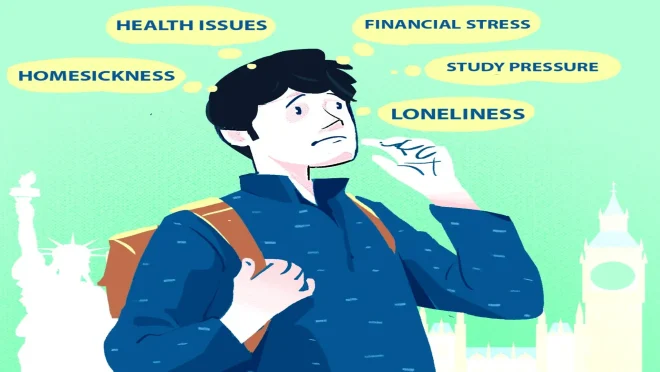
Sketch: TBS
Dr Maliha Rahanaz is an Economist at PBE, London, UK.
Disclaimer: The views and opinions expressed in this article are those of the authors and do not necessarily reflect the opinions and views of The Business Standard.