“Eto diner poreo je” Nemesis turns 25 and Maher Khan returns home
There are concerts, and then there are moments. What unfolded at InterContinental Dhaka’s Winter Garden on the night of 22 May was unquestionably the latter.
“Eto diner poreo je” Nemesis turns 25 and Maher Khan returns home
There are concerts, and then there are moments. What unfolded at InterContinental Dhaka’s Winter Garden on the night of 22 May was unquestionably the latter.
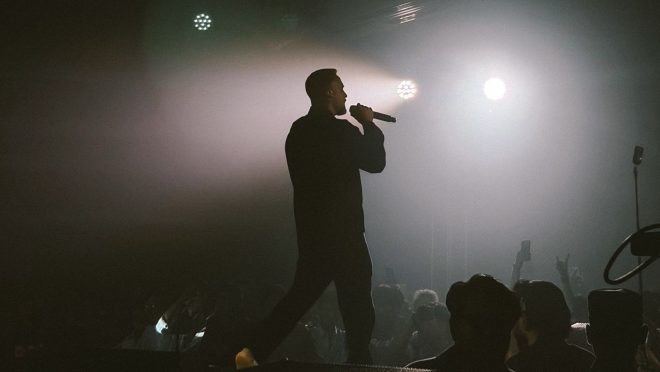
“Eto Diner Poreo Je” was the name chosen for Nemesis’s 25th anniversary concert, and it is difficult to think of a more honest title.
Because that is exactly what the room felt like. Not a celebration of time having passed, but a defiant declaration that it hadn’t. That somewhere between those first rooftop rehearsals in 1999 and this gilded ballroom in 2025, something had been preserved. Something rare, something stubborn, something real.
Before a single note was played, you could feel the history in the crowd. Teenagers who had downloaded “Kobe” on dial-up internet now stood beside their younger siblings who had found Nemesis through Spotify. Parents who had hummed “Mrityuchhaya” in university dorms brought their children. This was not a rock concert with a demographic, it was a reunion of everyone the band had ever touched, assembled in one room, slightly disbelieving that this was actually happening.
If Nemesis is a solar system, Zohad Reza Chowdhury is the sun. He has always been this — the frontman who makes you feel that the song is being written in real time, specifically for you, specifically tonight.
On the 25th anniversary stage, he was no different, except somehow more. More assured. More generous. More incandescent.
He moved through the setlist comfortable in every corner, knowing exactly what he was doing. There is a particular kind of performer who does not take the audience’s attention, they earn it every single time, and Zohad has spent 25 years earning it so consistently that it looks effortless. It is not. It never is. But tonight, it looked like joy.
If Zohad is the gravity of Nemesis, Ifaz Abrar Reza is the weather. He does not stand on a stage so much as he inhabits it — restless, electric, physically committed to every chord in a way that makes the audience feel physically committed too. His energy is contagious in the most literal sense: you watch him play and your foot is already moving before you’ve registered the decision.
On anniversary night, Ifaz brought that same magnificent chaos, amplified by the occasion. There were moments during the set when the entire room seemed to be running on his frequency. A collective vibration, a shared voltage.
Of all the night’s many gifts, Dio Haque may have been the most quietly extraordinary. When he stepped up, there was a moment of settling — audiences always recalibrate when a familiar shape gives way to something unexpected. And then he played, and the recalibration was complete.
Dio stole the show in the way that only understated brilliance can steal a show. His presence on stage was clean, focused, and deeply musical. He brought a quality of intentionality to every note that felt like a conversation rather than a performance.
Then came the moment the room had been quietly hoping for. The decade-long longing.
Nemesis was initially formed by Saber, Rishad Maher Khan and Yawar Mehbub, and for anyone who knew that history, the prospect of Maher Khan returning to that stage after more than a decade away carried a weight that went beyond music. It was about continuity. About the idea that the people who built something should be present when it is celebrated.
He walked out. The hall erupted.
Not polite applause. Not enthusiastic cheering. An eruption. The kind that starts somewhere in the chest and comes out as something you hadn’t planned. The kind that tells you a room full of strangers has been quietly carrying the same hope, and it just came true simultaneously.
And then he played the solo from “Kobe.”
“Kobe” had long become one of the band’s most recognised songs, and that solo is its spine. The moment the song reveals itself completely. Maher Khan played it as though no time had passed. The fingers remembered. The instinct remembered. The song remembered him back.
The decade collapsed. It was yesterday. The room was not clapping at a performance, they were celebrating a return.
Nemesis began as a group of recently graduated school friends who came together in the summer of 1999 with nothing but musical ambition, instinct, and dedication. They survived lineup changes, an industry that kept shifting beneath them, a global pandemic, years of silence, and the ordinary cruelties of time.
They came out the other side with a new album, a sold-out anniversary show, and a room full of people across every generation who could recite the words to songs written before some of them were born.
That is not a music career. That is a cultural institution.