The golden era of Eid television: How Hanif Sanket shaped a generation’s nostalgia
Growing up in the 90s and early 2000s, Eid-ul-Adha would remain incomplete without witnessing what can be termed the golden era of programming encompassing natoks and comedy shows.
The golden era of Eid television: How Hanif Sanket shaped a generation’s nostalgia
Growing up in the 90s and early 2000s, Eid-ul-Adha would remain incomplete without witnessing what can be termed the golden era of programming encompassing natoks and comedy shows.
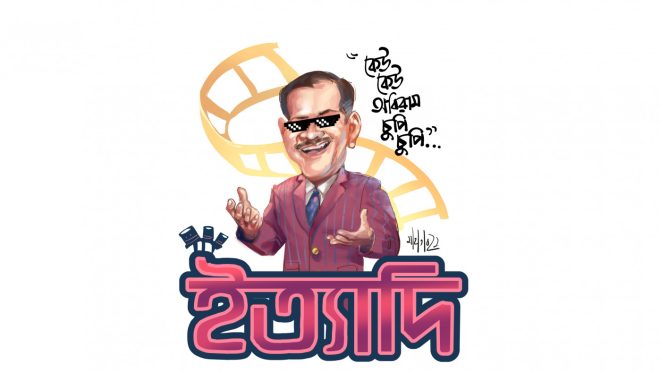
The programmes were enough to unite a family, glued in front of the TV. At the centre of this legacy lies Hanif Sanket, whose fingerprints could be found throughout the entire Eid programmes in those days and, with all the distractions of the internet and social media, even today he is leaving his mark.
His television shows were not just programmes or episodes to air only, rather they hold a special place in terms of reflecting deeper messages regarding different societal issues such as family, education, women empowerment, relationships, etc.
In this era of algorithms, the majority’s Eid still remains stuck in those moments, those programmes and those iconic productions with exemplary casts.
Among the most iconic productions was Eid Anondo Mela, a star-studded Eid-ul-Adha variety show hosted and directed by Hanif Sanket. The programme used to combine music, comedy, celebrity appearances, and cultural performances in a way that created genuine excitement among viewers.
Another one of Hanif Sanket’s greatest strengths was his ability to blend entertainment with social critique. His legendary programme Jodi Kichu Mone Na Koren became revolutionary in Bangladeshi television history. The show used satire, interviews, and comedy sketches to expose corruption, hypocrisy, social injustice, and everyday problems faced by ordinary citizens.
At a time when television was far less commercially aggressive, the programme proved that audiences appreciated intelligent humour. People laughed, but they also reflected on society. This unique style later became a hallmark of Hanif Sanket’s creative identity.
Programmes like Kothar Kotha and Jhalak further strengthened his reputation as someone who understood both entertainment and public consciousness. These productions highlighted culture, music, humanity, and the emotional connection between television and society.
Beyond magazine shows, Hanif Sanket also contributed memorable Eid dramas. Productions such as Onto Bosonto (2001), Kusum Kusum Bhalobasha, Putroday, and Biporite Hito captured the emotions of Bangladeshi family life with simplicity and realism.
These dramas differed from many modern fast-paced productions. They focused on many factors related to societal life rather than just following the conventional pathway. Their dialogues felt natural, and their characters represented ordinary people rather than exaggerated cinematic personalities.
Even today, many viewers remember these dramas not because of technical excellence alone, but because of the feelings they once evoked. They reflected the emotional atmosphere of Eid itself.
As Eid-ul-Adha approaches once again, many people feel nostalgic for that earlier era of television. The media landscape has changed dramatically. Satellite channels multiplied, digital platforms emerged, and audience attention became fragmented.
Today’s Eid entertainment is faster, trend-driven, and heavily influenced by social media algorithms. Productions are often designed for short-term virality rather than long-lasting emotional impact.
This transformation is not entirely negative. Modern creators have more technological opportunities, broader audiences, and greater creative freedom.
However, despite all this, many viewers still feel that something has been lost.
Programmes created by Hanif Sanket carried a balance between humour and responsibility, entertainment and ethics, popularity and depth. That balance is becoming increasingly rare.
Although many of his earlier iconic Eid productions are no longer aired, his pipeline of casting and storytelling remains culturally relevant because audiences have always trusted his style of storytelling.
In many ways, Hanif Sanket and his programmes can be compared to a bridge between generations. Early viewers remember the golden age of BTV and classic Eid programming, while younger audiences discover how entertainment can carry social responsibility without losing its charm.
As Bangladesh enters another Eid season filled with new dramas, web content, and celebrity programmes, the legacy of creators like Hanif Sanket remains deeply significant.
Perhaps that is why, even after decades, his programmes still return every Eid. The biggest example is composing this article, not merely as a television programme, but as a symbol of cultural tradition many Bangladeshis continue to cherish.