A blue moon rises tonight after nearly three years
A blue moon rises tonight after nearly three years
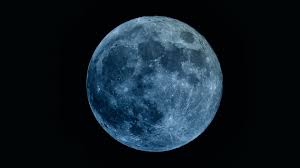
Once in a blue moon? Well, tonight’s the night. Skywatchers will be able to witness a rare celestial event tonight as a Blue Moon appears in the night sky, an occurrence that happens only once every two to three years.
Despite its name, the Moon will not actually turn blue. Astronomers explain that a Blue Moon refers to the second full moon within a single calendar month, a phenomenon caused by the mismatch between the Moon’s 29.5-day lunar cycle and the length of most calendar months.
May 2026 began with a full moon earlier in the month, allowing enough time for a second full moon to occur before the month ends — making tonight’s event a Blue Moon.
Why the Moon does not look blue
The Moon’s colour is not expected to change during a Blue Moon. Under normal conditions, it appears white or pale yellow due to reflected sunlight. Scientists say the Moon can only appear bluish under very rare atmospheric conditions, such as when smoke or dust particles from large wildfires or volcanic eruptions scatter red wavelengths of light — a scenario not linked to tonight’s event.
The term “once in a blue moon” originated from this rarity, though astronomers note that Blue Moons are more common than the phrase suggests.
A ‘micromoon’ as well
This Blue Moon is also classified as a micromoon, meaning it occurs when the Moon is near its farthest point from Earth, known as apogee. As a result, it will appear slightly smaller and dimmer than an average full moon, although the difference is subtle and difficult to notice without specialised instruments.
When and how to watch
The Moon will appear full throughout the night, with the best viewing expected soon after moonrise, when it rises low on the horizon. This is when the Moon often appears larger due to an optical effect known as the Moon illusion.
No special equipment is required to view the Blue Moon. It will be visible to the naked eye, weather permitting. Astronomers recommend finding a location with a clear view of the horizon and minimal light pollution for the best experience. Binoculars or a camera may enhance views of surface details such as craters.
Why Blue Moons matter
While a Blue Moon has no scientific impact on Earth, astronomers say it provides an opportunity to spark public interest in astronomy and highlight how human-made calendars differ from natural celestial cycles.
Tonight’s event will be the last Blue Moon until later in the decade, making it a rare chance for sky enthusiasts to enjoy a unique moment in the lunar calendar.