Microsoft tests AI-powered wearable device for workplace use
Microsoft has unveiled early-stage wearable technology concepts designed to give office workers easier access to artificial intelligence tools, as the company explores new ways of integrating AI into everyday work.
Microsoft tests AI-powered wearable device for workplace use
Microsoft has unveiled early-stage wearable technology concepts designed to give office workers easier access to artificial intelligence tools, as the company explores new ways of integrating AI into everyday work.
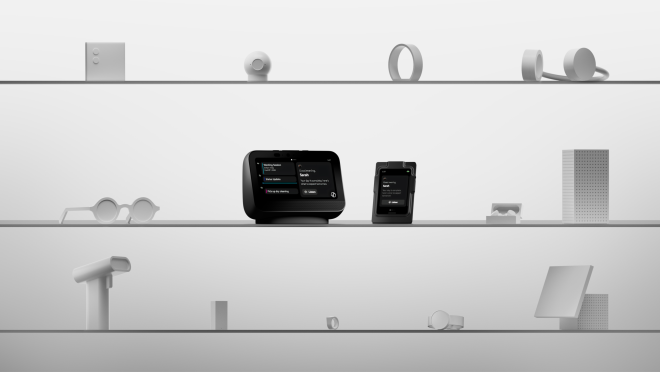
At its annual developer conference, Microsoft executive Steven Bathiche showcased two prototype devices developed by the company. One is a small portable cube featuring a touchscreen and voice controls for desktop use, while the other is a wearable badge that can be clipped to a belt or worn around the neck to provide quick access to AI-powered workplace assistance.
Microsoft Chief Executive Officer Satya Nadella described the devices as representing a “new form factor” for computing.
The company has not announced plans to commercialise either product. However, Microsoft said ongoing pilot programmes involving several hundred employees are helping the company understand how such devices could be developed in the future.
The concepts are part of what Nadella referred to as Project Solara. Demonstrations showed office workers using the devices to interact with AI agents, software tools capable of carrying out tasks with a degree of autonomy. These agents are already widely used in the technology sector, particularly for assisting with software development and other routine tasks.
The wearable badge and desktop device are designed to connect with Microsoft software and PCs, enabling users to communicate with AI agents without relying solely on laptops or desktop computers.
Bathiche said the wearable badge is lightweight and intended to support “agent interactions on the go.” During a live demonstration, he activated the device using a fingerprint scan and used its built-in camera to capture images of the audience, which were then sent for review.
According to Bathiche, the camera helps AI agents better understand their surroundings and take appropriate actions based on environmental context.
Microsoft has previously explored wearable technology through its HoloLens mixed-reality headset. The device, developed over nearly a decade, was once expected to be supplied to the US military under a multibillion-dollar contract. However, after facing technical challenges and testing issues, Microsoft announced in 2024 that it would stop producing HoloLens.
The company’s latest effort comes as interest in AI-focused wearable devices grows across the technology industry. Google recently announced plans to revisit smart glasses technology more than a decade after the commercial failure of Google Glass.
The inclusion of cameras in AI-enabled devices continues to raise privacy concerns. Similar products, including AI-powered smart glasses developed by Meta, have faced scrutiny over how and when they collect, store and use visual data.