Why World Cup 2026 drinks breaks are causing controversy
Why World Cup 2026 drinks breaks are causing controversy
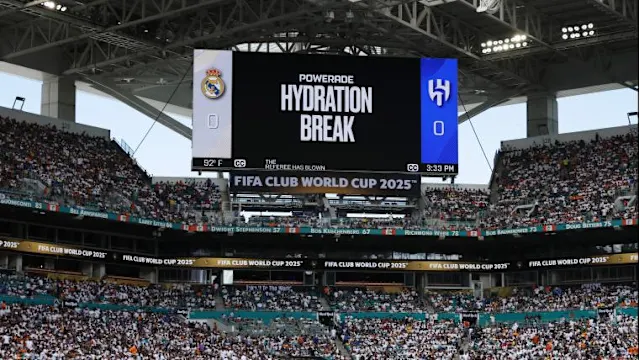
FIFA’s decision to introduce mandatory drinks breaks in every match at the 2026 World Cup is drawing criticism, with some observers questioning whether the move is motivated solely by player welfare or also by commercial interests.
The expanded 48-team tournament, hosted across the United States, Canada and Mexico, features a new rule requiring play to stop for three-minute hydration breaks midway through each half of all 104 matches.
According to ESPN, FIFA says the measure is designed to protect players from potentially dangerous temperatures after widespread concerns emerged during last year’s Club World Cup in the United States. Several players and coaches complained about extreme heat during the tournament, with Argentina and Chelsea midfielder Enzo Fernández describing the conditions as “very dangerous” after suffering dizziness during a match.
However, critics argue that the blanket introduction of drinks breaks, regardless of weather conditions or stadium environments, goes beyond player welfare concerns. The rule applies even to matches played under closed roofs or in cooler cities, leading some to question why every game requires the same treatment.
The controversy intensified after FIFA confirmed that broadcasters will be permitted to show advertisements during the hydration breaks. Commercial broadcasters can either display split-screen adverts featuring FIFA partners or switch entirely to standard advertising before returning to live coverage.
For many critics, this development reinforces concerns that commercial considerations play a significant role in the decision. Opponents argue that the breaks risk altering the traditional flow of football by effectively dividing each half into smaller segments, making the sport resemble the quarter-based structure commonly seen in American sports.
FIFA rejects suggestions that commercial interests are driving the policy. The governing body maintains that applying the rule uniformly across all matches ensures consistency throughout the tournament while safeguarding players in varying conditions.
The breaks are expected to provide more than just an opportunity for players to rehydrate. Coaches are likely to use the stoppages to deliver tactical instructions, potentially influencing the flow and outcome of matches. Referees will generally stop play around the 22nd minute of each half, although they may bring the break forward slightly if there is already a stoppage due to injury or another incident.
While few dispute the importance of protecting players from extreme heat, the debate surrounding mandatory drinks breaks continues to grow. As the World Cup approaches, questions remain over whether the policy represents a necessary health measure or another step towards a more commercialised version of football.