Animating the stories history forgot: Tufan Chakma’s journey from sketches to film
An illustration may capture a single moment, but an animation can breathe life into an entire history.
Animating the stories history forgot: Tufan Chakma’s journey from sketches to film
An illustration may capture a single moment, but an animation can breathe life into an entire history.
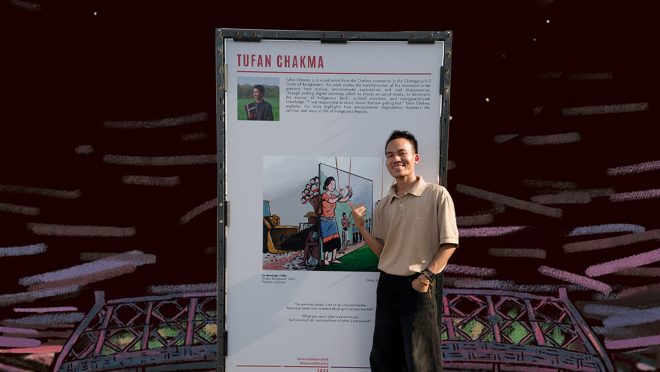
That realisation led Tufan Chakma on an extraordinary journey, from sketching illustrations during the pandemic to creating what is believed to be Bangladesh’s first research-based animated film centred on the lives, history, and culture of the indigenous communities of the Chattogram Hill Tracts.
With no formal background in animation, he taught himself the fundamentals through online resources before earning the prestigious Erasmus Mundus scholarship, where his ambitious project evolved into a master’s thesis spanning three European universities.
Rather than choosing a documentary or live-action film, he turned to animation because of its unique ability to reconstruct histories that were never visually documented. Events such as the displacement of indigenous communities following the construction of the Kaptai Dam remain largely absent from archival footage, leaving only fragments of photographic evidence behind.
Through animation, Tarun hopes to recreate those lost memories, preserve disappearing cultural narratives, and encourage audiences to engage with histories that are often overlooked. His film is not merely an artistic experiment but an attempt to ensure that stories, traditions, and identities that risk fading from public memory continue to be seen, understood, and remembered.
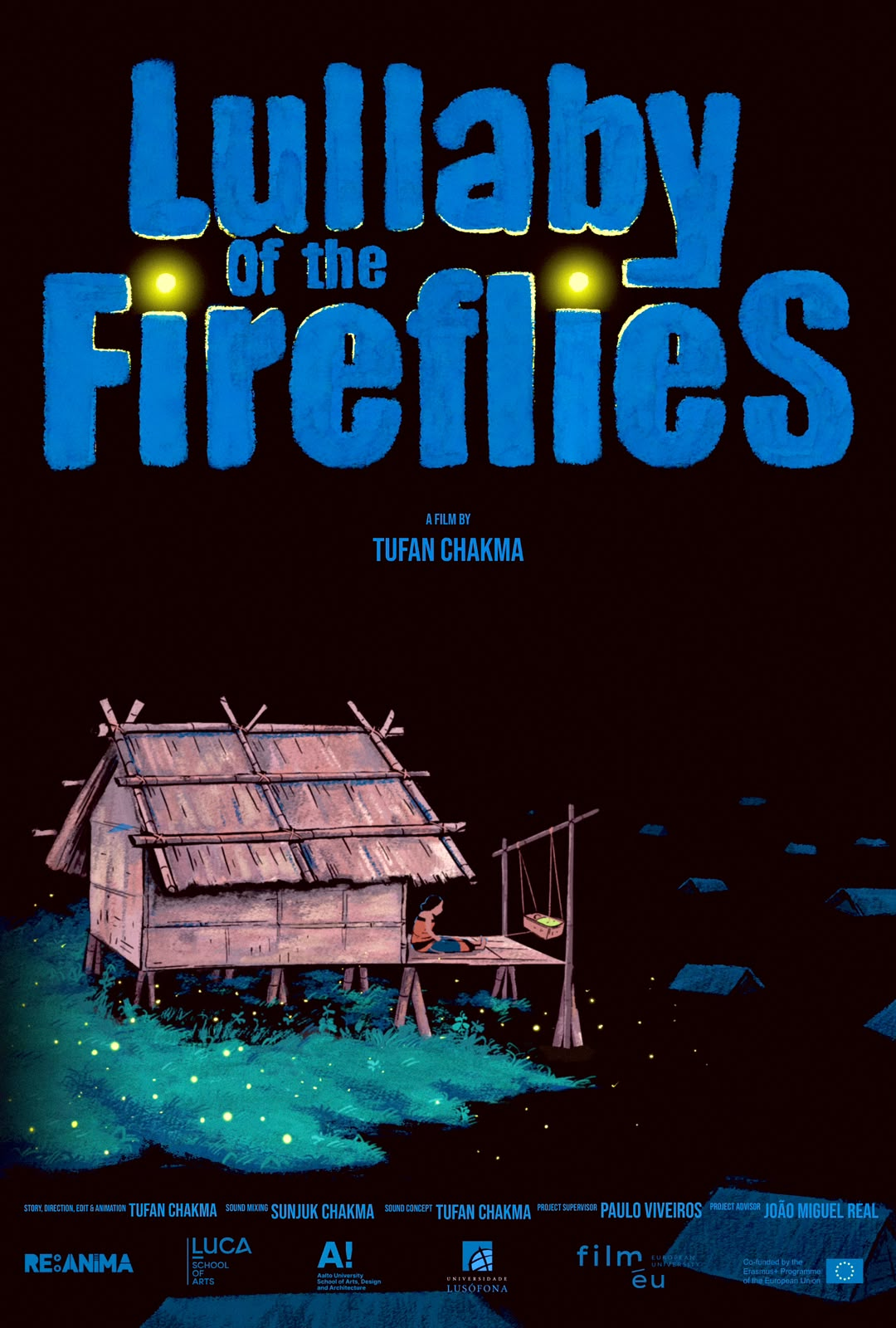
Poster: Courtesy
To know more about his entire journey, I talked with Tufan Chakma. Here’s what he shared about his animation blending in the official film Lullaby of the Fireflies.
When I asked what inspired him to create an animation film centred on the lives and culture of indigenous people of Chattogram Hill Tracts, he said that he started doing illustrations during the COVID period. He came across many different stories and gradually realised that some of these stories deserved to be told in much greater detail.
There was so much more that could be explored.
A path towards self-learning
“An illustration is just a still image, whereas animation is a visual medium that allows you to tell a much richer and more detailed story. As I continued working, I kept realising that certain stories needed another medium to fully express them.”
The interesting thing is that he had no academic background or professional experience in animation. He had never formally studied it. So, he simply started on his own, driven by his own interest and curiosity.
“Everything I know about animation, I learned through this programme,” he said.
Going back before Erasmus Mundus, during the COVID pandemic, he opened his own Facebook page. He was posting illustrations there, pretty much every day. While doing those illustrations, he started getting interested in animation.
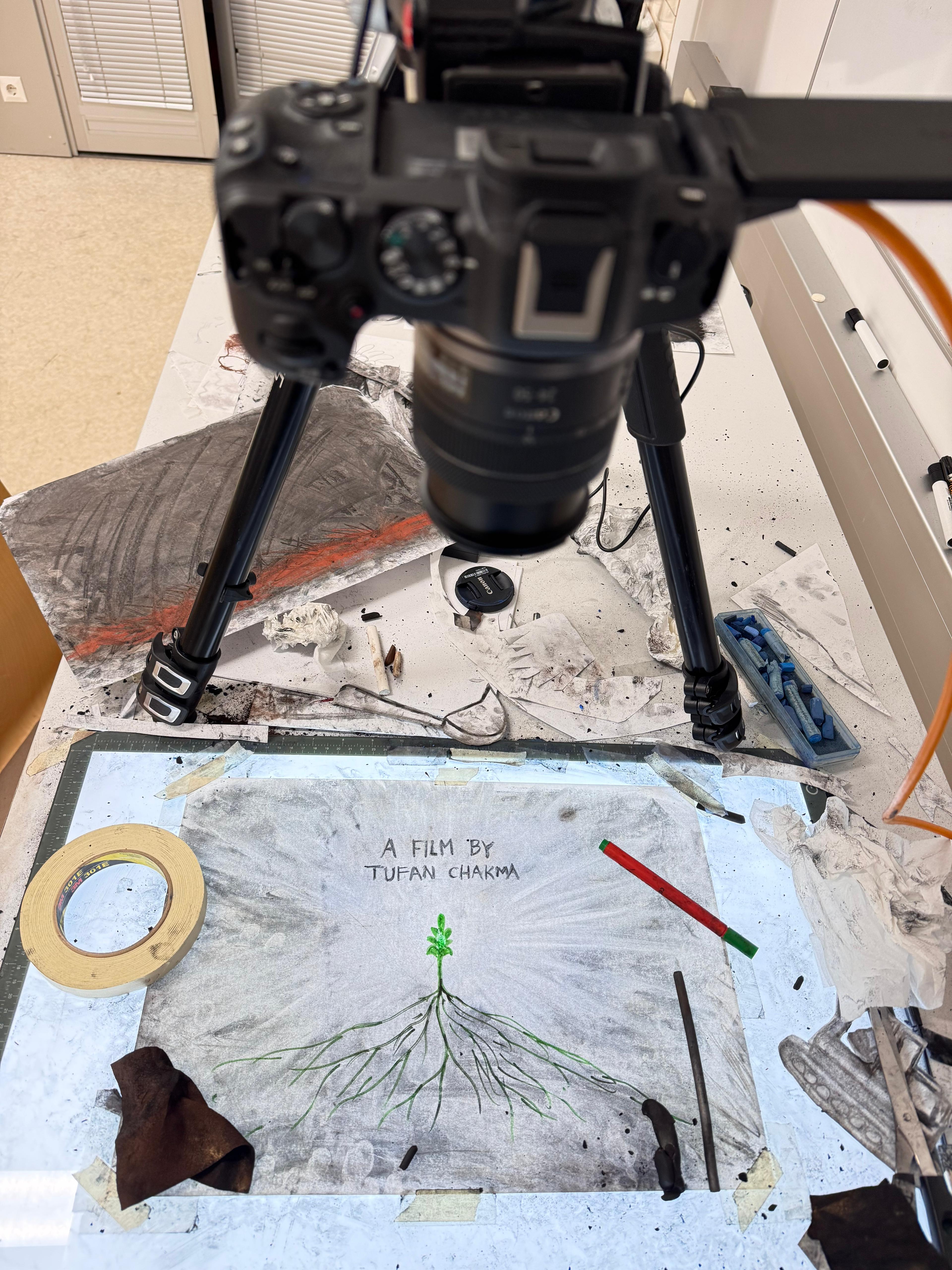
Photo: Courtesy
So, he went to YouTube and started learning by himself. He made small animations just for himself.
“I kept making a few of them. After that, I started learning the different principles and rules of animation on my own. I trained myself little by little. I also started practising traditional animation. I made a few short pieces and experimented with them. That’s really how my journey into animation started.”
After working on illustrations for three or four years, Tufan felt that many of these stories could be presented much more effectively through another visual medium. Tufan wouldn’t consider animation the only medium, but it is certainly one of the most powerful ones for telling these kinds of stories.
Because of this lack of historical visual records, it is difficult to recreate those moments through live-action filmmaking alone.
The story
The film deals with a lot of issues. Tufan wouldn’t necessarily call them sensitive, but they’re definitely important topics, things that have had a huge impact on people’s lives, especially in Bangladesh.
There are many stories and many people whose experiences deserve to be told.
So, the challenge was figuring out how to present a story that is both captivating and elaborative.
His research started from his campus in Jahangirnagar and continued to Luca School of Arts and Management.
At the beginning, he collected a small amount of material, but gradually kept adding more and more. Then he documented different traditions, customs, and practices. After these, he gathered information from different experiences and different sources, and eventually developed all of that into his final documentation.
“I researched different ethnic groups as well.”
Some information was available online, while some came from his own experiences and the documents he collected.
All of these things were necessary because every community has its own customs, its own way of life, and different cultural elements.
When I asked whether the animation is focusing on one specific ethnic group, or it is him trying to represent all of the ethnic minorities, he said this was something his professors kept discussing with him during the second semester.
“They would review my work and say, ‘Maybe present it this way instead,’ or think about this more critically.”
So, he had to think about the sensitive things very critically. Personally, Tufan spent a lot of hours reflecting on the decisions before proceeding forward.
Challenges
He didn’t have much experience, as he said earlier. On top of that, he had to do almost everything by himself. He couldn’t really build a team around him.
“You have to create the models, build the backgrounds, and put everything together piece by piece.”
It’s a process with so many different elements involved. Even if anyone is making a very short film, there are still countless things that need to come together.
Eventually, he had to present the project in an international academic setting. So, he kept refining his ideas, presenting them, getting feedback, and trying to shape the project into something stronger.
Designing the entire concept and presenting it properly was also a major challenge for Tufan. Hence, overall, there were quite a lot of challenges throughout the process.
The main obstacle was securing the investment for the project. Fortunately, as he was on a scholarship, most of the expenses were covered.
“If we had even more resources, maybe the production process could have been even better.”
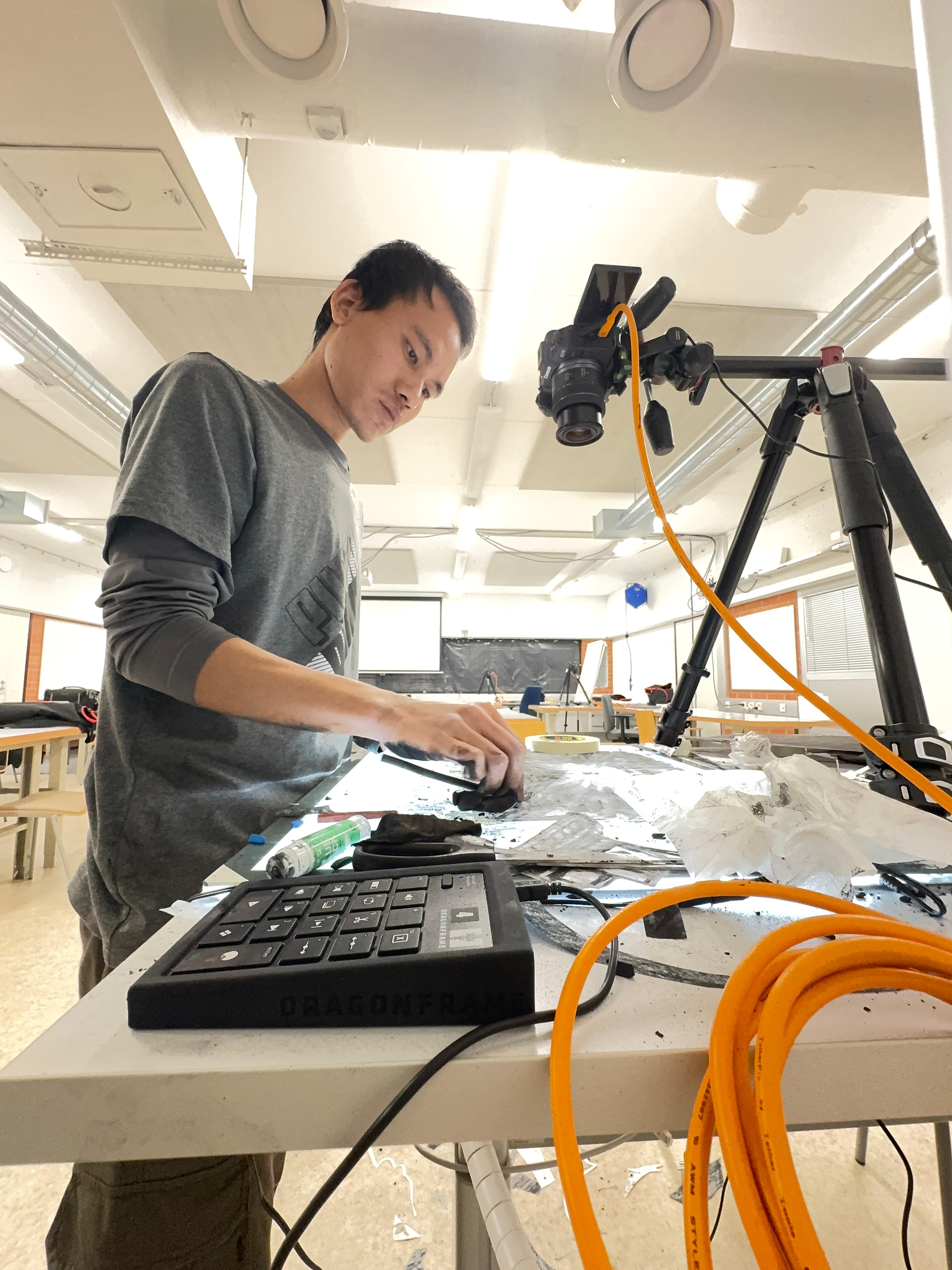
Photo: Courtesy
Time was another limitation. Managing the production schedule was quite difficult from the very beginning of the film until the final stages.
The indigenous stories Tufan tells through this animation can open up new opportunities, especially for the tribal and indigenous communities of the Chattogram Hill Tracts. When he looks at digital art representation, he feels they still have a long way to go.
Animation is a very expensive medium, but Tufan wants to keep going, as he concluded, “this film was comparatively easier because it received funding. But the next one won’t necessarily be that easy.”
The film is set to be released next year.