Keeping it in the 'family': A conversation on marriage and class
Open a Bangladeshi matrimonial biodata, and soon you will meet a very particular type of document. Height in feet and inches, bodily complexion described as “fair”, “very fair”, or even “shyamla”, degree, job etc. Nowhere does it say whether the person laughs at their own jokes or becomes disappointed when the biriyani doesn’t taste right.
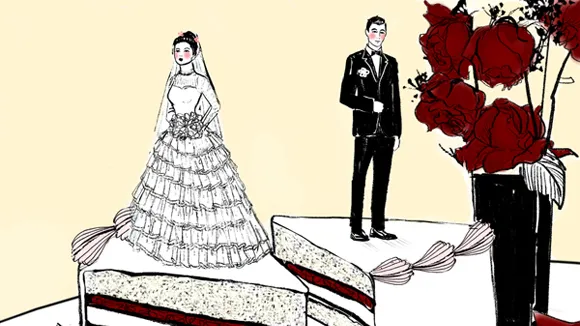
The biodata reads like a used-car ad, and it is not an accident. A French thinker, Pierre Bourdieu, spent his life explaining why things like this happen. His conclusion is uncomfortable but hard to ignore: marriage is not just about love, it is also a market.
Bourdieu started as an anthropologist, working on the people of Algeria, but shifted to sociology. He tried to answer one question: how do unequal societies remain unequal without someone forcing them to? Modern societies maintain this inequality not with armies, not even with money.
Wealthy families stay wealthy, but a more subtle point is that they remain both respected and refined, and everyone silently accepts that they are indeed deserving of such status. His answer to this problem was that money was only one kind of wealth, what Bourdieu called “capital”. There are two more, and your biodata is carrying all of them.
The first capital is the one you already know – economic capital, such as money, land, flats. The “owns flat in Gulshan” line is economic capital waving at you. The next is cultural capital, and it can be a bit tricky. It is the education, degrees, the way you speak, the books you have read, and pretty much everything one acquires.
Part of it comes from your parents, but you have to earn most of it. The third is social capital: the people you know – relatives, friends, networks. “Coming from a well-known family” is a polite way of saying that my uncle knows the secretary, and the secretary knows everyone. Put all the capitals together and you get a person’s worth on the market, and it brings us back to biodata.
Think of a family as players in a game. They aren’t necessarily cunning or manipulative; rather, they are simply doing what feels natural to them. Yet, when a biodata is submitted, it conveys two messages simultaneously: first, what they bring to the table; and second, though not explicitly stated, what they expect in return. Then, the two parties begin negotiations, usually run by relatives or professional matchmakers (ghataks). Terms like “compatibility” are frequently used.
Yet, a significant part of the conversation boils down to mathematical equations. What are we gaining? What are we losing? Is the land owned by the girl’s family equivalent to the educational qualification of the boy’s family? Can a somewhat uncomfortable family lineage be overlooked in the light of a man’s secure government job? It turns out the most romantic moment in many Bangladeshi marriages is a spreadsheet no one admits to having. And families often engage in a form of currency exchange. A family with great wealth but little social standing might gladly enter into a marriage with a family for whom the situation is exactly opposite. Through this exchange, both families gain something they previously lacked. It is somewhat like a currency exchange at an airport – the only difference is that the setting is less bright and the exchange rates are negotiated over a cup of tea.
Here is where Bourdieu becomes interesting. Bourdieu studied marriage patterns, and what he found was so common it has its own name: homogamy. The word is fancy for people who marry people roughly like themselves. If you look around yourself, you will find similar people engaging in marital bonds. Doctors marry doctors, business families marry into business families. Of course, there are exceptions.
The most famous is a woman from a modest background marrying into a wealthy family, what sociologists call hypergamy. Even in such cases, this exception usually comes with a condition attached. The family must have some asset that can compensate for the shortfall – such as exceptional beauty, excellent academic credentials, or something else that restores the balance. It is as if the bride’s side has to provide some form of security.
Now here is the bigger picture. Hundreds of thousands of families, each seeking a “suitable” match, each looking to marry into one of equal standing. What results from this? The rich stay rich, the educated stay educated. Credentials marry credentials. Class does not disappear. It simply is reproduced, wrapped into banners, especially the banner of personal choice.
The funniest part is if you told the average family, “you are reproducing class”, they would get offended. They would probably offer you tea and ask you to leave. And here is the catchy part: they would be sincere. Nobody in this process feels like a villain. Nobody thinks “Today I shall preserve the hierarchy.”
This is Bourdieu’s most famous concept, known as habitus. You can think of it as a collection of tastes, habits, and innate dispositions that you acquired while growing up in a particular environment – so deeply internalised that they no longer feel like separate habits, rather become an inseparable part of your very being. Your sense of whether something is attractive or respectable does not feel like something you were taught, it feels entirely natural. So, when a mother says “I only want a fair, educated girl”, she is not reproducing class in her mind. She genuinely believes she is asking for the bare minimum and it feels natural to her.
The trick lies here. Preferences that come from an individual’s social position feel natural. Bourdieu had a name for the beliefs that feel so natural that nobody questions them: doxa – the “common sense” of a particular social world. Every society has its own, and it is invisible from the inside. Just like fish do not notice water, families do not notice doxa.
It would be unfair to say that biodata is evil. Families are not plotting. Parents just want to ensure a secure future for their children in a country where safety nets are thin and a good match can genuinely mean security. When safety is scarce, calculation is not something heinous. It is survival disguised in a nice outfit. However, Bourdieu claims that this collection of sensible, affectionate, and highly rational decisions carries an unintended side effect. Social class is quietly produced from one generation to the next, as individuals follow norms they think are completely natural. The biodata is where the phenomenon becomes visible. It is as if the entire system is captured in a single page. An invisible market then transforms into a document.
Do not panic, no one is marrying their cousin. This is class incest. Think about it: homogamy means we keep marrying into the same class, same kind of family, same circles. From a biological perspective, the gene pool remains fine. In a social sense, the family never branches out.
People marry into the same circles and the capital circulates within that small circle, giving the impression that they are members of one extended family. We banned marriage within blood relatives, but we have granted an unwritten exemption for marriages based on the size of one’s bank balance.
So the next time you see a biodata, or are handed one, or (heaven help you) have to write one on your own, read it like Bourdieu would. And the next time someone says marriage is all about love and personal choice, ask them “how did you come to love the person your family’s class would have approved of?” Brace yourself, because the aunties are coming.
Anonyo Bhattacherjee is a student of Anthropology at Dhaka University