What Max Weber taught me about being ‘Cool’
Whenever I used to hear the term ‘cool’, the first thing that came to my mind was to wear neutral-coloured clothes, have heavy pockets, listen to English music, quote philosophical and deep conceptual status in the media often, and as usual, pretend not to care about the attention one so deeply craves.
What Max Weber taught me about being ‘Cool’
Whenever I used to hear the term ‘cool’, the first thing that came to my mind was to wear neutral-coloured clothes, have heavy pockets, listen to English music, quote philosophical and deep conceptual status in the media often, and as usual, pretend not to care about the attention one so deeply craves.
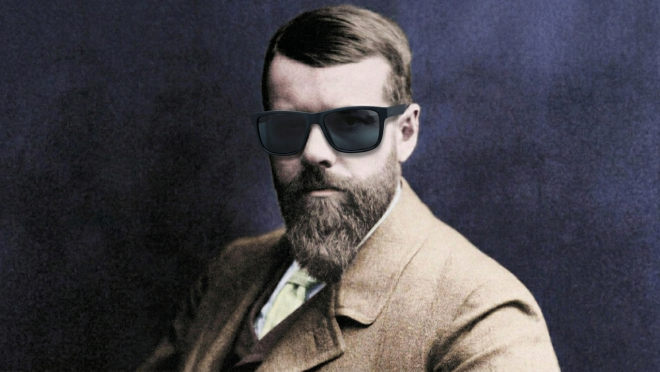
Then in my 1st semester I had to read Max Weber and, fortunately or unfortunately, he ruined everything!
And in honour of Weber’s death anniversary, I want to share what I learned.
Because according to Weber, truly cool people are those who understand how society’s hierarchy works, recognise the invisible systems of status and inequality, but do not become psychologically enslaved by society or judged people.
Modern society is not a place where people simply become cool. It is a place where people are constantly measured, classified, rationalised, and most importantly stratified. What we call ‘coolness’ is often just social positioning.
And once you understand Weber’s theory of stratification, you realise something deeply uncomfortable. It’s society that decides who gets to appear cool long before the individual even enters the room.
Unlike Karl Marx, who mainly introduced inequality theory, Weber believed stratification is multidimensional. In Weber’s framework, society operates through three dimensions, which are class, status and power.
And honestly, this explains modern society far better than reels could ever. Because it’s hard to find a person who has all the three (status, money, power). One has to fall short down. Even if we found someone, still they desperately crave for cultural validation.
Weber understood that human beings are obsessed not only with survival, but with recognition – this is where coolness starts.
Coolness is modern society’s unofficial reward system for symbolic superiority.
Modern stratification no longer depends only on assets or wealth. It now operates through invisible cultural and digital filters. Society claims to value equality while quietly ranking people through thousands of invisible indicators. Everything becomes categorised and measurable.
The modern individual is evaluated not only economically but culturally. People constantly judge whether you “fit” elite social codes.
If Weber were alive today, he would probably stare at social media for half an hour and then immediately close the application forever. Because digital society has transformed stratification into a 24/7 performance and people have become more performative than they ever could be, including me.
A teenager with skills and fluent English as well as ‘accent’ can gain more influence than highly educated individuals. Meanwhile, people without digital access, technological literacy, or cultural fluency remain socially invisible. And Weber would absolutely recognise it.
Modern society rationalises human worth through visibility metrics: views, engagement, networking potential, professional branding, productivity, and social presentation.
Let us not romanticise things too much. Once you understand the conceptual coolness of Weber, you would love to meet him once in a dream for giving you the mental peace.
Becoming cool is not really about fashion, aesthetics, or pretending to be mysterious. Modern society constantly stratifies people. People are judged not only by money, but also by how well they perform sophistication, confidence, and socialisation.
Weber explains that society has become highly rationalised, meaning everything is measured, categorised, and ranked. Today, even personality becomes a performance. The problem is that many people become trapped inside this ‘iron cage’ of constant validation. They stop being authentic and start curating themselves for approval.
Real coolness comes from self-awareness, intellectual depth, cultural understanding, emotional composure, and authenticity, not from desperately trying to impress everyone. The coolest person is the one who understands the social game deeply enough to not lose themselves inside it.