The great Pink takeover of modern football
The great Pink takeover of modern football
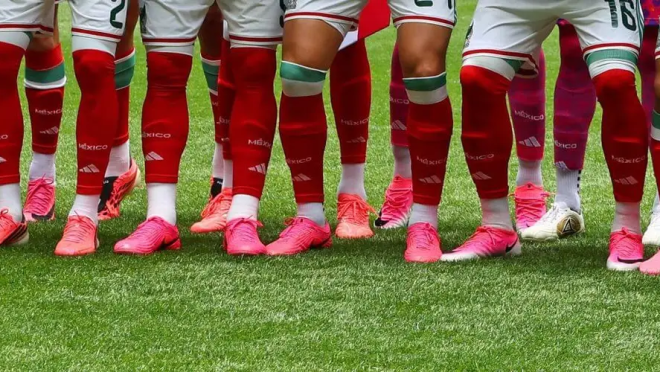
Bright pink is having another major fashion moment—and this time, it has taken centre stage on football’s biggest platform.
Fans watching the World Cup may have noticed a striking trend unfolding across the tournament. Beyond the drama on the pitch, flashes of vibrant pink have become almost impossible to ignore. From goalkeepers and match officials to football boots and training gear, shades ranging from fluorescent pink to electric fuchsia have become a defining visual feature of the competition.
Croatia goalkeeper Dominik Livaković has been among the most noticeable examples, regularly appearing in a vivid pink kit that stands out against the green of the pitch. Similar shades have appeared on officials’ uniforms, while players from teams including Croatia and England have sported pink boots from leading brands such as Nike, Adidas, Puma and New Balance.
According to The Guardian, the trend reflects a wider shift that has been building in both fashion and football for years. What was once considered an unconventional colour in men’s sport has steadily moved into the mainstream, becoming one of the game’s most recognisable style statements.
The rise of pink can be traced partly to the cultural phenomenon of Barbiecore, which pushed bright pink back into the fashion spotlight in 2023. Trend forecasting company WGSN predicted that “electric fuchsia” would remain one of the year’s most influential colours, and its growing presence in football suggests that prediction has proven accurate.
Sara Maggioni, WGSN’s head of womenswear, believes the colour’s popularity extends beyond fashion trends. She argues that bright shades are particularly effective in modern football because they capture attention instantly, especially among younger audiences who increasingly watch matches on smartphones and digital platforms.
In a crowded visual landscape, visibility matters. Vibrant pink stands out sharply against the green pitch, making players, boots and branding easier to spot both in stadiums and on screens. For sportswear companies, that visibility offers a significant advantage.
Although pink is often perceived as a relatively new addition to men’s football, its roots in the sport run much deeper. Football’s relationship with the colour stretches back more than a century. Everton famously wore pink kits in 1892, long before modern debates about colour and masculinity emerged.
According to menswear expert Andrew Groves of the University of Westminster, pink only became controversial later as social attitudes evolved and expectations around masculinity became more rigid.
Historically, colour associations were very different from those seen today. During the early twentieth century, pink was often regarded as a colour for boys, while blue was more commonly linked to girls. The modern stereotypes surrounding colour developed gradually through marketing, consumer culture and changing social norms.
Football’s growing embrace of pink therefore reflects broader cultural shifts. What was once viewed as unconventional is now widely accepted, both on and off the pitch.
The trend is also evident in club football. Pink kits have become increasingly popular in recent years, with Arsenal’s pastel-pink third strip attracting widespread attention during the 2022-23 season. Meanwhile, Major League Soccer side Inter Miami has built much of its identity around the colour since its launch.
The arrival of Lionel Messi at Inter Miami in 2023 elevated pink’s status even further. Images of the Argentine superstar wearing the club’s distinctive pink shirt quickly spread around the world, and demand for the jersey surged almost immediately. Several years later, the club’s signature shade remains instantly recognisable among football supporters worldwide.
The Guardian previously reported that pink boots had already become a dominant force in English football. During the 2019-20 Premier League season, players wearing pink footwear scored 636 goals, compared with just 36 goals scored by players wearing traditional black boots. While the figures do not prove a direct link between colour and performance, they illustrate how dramatically football aesthetics have changed.
Sportswear brands have embraced the shift. Speaking recently to The Athletic, Nike football executive Odinga Nimako suggested that pink has reached a turning point in the sport.
For many players, wearing such a bold colour projects confidence. Bright pink footwear is designed to be noticed, and those who choose it often want to make a statement both through their style and their performances.
Yet the appeal is no longer limited to a niche audience. What was once considered daring has become part of football’s visual mainstream, embraced by players across positions, leagues and age groups.
Ultimately, the sport’s fascination with pink comes down to one simple factor: visibility. Modern footballers are not only athletes; they are also public figures, brands and style icons. In an era driven by images, social media and global audiences, standing out has never been more valuable.
Whether it appears on a goalkeeper’s shirt, a pair of boots or an entire club identity, electric fuchsia has become more than a passing trend. It represents football’s growing willingness to challenge conventions, embrace fashion and recognise the power of visual impact.
For now, at least, pink is no longer just a colour—it is one of football’s most powerful statements.