The myth of Neymar: Football's ultimate "if only"
The myth of Neymar: Football's ultimate "if only"
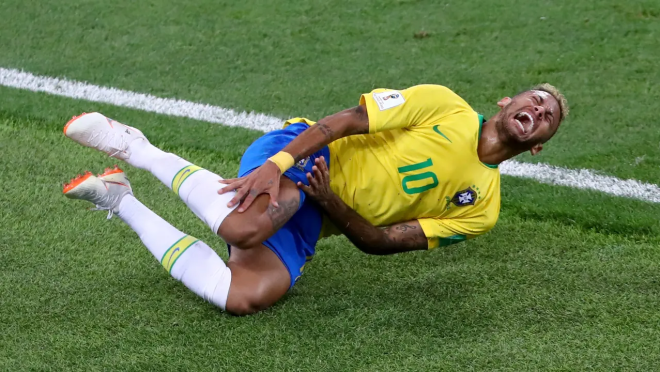
Once upon a time, there was a Brazilian boy with unimaginable talent. He could dribble past defenders as if they were traffic cones, score outrageous goals, and make millions fall in love with football. He was supposed to be the heir to the throne after the reign of two monsters named Lionel Messi and Cristiano Ronaldo. He was, according to his fans, destined for multiple Ballons d’Or, World Cups, and eternal greatness.
Then reality happened.
No footballer in history has benefited more from the phrase “if only” than Neymar. If only he had not been injured in 2014. If only he had stayed at Barcelona. If only he had not gone to Paris. If only his ankle were made of titanium. If only referees were kinder. If only defenders were gentler. If only gravity did not exist.
In the mythology of Neymar fans, he is football’s greatest unfinished masterpiece. In actual history, however, he owns exactly zero Ballons d’Or, zero World Cups, and never finished higher than third in the Ballon d’Or rankings. Yet somehow, every football debate turns him into a victim of circumstances rather than a participant in them.
Neymar fans speak about him the way historians speak about lost civilisations. “He could have won five Ballons d’Or.” “He could have surpassed Messi and Ronaldo.” “He could have won the World Cup.” “He could have become the greatest Brazilian ever.” Could have. Could have. Could have. At some point, “could have” became his greatest trophy.
The numbers are fascinating. Neymar has played for some of the strongest teams of his era. He played alongside Lionel Messi, Luis Suárez, Kylian Mbappé, and countless stars. He spent years in a financially dominant Parisian superteam assembled almost exclusively to win the UEFA Champions League. The club even paid a world-record transfer fee of €222 million for him.
The result?
One Champions League final, no European Cups, and an everlasting collection of “what if” documentaries produced daily by fans on social media.
Neymar’s supporters often portray him as a footballing martyr. They speak as though fate itself denied him greatness. But football history is full of players who faced injuries, setbacks, and poor decisions. Greatness is not awarded based on hypothetical achievements.
Otherwise, every football fan would have their own imaginary Ballon d’Or cabinet.
Then comes the acting career. No, not Hollywood. The on-field acting. Few footballers have generated as many memes from falling to the ground as Neymar. During the 2018 World Cup, his theatrical tumbles became a global internet phenomenon. Children copied his rolls. Television channels counted his seconds on the ground. Memes spread faster than Brazil’s attacks.
At one point, he became the only footballer who could be fouled once and roll seven times. Defenders tackled him. Physics tackled him. A gust of wind allegedly tackled him. If football had an Academy Awards ceremony, he would have at least collected something.
The tragedy of Neymar is not that he lacked talent. Quite the opposite. He had enough talent to dominate an era. The tragedy is that his legend has become larger than his achievements. Every year, his fans rebuild an alternate universe in which he wins everything. In that universe, he has multiple Ballons d’Or, several Champions Leagues, and perhaps a World Cup or two. In that universe, he is the undisputed king of football.
Unfortunately for them, football is played on grass, not in hypothetical timelines. And so the boy remains suspended between two careers: one as an extraordinary footballer who achieved a lot, but less than his potential promised, and another as a mythical figure whose greatest accomplishments seem to occur in sentences beginning with the words:
“If only…”