Why The Inheritance Games feels like the world's hardest exam
Why The Inheritance Games feels like the world's hardest exam
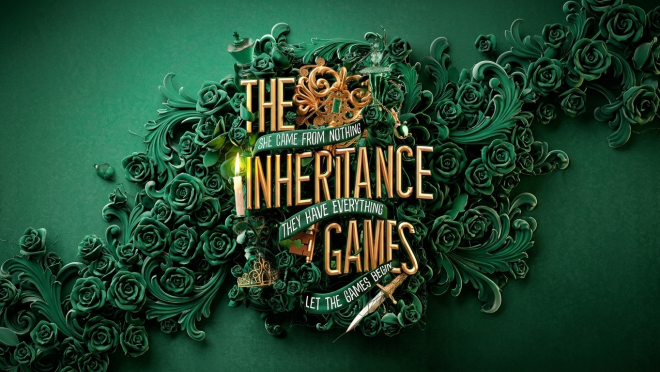
Literary thrillers routinely rely on physical scale to establish high stakes, yet the most enduring suspense occurs within a closed cognitive loop. The initial reception of Jennifer Lynn Barnes’ “The Inheritance Games” frequently emphasised its proximity to traditional escapism: an impoverished student, Avery Grambs, discovering an unsolicited forty-six-billion-dollar legacy left by an enigmatic tycoon she has never encountered. The primary stipulation demands her immediate integration into a sprawling residential labyrinth, alongside a fiercely competitive lineage that was systematically disinherited in her favour.
Beneath this framework of hidden architecture and structural wealth lies a meticulously calibrated operational experiment. Barnes utilises her background in developmental psychology to convert a standard mystery into a clinical analysis of behavioural adaptation under systemic duress. The text strips away structural sentimentality to expose how artificial pressure funnels highly conditioned minds into an environment where strategic intelligence remains the sole barrier against complete displacement.
The ultimate antagonist of the novel is not the living family members trying to secure their fortune; it is the dead patriarch himself. Tobias Hawthorne constructs an inescapable human collision course. He treats his four grandsons and Avery like variables in a vast, cold equation, predicting their behaviour with terrifying precision.
What elevates this book into something intellectual is how Barnes reframes the concept of an inheritance. The billions are a catalyst rather than a gift. Tobias establishes a brutal, artificial meritocracy inside Hawthorne House, turning the entire estate into a physical manifestation of a high-stakes examination hall. To survive the environment, the characters must continuously dissect linguistic puzzles, decipher mathematical sequences, and parse historical trivia under extreme time pressure. For any student who has ever sat for an elite, competitive admission test, the psychological environment feels incredibly familiar.
It is a high-pressure system where missing a single keyword or misinterpreting the specific nuance of a sentence results in immediate, absolute disqualification. Intelligence here is weaponised as a literal tool for survival.
The estate itself functions as an active participant in this mental strain. Hawthorne House is designed to test specific cognitive faculties and exploit personal vulnerabilities. The physical spaces dictate the movement of the characters, forcing alliances and betrayals based entirely on the layout of the environment. Barnes writes the setting with functional clarity, ensuring that the geography of the puzzles remains perfectly logical to the reader.
In a genre where female leads are frequently driven by sweeping emotional impulses or sudden, unearned bursts of intuition, Avery Grambs is a remarkably refreshing anomaly. Her primary defence mechanism relies entirely on logic, distance, and systematic analysis. Avery approaches her bizarre, dangerous new reality like a data scientist trying to map an unpredictable system. She understands that she has been dropped into a game where everyone else has been trained from birth to know the rules. Instead of panicking or acting on sentimentality, she compartmentalises her fear. Her internal monologue is sharp, practical, and entirely free of narrative fluff.
When confronted with the sheer hostility of the Hawthorne grandsons, particularly Grayson, the rigid heir apparent, and Jameson, the chaotic thrill-seeker, Avery refuses to play the victim. She assesses their traits, finds the gaps in their strategies, and realises that the only way to protect herself is to become entirely indispensable to the puzzle they are all trying to solve. She transforms herself from a piece on Tobias’s chessboard into a player who is actively analysing the board itself. She approaches threats as data problems to be solved, intentionally integrating herself into the system until she is essential to the completion of the game.
The narrative only truly wavers when it yields to the heavy gravity of traditional young-adult publishing expectations. The intense, brooding romantic tension between Avery and the Hawthorne brothers occasionally threatens to dilute the purity of the analytical puzzles. At certain junctures, the emotional drama feels less like an organic extension of the characters and more like a mandatory checklist item designed to keep the commercial pages turning.
Fortunately, Barnes’s structural pacing is too precise to let the story stall for long. Just as the romantic tension threatens to take over, she drops a new logistical revelation or shifts the stakes entirely, snapping the focus back to the core mystery. The emotional entanglements are ultimately reabsorbed into the game itself: Avery is forced to constantly calculate whether a brother’s gesture is genuine or merely a tactical manoeuvre designed to secure a competitive advantage. Traditional thrillers often rely on convenient coincidences to resolve their plots, but “The Inheritance Games” prioritises data collection and logical deduction to force character evolution.
Ultimately, “The Inheritance Games” succeeds because it respects the intelligence of its audience. The mysteries do not resolve through convenient coincidences or magical plot devices; they unlock through rigorous deduction and attention to detail.
The book delivers a profound psychological takeaway: the intricate strategy, the mental endurance, and the cognitive agility required to navigate a rigged system deliver a far greater thrill than the actual prize waiting at the finish line. Barnes has written a thriller that values competence above all else, proving that in any environment designed to break you, the ultimate weapon is a mind that refuses to let panic dictate its next move.