Bangladesh desperately needs a film cassette café
Walk into any café in Dhaka, Sylhet, Chattogram, or any other part of Bangladesh, and you will likely find bright lights, modern interiors, people scrolling endlessly through their phones, and playlists generated by algorithms. The atmosphere is vibrant, but impersonal. Conversations are interrupted by notifications, memories are replaced by temporary trends, and genuine cultural experiences are becoming rare.
Bangladesh desperately needs a film cassette café
Walk into any café in Dhaka, Sylhet, Chattogram, or any other part of Bangladesh, and you will likely find bright lights, modern interiors, people scrolling endlessly through their phones, and playlists generated by algorithms. The atmosphere is vibrant, but impersonal. Conversations are interrupted by notifications, memories are replaced by temporary trends, and genuine cultural experiences are becoming rare.
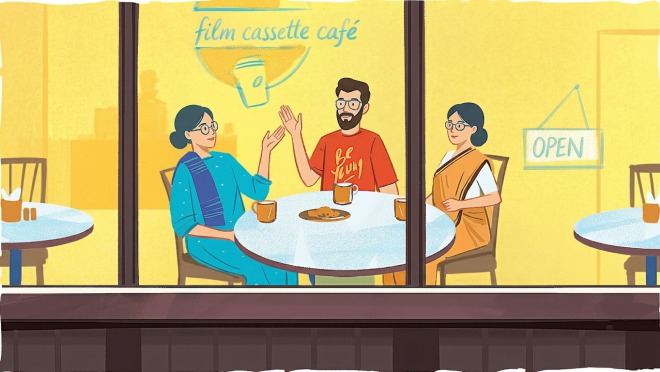
In such a reality, Bangladesh desperately needs something different, something capable of reconnecting people with stories, emotions, nostalgia, and human connection.
This is where the idea of a Film Cassette Café becomes not just an innovative business venture, but an immediate cultural necessity of our time.
A Film Cassette Café is more than a place to drink coffee. It is a bridge between generations, a living museum of music, cinema, and memories. It is a comfort zone for the soul in a chaotic society that often feels artificial.
Today, much of this cultural heritage is disappearing. Old film cassettes are gathering dust in forgotten cupboards. Vintage film posters are fading away. The stories behind legendary albums are being forgotten by younger generations. A Film Cassette Café can become a powerful solution to this cultural erosion by preserving these artefacts and presenting them in an engaging, accessible environment.
However, the importance of such a café extends far beyond nostalgia. Perhaps it lies in creating a comfort zone.
Modern Bangladeshi youth are facing a silent crisis of mental exhaustion. Academic pressure, career uncertainty, traffic congestion, economic challenges, and the relentless influence of social media have created a society where people are constantly stimulated but rarely at peace. The average person spends hours consuming content but struggles to find genuine moments of relaxation. A Film Cassette Café can serve as a sanctuary from this noise.
The structure should be such that there are rows of film cassettes. People would visit the café, select a cassette, and play it on a screen: a sanctuary for the mind and a fresh blend of recreation.
Imagine entering a space where the walls are decorated with original Bangla film posters from decades past. Shelves are filled with rare audio cassettes and vintage music collections. Soft melodies from classic Bangla songs play in the background. The lighting is warm and comforting. Instead of loud distractions, visitors are encouraged to slow down, listen, reflect, and engage.
Psychologically, nostalgia has a remarkable impact on mental well-being. Researchers have consistently found that nostalgic experiences reduce loneliness, increase emotional stability, and create feelings of belonging. When people reconnect with meaningful memories, they often experience reduced stress and greater emotional comfort.
In Bangladesh, where urban life is becoming increasingly hectic, such spaces are desperately needed.
The younger generation would benefit immensely as well. Many young people know legendary songs through digital playlists but have never experienced the physical culture surrounding them. They have heard about the cassette era but never truly understood its significance.
Furthermore, Bangladesh lacks sufficient creative community hubs. Artists, filmmakers, writers, photographers, musicians, and cinephiles often struggle to find environments that encourage meaningful discussions. While universities and cultural organisations occasionally host events, there are few permanent spaces dedicated to everyday cultural interaction.
A Film Cassette Café could fill this gap.
Film screenings, album listening sessions, storytelling evenings, poetry readings, and discussions about cinema history could transform the café into a vibrant cultural centre. Instead of merely consuming culture, people would actively participate in it.
This is particularly important because culture survives through conversation. When people gather to discuss films, music, and art, they keep cultural traditions alive. Without these interactions, heritage gradually fades into obscurity.
The tourism potential is equally significant. International visitors increasingly seek authentic cultural experiences rather than generic commercial attractions. A Film Cassette Café showcasing Bangladesh’s cinematic and musical history would offer tourists a unique window into the nation’s cultural identity.
Visitors could explore collections of classic movie memorabilia, discover iconic musicians, and experience the nostalgia that shaped generations of Bangladeshis. Such an establishment would become both a cultural landmark and a tourist attraction.
Economically, the concept also possesses considerable promise. Around the world, nostalgia-driven businesses are thriving because people crave experiences that feel genuine and emotionally meaningful. Vinyl cafés, retro gaming lounges, vintage bookstores, and themed cultural cafés continue to attract customers because they offer something beyond products; they offer experiences.
Customers would not simply buy coffee. They would purchase moments of remembrance, discovery, and connection. This emotional value creates customer loyalty that traditional cafés often struggle to achieve.
Another critical aspect is the preservation of physical media.
The digital age creates an illusion of permanence. Songs, films, and photographs seem endlessly accessible online. Yet digital content is surprisingly fragile. Files disappear, platforms shut down, formats become obsolete, and valuable cultural materials can be lost forever.
Physical cassettes represent tangible history. They are artefacts that tell stories not only through their content but also through their existence. Their cover designs, liner notes, recording quality, and physical wear all provide insights into the era they came from.
By collecting and displaying these materials, a Film Cassette Café contributes directly to cultural preservation.
Such a space would also foster intergenerational connections.
One of the challenges facing modern society is the growing disconnect between generations. Young people and older adults often occupy entirely different cultural worlds. Their entertainment preferences, communication styles, and experiences differ dramatically.
A Film Cassette Café can become common ground. Parents can share stories about their favourite albums. Grandparents can discuss films that shaped their youth. Younger visitors can ask questions and gain firsthand insights into a world they never experienced.
In a society where family bonds remain highly valued, creating spaces that encourage these interactions is invaluable.
Most importantly, it represents resistance against cultural homogenisation. Bangladesh deserves spaces that celebrate its own stories.
A Film Cassette Café would celebrate Bangla cinema, Bangla music, Bangla memories, and Bangladeshi identity. It would remind people that cultural heritage is not something confined to museums; it is something that can be experienced, discussed, and enjoyed every day.
Ultimately, the necessity of a Film Cassette Café in Bangladesh is not about coffee, decorations, or business trends. It is about creating a refuge for memory in an age of forgetfulness. It is about providing mental peace in a world of constant noise. It is about preserving culture in a time of rapid change. It is about giving people a place where stories, music, cinema, and human connection matter once again.
Bangladesh does not simply need more cafés. It needs meaningful spaces. And a Film Cassette Café has the potential to become one of the most meaningful cultural spaces the country has ever seen.