Revisiting Taxi Driver: A descent into loneliness and violence
Taxi Driver is one of those films that lingers in your head long after you’re done watching it.
Revisiting Taxi Driver: A descent into loneliness and violence
Taxi Driver is one of those films that lingers in your head long after you’re done watching it.
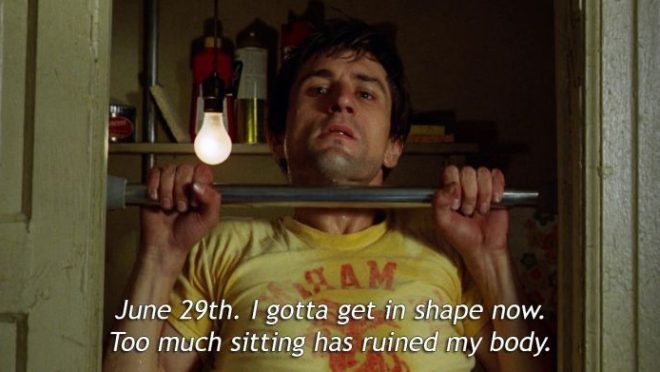
Maybe it’s the neo-noir aesthetic, the profanity, or Robert De Niro’s acting. It is one of those cult-classic films that you need to watch more than once to appreciate just how good it is. So, on the day Travis Bickle started working out again to get back into shape, let’s revisit the film that made countless men on social media say, “That is literally me.”
Travis Bickle is an insomniac taxi driver who starts the film as a moderately troubled man. He can’t sleep, so he throws himself into working late nights. During those late-night shifts, he becomes an unwilling witness to the city’s underbelly: prostitutes, pimps, petty criminals, and lonely souls drifting from bar to bar. New York after dark is presented as a festering organism, and Travis observes it all from behind the windscreen of his cab. He doesn’t just see the filth; he internalises it. His running monologue, delivered through a diary-like voice-over, slowly reveals a man convincing himself that the world needs to be “cleansed”, and that perhaps he is the one meant to do it.
What makes Taxi Driver so unsettling is how gradually this descent unfolds. There is no single breaking point, no dramatic snap. Instead, Travis’s alienation grows scene by scene through awkward conversations, failed attempts at connection, and his increasing obsession with discipline and control. The gym becomes a sanctuary. Guns become symbols of purpose. His silence grows heavier and more dangerous.
At the centre of it all is Robert De Niro’s career-defining performance. He plays Travis with terrifying restraint, making him both pitiful and deeply disturbing. You feel sorry for him, even as you become afraid of where his thoughts are heading. His iconic mirror monologue is not just a meme-worthy moment; it is the crystallisation of a man who has fully retreated into himself, rehearsing violence as though it were a form of self-affirmation.
Director Martin Scorsese frames the city like a nightmare you can’t wake up from. The rain-soaked streets glow red and yellow, sirens bleed into Bernard Herrmann’s haunting score, and the camera lingers just long enough to make you uncomfortable. New York is not just a setting here; it is a character that feeds Travis’s paranoia and justifies his delusions.
The brilliance of the film lies in its refusal to offer easy answers. Travis is not portrayed as a hero, nor is he reduced to a simple villain. Even the film’s controversial ending feels deliberately ambiguous, forcing the viewer to question society’s role in creating men like him and how easily violence can be reframed when it suits a narrative.
Some of Taxi Driver’s power comes from scenes that have burned themselves into pop culture, not because they are flashy, but because they chart Travis Bickle’s quiet, terrifying transformation.
One of the earliest warning signs arrives during the gun-shopping scenes. Travis, standing in a small, dimly lit room, calmly handling firearms as though they were everyday tools, is deeply unsettling. There is no dramatic music cue, no heightened tension, just a man methodically arming himself. It is here that his obsession with control becomes clear. Owning guns makes him feel prepared, important, and purposeful. The casualness of the transaction makes it even more disturbing.
Then there is the famous mirror scene. Alone in his room, Travis rehearses confrontation: “You talkin’ to me?” It is awkward, almost pathetic, but also chilling. This is a man scripting his own mythology, convincing himself that he is someone to be feared and respected. Robert De Niro plays the moment with such raw insecurity that it becomes impossible to laugh without feeling uncomfortable.
The mohawk reveal marks a clear point of no return. Travis shaving his head into a warrior-like crest before the assassination attempt is symbolic and deeply ironic. It is his attempt at rebirth, at becoming something “pure” and disciplined. The haircut is extreme, almost absurd, yet it perfectly captures his warped sense of heroism. He now sees himself as a soldier heading into battle, even though the enemy exists largely inside his own mind.
And then comes the shoot-out. The final burst of violence is chaotic, ugly, and exhausting. Scorsese refuses to romanticise it. Blood stains the walls, bodies fall awkwardly, and Travis himself is barely standing by the end. The violence feels clumsy and desperate, mirroring Travis’s mental state. It is not cathartic; it is horrifying. When he raises his blood-soaked fingers to his head like a gun, mimicking suicide, the gesture feels less like triumph and more like the final reflex of a broken man.
What makes these scenes iconic is not just their imagery, but how they function as milestones in Travis’s descent. Each moment strips away a little more of his humanity while convincing him that he is becoming something greater. By the time the film circles back to normality, the audience is left unsettled, not because of what Travis did, but because of how easily his actions are reinterpreted by the world around him.
Nearly five decades on, Taxi Driver remains disturbingly relevant. Its themes of loneliness, masculinity, and radical self-mythologising resonate loudly in the age of online echo chambers. Travis Bickle may be a fictional character, but his mindset feels uncomfortably real.
This is not a film you watch for comfort. It is a film you sit with, wrestle with, and maybe even argue with long after the credits roll. And that lingering unease is exactly why Taxi Driver still matters.