A life that painted generations
By the time a generation grows old, there are only a handful of names that remain untouched by time. Mustafa Monwar was one of them.
A life that painted generations
By the time a generation grows old, there are only a handful of names that remain untouched by time. Mustafa Monwar was one of them.
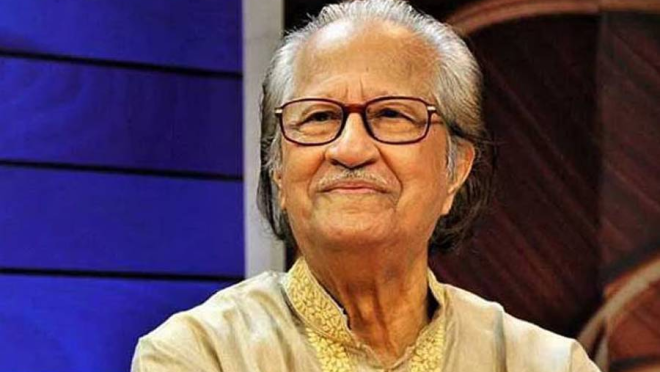
On the morning of 29 June 2026, Bangladesh awoke to heartbreaking news. Eminent artist, puppeteer, television pioneer, educator, cultural organiser and Ekushey Padak recipient Mustafa Monwar breathed his last at the age of 90 at around 8:30 am while undergoing treatment at Square Hospital in Dhaka after battling pneumonia and multiple age-related complications.
With his passing, Bangladesh has not merely lost a painter or television personality. It has lost one of the greatest architects of its post-independence cultural identity, a man whose colours, puppets, stories and unwavering commitment to children quietly shaped millions of lives.
A childhood rooted in art
Born on 1 September 1935, Mustafa Monwar came from a family where literature and creativity were a way of life. His father was the celebrated poet Golam Mostofa, whose literary legacy became an early inspiration in undivided Bengal. Growing up in Narayanganj, young Mustafa developed an irresistible fascination with drawing, music and storytelling.
Initially, he enrolled at Scottish Church College in Kolkata to study science. Yet science could not contain a mind that constantly sought colours and imagination. On the advice of noted scholar Syed Mujtaba Ali, he switched to the Government College of Art & Craft, Kolkata, where he graduated in 1959, securing First Class First in Fine Arts. That decision changed not only his life but also the future of Bangladeshi art.
Returning to the country, he joined the East Pakistan College of Arts and Crafts as a lecturer at the invitation of another legendary Bangladeshi artist, Zainul Abedin. While teaching offered him stability, his ambitions stretched far beyond the classroom.
Because he was an artist who refused to remain confined within a canvas. Many painters become known through galleries. Mustafa Monwar became known through people’s memories.
He believed art should live among ordinary people, not merely on museum walls. Throughout his career, he constantly crossed boundaries between painting, theatre, puppetry, television, literature and education.
His versatility earned him the title Sabyasachi; someone equally accomplished in multiple disciplines. Few cultural figures in Bangladesh have embodied that description more perfectly.
Bangladesh’s puppet man
If one contribution immortalised Mustafa Monwar, it was his revolution in puppetry.
Before him, puppetry in Bangladesh largely survived as a traditional folk performance, especially in rural areas. Mustafa Monwar transformed it into an educational, artistic and socially meaningful medium.
During the 1971 Liberation War, while visiting refugee camps in West Bengal, he encountered traumatised children who had witnessed unimaginable horrors. Instead of speeches or politics, he chose compassion. He created puppet shows to make children smile again.
That decision would define his life’s mission.
Following independence, he pioneered modern puppetry in Bangladesh, writing and producing productions such as Agacha, Rakkhash and A Brave Farmer. He later established the Educational Puppet Development Centre (EPDC), ensuring that puppetry would continue educating future generations.
International documentary filmmaker Lear Levin even documented his work during the Liberation War, footage that later became part of Tarique Masud’s acclaimed documentary Muktir Gaan.
For these achievements, generations affectionately came to know him as the Puppet Man of Bangladesh.
For Bangladeshis born between the 1970s and the early 2000s, Mustafa Monwar was not simply an artist. He was childhood.
At BTV, he became one of the country’s most influential programme creators. His legendary children’s programme Notun Kuri discovered countless young talents in music, dance, recitation and acting.
For decades, families gathered around their television sets to watch children perform in a programme that celebrated creativity rather than competition.
Then came Moner Kotha, a puppet series inspired by the folklore Saat Bhai Champa, featuring the memorable character Parul and her seven brothers. Running for nearly 12 years, it became one of Bangladesh’s most beloved television productions.
Long before smartphones or streaming platforms, these programmes gave children something increasingly rare today: a slower, gentler and more imaginative childhood.
A cultural institution builder
Beyond television and puppetry, Mustafa Monwar helped shape the country’s cultural institutions.
Throughout his distinguished career, he served in many institutions in different capacities, including Lecturer at the East Pakistan College of Arts and Crafts, Deputy Director General of Bangladesh Television, Director General of Bangladesh Shilpakala Academy, Director General of the National Institute of Mass Communication, Managing Director of Bangladesh Film Development Corporation (FDC), Chairman of Bangladesh Shishu Academy, and Founder President of Directors Guild Bangladesh.
These positions were never mere administrative titles. They allowed him to build structures through which future artists, filmmakers, actors and cultural workers could flourish.
Mustafa Monwar’s genius lay in refusing labels. He painted. He sculpted. He directed theatre.
He adapted Shakespeare’s The Taming of the Shrew and Rabindranath Tagore’s Raktakorobi for Bangladeshi audiences. He reimagined Hans Christian Andersen’s The Ugly Duckling and The Nightingale. He researched folk traditions. He mentored generations.
He understood that culture is not built by one masterpiece but through thousands of quiet acts of creation.
Among his many honours were:
- All India Fine Arts Competition Award (1957)
- Zainul Abedin Gold Medal
- Ekushey Padak (2004) for contributions to Fine Arts
- Ananda Bichitra Award
- The Daily Star Standard Chartered Lifetime Achievement Award (2017)
- Sultan Gold Medal (2018)
Yet perhaps his greatest award was never presented on a stage. It lives in the memories of millions who still remember his programmes decades later.
A legacy that cannot die
Some artists leave behind paintings. Others leave behind books. Mustafa Monwar left behind something far more precious.
He left behind memories. He reminded us that childhood deserves imagination, reminded us that education can be joyful, and reminded us that art belongs to everyone. Even amid war, a puppet can restore a child’s smile.
His death creates a void that cannot easily be filled because people like Mustafa Monwar are not produced by institutions. They become institutions themselves.
His legacy survives in every child who discovered confidence through Notun Kuri, every family who laughed with Parul, every young artist encouraged by his mentorship, every puppet theatre that still performs today, and every Bangladeshi who believes culture is as essential to a nation as politics or economics.
Farewell to a national treasure
The passing of Mustafa Monwar marks the closing chapter of one of the most remarkable cultural lives in Bangladesh’s history. Future generations may know him through books, documentaries or museum exhibitions.
Those fortunate enough to grow up with his work, however, will remember something more intimate. They will remember afternoons spent drawing because he inspired them.
They will remember evenings waiting for Notun Kuri or Moner Kotha on BTV. They will remember a man who never stopped believing that art could make better human beings.
In mourning Mustafa Monwar, Bangladesh is not only saying goodbye to an extraordinary artist. It is saying goodbye to one of the last great storytellers who coloured the nation’s childhood with imagination and hope.
Mustafa Monwar remains in his creations, his colours and his puppets. His dreams will continue to live on and endure in the hearts of Bangladeshis for generations to come.