An unserious article about World Joke Day
So I sat down to write something respectable about this day, and the first sentence that came out was, “Why is six scared of seven? Because seven ate nine,” and at that point I just accepted defeat and let the cringe win. This is that article. I apologise in advance to my editor, my ancestors, and anyone reading this.
An unserious article about World Joke Day
So I sat down to write something respectable about this day, and the first sentence that came out was, “Why is six scared of seven? Because seven ate nine,” and at that point I just accepted defeat and let the cringe win. This is that article. I apologise in advance to my editor, my ancestors, and anyone reading this.
1 July is World Joke Day, a holiday that exists for the same reason gym memberships exist in January: the unearned optimism that this year we’ll actually be funnier. I personally celebrate by texting my group chat a pun so bad that I get seen-zoned for the entire day. To me, that’s definitely not rejection; that’s a five-star review.
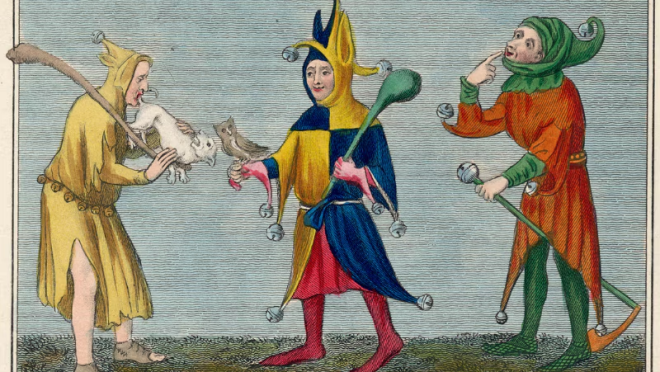
So, about the history of jokes: nobody really knows who told the first joke, but historians agree it was almost certainly followed immediately by someone saying, “Okay, but was that necessary?” What we do know is that comedy used to be a government job. The court jester wasn’t just a man in a bell hat; he was the only employee legally allowed to insult his boss in front of the entire company and still get a bonus.
Try that at your office, of course, if you have a job. “Sir, your tax policy is a joke, much like your fake English accent,” is a great bit until HR gets involved. The jester pulled it off and walked away with land and gold, which honestly explains a lot about why open mic comedians today are so bitter. The pay used to be so much better.
Politics and comedy have always been roommates who can’t stand each other but refuse to move out. Every kingdom had a jester roasting the king; every modern democracy has a late-night host roasting whoever just lost their mind on television. The names change; the punching bag stays the same: the guy with too much power and not enough self-awareness. Even today, the fastest way to find out a government is nervous is to see which comedian they’ve just arrested. Nothing says, “I am extremely secure in my leadership,” like throwing a man in jail for an impression. You can check Trevor Noah’s comedy shows as an example.
Some jokes exist purely to make you laugh and immediately check if anyone saw you laugh. “I told my doctor I broke my arm in two places. He told me to stop going to those places.” Fine, harmless, no one will exactly ‘hate’ you. Now compare that to actual gallows humour: soldiers in trenches joking about which one of them gets shot first, prisoners cracking one-liners on the way to execution. History is full of people laughing in the absolute worst circumstances, not because it was funny, but because crying was already fully booked. Dark humour isn’t cruelty; it’s a coping mechanism wearing a clown nose. Cruelty is what happens when the joke stops being about the situation and starts being about a person who can’t defend themselves, which, fun fact, is also the exact moment a joke stops being a joke and starts being a personality disorder. There’s a thin line between dark humour and personal attack; you can take the Samay Raina incident as an example.
Now for the personal part, because apparently I’m contractually obligated to bring myself into this. Every father has exactly one comedic setting, and it is “pun, delivered with the confidence of a man who has never been told to stop.” Dinner table, every single time: “I have a joke about pizza, but it’s too cheesy.” Anyone would groan, yet the father grins like he just won a Nobel Prize. And somehow, twenty years later, that’s the joke you’d remember more than anything actually clever you’ve ever heard. That’s the dad joke’s secret weapon: it’s not trying to be good; it’s trying to be yours. “I used to be a banker, but I lost interest.” “Why don’t skeletons fight? They don’t have the guts.”
Then brainrot happened, and comedy stopped needing logic entirely. A teacher says “67” during attendance and the entire classroom detonates. At least me and my bestie do. There is no joke here, and yet it lives in everyone’s skull rent-free, like a tenant who never pays and somehow we still let him stay. Tung Tung Tung Sahur, Italian brainrot sharks in Nikes, all of it makes zero sense, and yet I have laughed at a cartoon crocodile wearing sunglasses more than I laughed at most stand-up specials this year, and I refuse to feel bad about it.
Comedy isn’t a Western export, before anyone gets ideas. Bengali literature has its own long tradition of roasting everyone politely. Tarapada Roy turned daily absurdity into quiet satire. Syed Mujtaba Ali made fun of himself before anyone else got the chance, which is frankly the safest comedic strategy in existence: can’t be roasted if you got there first. Jasimuddin, mostly known for poetry that makes you weep, still had enough wit tucked away to remind you that even the most serious writers need an off switch.
A joke costs nothing, takes three seconds, and occasionally ends a friendship or ruins a relationship. But on the rare occasion it lands, it does something almost nothing else can: it makes the unbearable slightly more bearable and the awkward slightly less awkward. So go ruin someone’s day with a pun. Do the “six seven” unprompted in a serious gathering. Collect and tell dad jokes at your own dinner table someday. At least, you’ll make someone laugh and feel good.