105 years of Dhaka University, and my small place in it
My time at Dhaka University was nothing short of a cultural khichuri. A wonderful amalgamation of people from all around the country pursuing their dreams and hopes.
105 years of Dhaka University, and my small place in it
My time at Dhaka University was nothing short of a cultural khichuri. A wonderful amalgamation of people from all around the country pursuing their dreams and hopes.
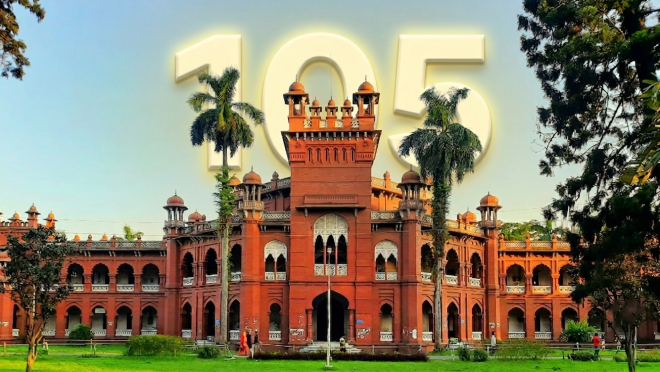
I’ve met people from backgrounds wildly different from my own, shared classrooms and corridors filled with debate, laughter and disagreement, and learnt as much outside lectures as I did inside them. It was a place where ideas clashed, friendships formed over cups of cha, and perspectives were constantly challenged, shaping not just careers, but the kind of people we would go on to become.
One of my earliest memories in DU was a funny one. Someone asked me for directions to Raju Memorial, and I pointed him towards TSC. My friends had a field day with me over that and called me geographically challenged for a while. I mean, it’s true, but now that I’ve graduated, every time I close my eyes I can clearly envision every nook and cranny of my wonderful campus.
To begin with, are you even a DU student if you haven’t had a late breakfast or early lunch at Shadow?
The food is subpar, and only the sandwich is redeemable. But there is a sense of nostalgia in every bite. Sure, your stomach might curse you a bit, but it’s a canon event in every Dhabian’s life. And who can forget the watered-down lemonade with a bunch of chunky ice? Never in my life would I voluntarily take a sip of this elixir if I wasn’t a student. But in my four years, I seem to remember drinking one every other day with my group of friends.
Then there is Madhur Canteen, a hub for political gatherings, meetings and, occasionally, the best shingara and cup of tea on campus. The vibe of the place is always loud and lively, with tables hosting students from all years and people who came to visit their friends there. The rich history of Madhur Canteen is woven into the political and cultural fabric of the university itself; a space where slogans have echoed, movements have taken shape, and everyday conversations have quietly reflected the pulse of the nation.
Street food culture in DU is not as vibrant as it was a few years back. But you’ll still find carts of bhelpuri, fuchka, jhalmuri and ice cream around the campus. Not sure if it will give you food poisoning? No one is. You just close your eyes, have a delicious bite, and pray that your stomach doesn’t erupt into chaos.
Then the classrooms. Different buildings have different styles of classrooms. Some are incredibly “posh”, with good seating arrangements and air conditioning that either make you feel like you’re in Siberia or leave you wondering whether it’s working at all. Others are far more modest, with creaky benches, stubborn fans and walls layered with decades of dust and history. Yet, regardless of comfort, these rooms were where arguments were sharpened, curiosity was encouraged, and lessons often extended far beyond the syllabus.
A classroom memory that I will always remember was a professor of mine calling me a “Don” because I turned up wearing a leather jacket and a bunch of accessories. It led to many of my peers calling me that for a while, but that is how I met my group of friends.
A campus so vast, filled with people from all backgrounds and beliefs, yet bound by a shared sense of belonging. Making friends here felt almost inevitable. Between long walks across campus, shared notes before exams and endless conversations that started as debates and ended in laughter, friendships formed naturally. Some were born out of group assignments, others over late lunches or spontaneous tea breaks, but many grew into bonds that went far beyond university life. In a place as crowded and diverse as Dhaka University, friendships became anchors, offering comfort, disagreement, growth and, often, a second family. And if you’ve spent time in the “hall”, which is basically a dormitory, you know how lifelong friendships are created.
You spend every day with the same group of people, sharing clothes, deodorant, food, stories and trauma, until one day they become an undeniable part of your life. Sure, you have fought with your roommates for maybe eating something you were saving for later or wearing the clothes you had kept out for the following day, but that is how bonds are made. Those small, everyday conflicts slowly fade into inside jokes and stories retold years later. The hall teaches you patience, compromise and loyalty in ways no lecture ever could. It is where you learn how to live with others in their rawest forms, to forgive quickly, and to show up even after disagreements.
Long after graduation, it is these shared moments, the cramped rooms, sleepless nights, borrowed essentials and unspoken understanding, that remain the most vivid reminders of campus life. For many, the hall is not just a place to stay; it is where friendships stop being temporary and quietly turn permanent.
As an English-medium student, I was in denial for a while in my early days, mainly because I could not blend in with my peers. If you’re reading this and going through something similar, that’s just your ego talking. Curb it and open your heart to your peers because you’re here for the next four years at least. Might as well make the most of it. Make friends, have disagreements, fight and cuss them out, don’t talk again for the day, and later make up over a cup of tea or some bhelpuri (the instigator pays, of course).
Over time, you realise that those differences you once saw as barriers are actually what make the experience richer. The discomfort fades, the gaps close, and familiarity slowly replaces insecurity. You begin to listen more, judge less, and find common ground in the most unexpected places. Dhaka University has a way of humbling you first, then embracing you, but only if you let it. And once you do, the campus stops feeling intimidating and starts feeling like home, with people who challenge you, stand by you, and grow alongside you, long after the four years are over.
As the University of Dhaka marks its 105th anniversary, it feels impossible to separate the institution from the lives it has quietly shaped. Beyond the headlines, movements and milestones, DU lives in memories like mine; in wrong directions given with confidence, watered-down lemonade shared daily, cramped halls that felt like home, classrooms that challenged comfort, and friendships that changed who I am.
One hundred and five years on, this campus continues to do what it has always done best: bring together difference, chaos and conviction, and turn them into belonging. I arrived uncertain, left transformed, and continue to carry DU with me, not merely as a university, but as a feeling, a set of lessons and a companion for life.