The pressure no one sees is breaking Bangladesh's youth
There is a kind of pressure that doesn’t shout, doesn’t demand attention, and rarely leaves visible marks. It lingers quietly in the background, shaping thoughts, decisions, and self-worth that reside between the victim and the room where midnight thoughts are prominent.
The pressure no one sees is breaking Bangladesh's youth
There is a kind of pressure that doesn’t shout, doesn’t demand attention, and rarely leaves visible marks. It lingers quietly in the background, shaping thoughts, decisions, and self-worth that reside between the victim and the room where midnight thoughts are prominent.
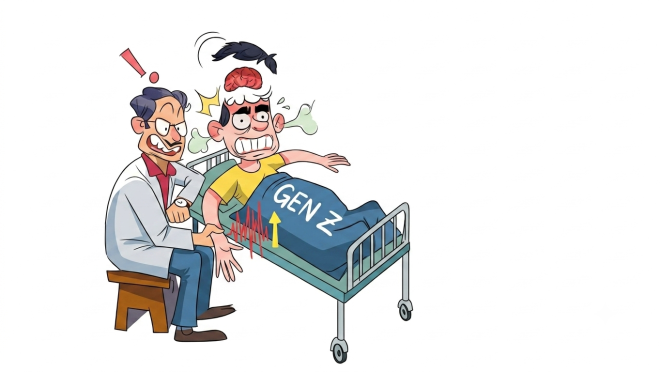
This is the silent pressure, an invisible force that many youths carry every day. Unlike explicit expectations or spoken criticism, silent pressure operates through unspoken assumptions, subtle comparisons, and internalised fears that affect externally later. It is not always imposed directly.
Often, it is absorbed, interpreted, and magnified within the mind. The solution can hardly be seen then.
From a young age, most begin to sense what is expected of them. Parents may never explicitly say, ‘You must be the best’, but their pride in high grades, their concern over small failures, their expectation of choosing a career path, or their comparisons with the ‘neighbour’s son’ send a clear message.
A simple question can echo louder than any direct command or chaos. Over time, youths learn to read between the fine lines. They understand that success is not just appreciated; rather, it is expected. And failure, even minor, feels like disappointment that sucks all the previous records, even if they had loud excellence.
This expectation doesn’t reflect only from parents. Societal norms play a powerful role in shaping silent pressure. Cultural values often emphasise academic success as the primary measure of worth. Students are praised for marks, ranks, and achievements, while other qualities such as creativity, kindness, curiosity, passion, and expertise fields are overlooked.
Social media amplifies this effect even more by constantly showcasing curated success stories: top scores, prestigious admissions, impressive talents. Students scrolling through these highlights can’t help but compare themselves, even if they know deep down that they are seeing only a fraction of reality, only one side of the coin.
Peer pressure adds another layer to this silent burden. It is not always about being told to behave in a certain way to get attention. Sometimes, it is simply about not wanting to fall behind, not wanting to get shadowed. When classmates discuss their achievements, study routines, or future plans, a student may feel an internal push to match or exceed them. No one may be directly competing, yet competition becomes inevitable. The classroom turns into a quiet race where everyone pretends to be calm, but internally measures themselves against others. University students face this even more.
What makes silent pressure particularly challenging is that it often goes unnoticed by others. A student may appear composed, even successful, while internally struggling with anxiety, self-doubt, and fear of failure. They might smile when praised but feel that their efforts are never enough. They may hesitate to share their struggles, believing that others expect them to be strong. In many cases, they don’t even fully understand the source of their stress. It simply feels like a constant weight.
This pressure can shape behaviour in subtle but significant ways. Some become perfectionists, setting unrealistically high standards for themselves. They spend excessive time on tasks, afraid of making mistakes. Others may become overly cautious, avoiding challenges where failure is possible. In contrast, some students may withdraw altogether, feeling overwhelmed and choosing disengagement over the risk of not meeting expectations.
In all cases, silent pressure influences not only what students do, but how they feel about themselves. The emotional impact of silent pressure is often profound. It can lead to chronic stress, anxiety, and a persistent sense of inadequacy. Even achievements may not bring satisfaction, as the goalposts keep shifting. A student who scores well may immediately start worrying about maintaining that performance. Success becomes temporary relief rather than lasting fulfilment. Over time, this cycle can erode confidence and diminish the joy of learning.
Another aspect of silent pressure is the fear of disappointing others. Many internalise the idea that their success is not just personal but it reflects on their family. They may feel responsible for fulfilling dreams or, moreover, justifying the sacrifices they made day after day, month after month, year after year. This sense of duty can be motivating, but it can also be overwhelming. When students feel that their worth is tied to their performance, failure becomes more than a setback. It feels like a personal flaw.
Despite its challenges, silent pressure is rarely discussed openly. Conversations about stress often focus on visible factors such as exams, workload, and deadlines while ignoring the underlying emotional landscape. Students may not have the language or the space to express what they are experiencing. Parents and teachers, on the other hand, may assume that no complaints mean everything is fine. This gap in understanding allows silent pressure to persist and grow eventually.
Addressing silent pressure requires awareness from all sides. For parents, it involves reflecting on the messages they send, both spoken and unspoken. Encouragement should not be conditional on performance. Recognising effort, valuing individuality, and allowing room for failure can help reduce the burden students feel. For educators, it means creating environments where learning is prioritised over ranking, and where students feel safe to express uncertainty or struggle.
Students themselves also play a role in managing silent pressure, though it is not easy. Developing self-awareness is a crucial first step: to recognise when expectations are becoming overwhelming and question whether they are realistic. Learning to define success in personal terms, rather than solely through external validation, can gradually shift the mindset. Building supportive relationships, where honesty is valued over perfection, can also make a significant difference.
Ultimately, silent pressure thrives in silence. The more it remains unspoken, the more power it holds. Breaking that silence through conversations, counselling, and understanding can begin to lighten the load. No one should have to carry their struggles alone, nor should they feel that their worth depends entirely on their achievements.
The journey is not just about reaching academic milestones or career success. It is about growth, self-discovery, and resilience. When silent pressure dominates this journey, it can overshadow these essential aspects.
Recognising and addressing it is not just beneficial but incumbent. Because sometimes, the heaviest burdens are the ones no one else can see.