Inside the magic of Caraval
I entered the world of Caraval the way most people come to things that change them: sideways, unexpectedly, through someone else’s love for it. My friend Chhaya had been living inside this world long before I ever cracked the spine.
Inside the magic of Caraval
I entered the world of Caraval the way most people come to things that change them: sideways, unexpectedly, through someone else’s love for it. My friend Chhaya had been living inside this world long before I ever cracked the spine.
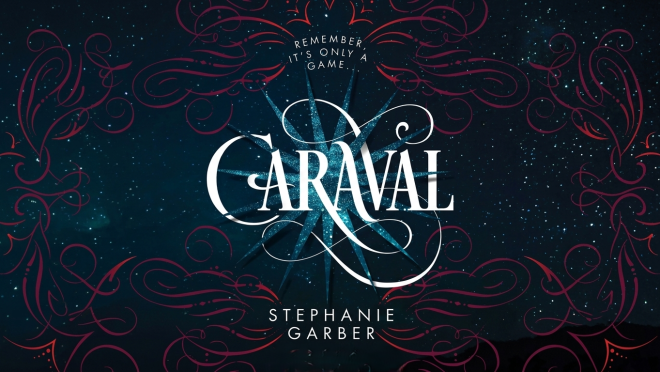
She talked about it with a particular warmth that isn’t nostalgia exactly, more like homesickness for somewhere that technically doesn’t exist. Her love for the series had a kind of golden-hour shimmer to it. And I kept sitting with it, thinking: what world does that? What story pulls that kind of devotion out of a person, keeps it glowing in them long after the last page?
So this review is for her, first. And then for the book.
Stephanie Garber opens Caraval with a letter, sealed and waiting, written in ink that smells like burnt sugar and bad decisions, from the legendary Master Legend himself, inviting one Scarlett Dragna to the most spectacular show on earth. Or off it. The geography of Caraval is genuinely hard to pin down, which is, of course, entirely the point.
This is the trick Garber pulls from page one and never quite puts down: she makes the reader feel like a participant. The kind who’s already in too deep before they’ve realized they agreed to anything. There’s a door swinging open on the very first page, and the warm, strange light is already spilling through it, and you’re already stepping forward before your better judgment has had time to weigh in.
Scarlett has wanted to attend Caraval since she was a child writing letters to Legend; letters he never answered, which says something about both of them. Now, at last, an invitation arrives. And almost immediately, everything goes sideways. Her sister Donatella is taken. The game has already begun. And the only way to find her is to play.
What follows is the kind of narrative that does something technically impressive without ever feeling technical about it: it makes you genuinely uncertain what’s real. The way a really good magic trick does, where part of your brain knows there’s a method, and still you gasp.
The gift Garber has (and she does genuinely have it) is making the extraordinary feel inevitable. When a world is built right, it arrives with full authority, breathing its own air long before you came looking. Caraval has that quality. The food that tastes like emotions. The streets that rearrange themselves while you’re walking them. The roses that bleed colours into the cobblestones and couldn’t care less who’s watching.
None of it is explained. The rules arrive the way folklore arrives: assumed rather than announced. And somehow that lands harder than any encyclopaedia of lore ever could. You believe in Caraval the way you believe in weather. Because you can feel it on your skin.
The magic here is tactile. Physical. It leaves marks. Tickets that burn warmth into the palm. Dresses that shift colour with the wearer’s mood like a secret being told against its will. A city that smells of candle smoke and cinnamon and something underneath both that you can’t quite name. Garber understands that wonder is a tactile thing, felt in the grain of the world before it even registers in the scale of it. Her eye drops to everything from the smoke still curling, the warmth fading from upturned faces, to the particular hush of a crowd when the last light goes out.
Julian is the problem, and I mean that as high praise. You will love him for it even when you know better.
He’s the category of love interest that good fantasy has always done well and bad fantasy gets embarrassingly wrong: morally complicated, genuinely funny, doing questionable things for reasons the reader half-understands before Scarlett does. He and Scarlett have a dynamic that crackles because Garber refuses to let either of them stay comfortable in their assigned roles. They push against each other. They’re wrong about each other in interesting ways. And the slow unwinding of those wrong assumptions is quietly, almost sneakily, the emotional engine of the entire book.
Donatella, too, the sister. She could’ve been a MacGuffin, the thing to be rescued, the motivation engine, and Garber refuses to let her be only that. What we learn about Tella through the search for her reframes things. The kind of retroactive revelation that makes you want to start from page one, reading all her absences differently. Like finding a hidden room in a house you thought you knew.
The criticism I’ve heard, fair to raise, is that the plot’s revelations can feel like they’re always one step ahead of fair. That Garber moves the goalposts and that the rule is that everything in Caraval is just a game gets deployed a little too conveniently when the story needs an escape hatch. Some of the twists land cleanly, and some of them simply drift, suspended somewhere between earned and unearned.
However, the criticism, sharp as it is, reaches for the wrong measuring stick entirely. Puzzle boxes get solved and put down. Garber built something that gets under your skin: a weather system, a slow fever, a vertigo that sets in when you realize you’ve started caring about things inside a game that was supposed to be make-believe, in a world where the floor keeps tilting.
Caraval gives you an incomplete, probably untrustworthy, definitely beautiful world which has the audacity to leave, mid-sentence, with the candles still burning.
The magic doesn’t stop when you close the cover. That’s the whole secret of it. Garber lit something and walked away, and it’s still going.
The game is never just a game. She knew that from the very first page. She was just waiting to see if you’d figure it out.