A brutal review of Buet campus life: A warning for the batches to come
I am a Level 3 student of CSE at Buet, and I know that saying this plainly may earn me quiet resentment from people I still call friends, but I have already watched this place take more from people than resentment ever could, so I am done softening it.
A brutal review of Buet campus life: A warning for the batches to come
I am a Level 3 student of CSE at Buet, and I know that saying this plainly may earn me quiet resentment from people I still call friends, but I have already watched this place take more from people than resentment ever could, so I am done softening it.
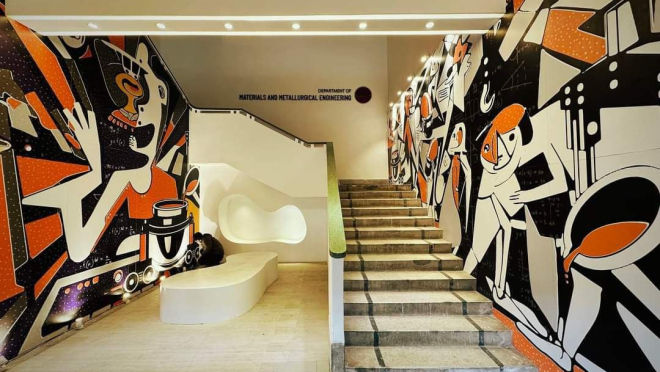
Let me tell you honestly how I got here, because honesty has to start before the admission letter. Like most students shaped by the Bangla-medium conveyor belt, I never really chose anything; I just kept moving through the machine that decides for you, class after class, exam after exam, until one day in Class Nine I liked science and decided, the way a teenager decides things from a movie about hackers typing furiously in a dark room, that this would be my life.
I also loved international relations, genuinely, but that love got quietly buried the moment Buet entered the picture, because this institution does not really allow you to keep the parts of yourself that existed before it.
When I got in, in 2023, ranked in the top hundred nationally, I felt something close to reverence for my own life, convinced I had finally proven I belonged among the sharpest minds this country produces, and I need you to sit with how real that hope was, because within two weeks of classes starting, that hope was deliberately, systematically dismantled. I was told outright, in the exact words used on my batch, that the number of seats had gone up and the quality of brains coming in had gone down, and whether or not that was meant as motivation, what it actually did was tell nineteen-year-olds who had just spent months being congratulated by their entire neighbourhood that their achievement was already being treated as a joke inside the building they had just entered.
That is not an accident of one blunt comment. That is the rat race introducing itself, on day one, in the only language it knows, which is contempt disguised as standards.
Then there is the arithmetic nobody says loudly enough: sixteen women in a department of one hundred and eighty-five, and I will not waste paragraphs explaining what that imbalance does to a campus’s culture, because I will just tell you plainly what it did to me, which is that the moment I began forming ordinary friendships with male classmates, whispers started about my character, not from strangers, but from the same classmates who sat beside me solving the same brutal problem sets, people who will tell you to your face that they believe in gender equality and then, without any apparent contradiction in their own minds, decide that a woman speaking freely to men must mean something is wrong with her. You’d never know when your best friend will come up to you and say something about your own morals that isn’t true at all.
So, that’s a fair warning for the female aspirants out there.
I will not attack the structure of the coursework itself, because that is not where the wound is; the wound is in the second, unofficial curriculum layered on top of it, the understanding drilled into every student that the classroom is only the bare minimum and that falling behind the self-taught, self-imposed, never-ending real syllabus is treated not as an ordinary human limitation but as evidence that you were never good enough to be here in the first place, and by the time you realise this expectation was never sane to begin with, you have already spent years internalising it as truth.
By my first year I understood exactly why people here repeat, almost as a survival proverb, that broken bones heal but university friendships forged under this kind of pressure rarely become anything real, because when every relationship is filtered through a system that rewards comparison over care, softness becomes dangerous, and people learn, without ever consciously deciding to, that it is safer to out-compete each other than to actually know each other.
The alumni network here is genuinely extraordinary, and in national protests and political movements Buet students have repeatedly shown a unity that few institutions in this country can match, but sit inside that same unity long enough and you will hear brilliant, high-achieving people argue with total conviction that coeducation corrodes society, or that a woman’s assault was somehow the predictable outcome of her own choices, and you begin to understand, in a way that actually hurts to sit with, that raw intelligence here has been optimised for relentlessly while basic decency was never even on the syllabus. It’s like that famous question: “Not all the Buetians, but always a Buetian.”
And now the part that should genuinely frighten every parent reading this, because it is not gossip and it is not exaggeration. A senior from the HSC-20 batch recently died by suicide under the weight of academic pressure, and the first reaction inside Buet’s own internal student spaces was not grief; it was judgement, people writing that he must have been too weak to belong here, that attempting to end his life was a coward’s decision, that he should have thought of his family before he broke, as if unbearable pain requires a permission slip before anyone is allowed to take it seriously. These words were written by Buet students, about a Buet student, in the raw days after his death, and it was not an isolated cruelty, because one of my own classmates also took his life, unable to reconcile who he actually was with who this place insisted, relentlessly, that he become.
A friend from Dhaka University, hearing all of this, gave me the most honest piece of advice I have received from anyone, inside this institution or outside it: that the rat race here is no secret to the rest of the country either, that we have all been quietly groomed to treat our own exhaustion as a badge of honour, and that the only real strategy for surviving it is to keep loving whatever you loved before you got here, quietly, on the side, and to never let this place become the only measure of what you are worth.
So, if you are a junior standing at the edge of this decision, know exactly what you are walking into. Buet will hand you doors that few institutions in this country can open, and it will surround you with genuinely brilliant, complicated, relentless people. But it will also, without ever needing a single named villain to do it, teach an entire generation of talented young people that their worth exists only in output, and it will teach that lesson so completely that some of them will not survive learning it. Believe in yourself before you believe in anything this place tells you about your value, and understand, from someone who has already spent two years being ground down by it, that the real danger here was never the workload. It was the rat race mindset that convinced a whole generation that losing themselves quietly was simply the cost of becoming someone worth being.
Perhaps Buet is not unique in this regard. Maybe this is the reality of higher education across many universities in Bangladesh, where relentless competition slowly overshadows compassion and survival becomes more important than living. I cannot speak for every institution, but I can speak for the one I have experienced. Looking back, I realise that I had placed Buet on a pedestal long before I ever stepped inside its classrooms. I believed that getting here would somehow answer all my questions, validate years of hard work, and surround me with people who would inspire me every day. Instead, I learned one of the most painful lessons of adulthood: be careful what you wish for.
There is a reason people say, “Never meet your hero; you’ll only end up disappointed.” Sometimes the dream itself is real, but the reality of living it is far more complicated than anyone ever tells you.