Australia combines AI and Indigenous knowledge to strengthen bushfire management
Australia combines AI and Indigenous knowledge to strengthen bushfire management
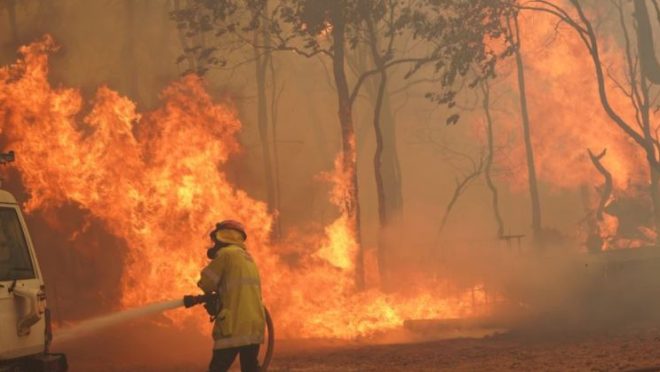
Australia is combining artificial intelligence, satellite technology and Indigenous ecological knowledge to improve bushfire management as the country prepares for longer and more intense fire seasons driven by climate change.
The approach has gained greater urgency since the 2019-20 “Black Summer” bushfires, which burned an area roughly the size of the United Kingdom and highlighted the need for better methods of predicting and reducing fire risk, says the BBC.
The Bushfire Research Centre of Excellence, led by Professor Marta Yebra, uses satellite imagery, drones and artificial intelligence to identify areas most vulnerable to fire. A central part of its work is monitoring “fuel moisture content” – a measure of how dry leaves, grass and bark are – to help predict where fires are most likely to ignite.
Researchers combine these data with Indigenous ecological knowledge to improve assessments on the ground.
Indigenous experts, including Adrian Webster, assess the condition of the landscape by observing plant colour, scent and shade cover, and by examining the subsurface. Their observations help validate satellite data and identify areas considered “ready to burn.”
Australia uses several controlled burning techniques to reduce vegetation that can fuel large bushfires.
Cultural burning
Cultural burning, an Indigenous land management practice dating back around 60,000 years, involves lighting “cool fires” that burn at lower intensity. The method creates a patchwork of burned and unburned areas, reducing fuel accumulation while maintaining cultural and spiritual connections to the land.
Prescribed burns
Authorities also carry out prescribed burns, also known as hazard reduction burns, during cooler months. These are commonly conducted in areas where expanding suburbs meet bushland to lower the risk of major fires reaching populated communities.
Backburning
Backburning is another technique used during active bushfires. Firefighters deliberately light controlled fires ahead of an advancing blaze to remove vegetation and slow or stop its spread.
Drones and international cooperation
Drones have expanded Australia’s firefighting capabilities by providing crews with real-time information during emergencies. They can also transport heavy equipment and, in some operations, ignite controlled fires for backburning.
Australia has increasingly shared its bushfire expertise internationally. While it has long deployed specialist firefighting crews to the United States and Canada, it is now providing greater support to European countries experiencing more frequent and severe wildfires linked to climate change.
France recently made its first request for Australian firefighting assistance.
Preparing for more severe fire seasons
Researchers say preparations are becoming more important as forecasts point to the possibility of a “super El Niño”, which could bring higher temperatures and prolonged drought.
Experts warn that fire seasons are beginning earlier and lasting longer, making the ability to anticipate bushfire risk, rather than simply respond to it, an increasingly important part of modern fire management.