Into the uncanny valley: Why almost-human things creep us out
Into the uncanny valley: Why almost-human things creep us out
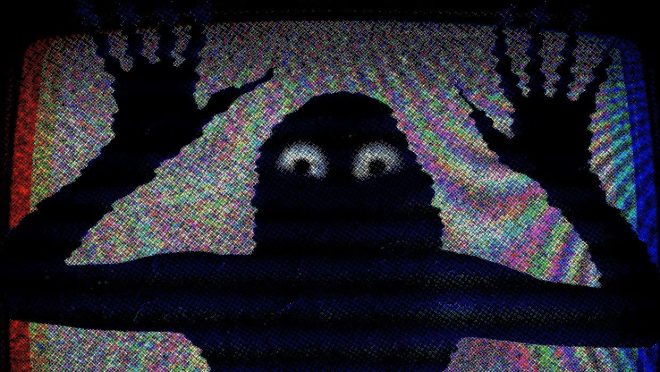
There is a particular kind of discomfort that is difficult to explain.
It is not the fear of a monster, nor the shock of a jump scare. It is subtler than that. It arrives quietly, like when a doll’s eyes linger a fraction too long, when a digital face smiles without warmth, or when an AI-generated person looks almost real, except for something you cannot quite identify.
You know it is not human. Yet your brain briefly insists that it should be. That strange emotional contradiction has a name: the uncanny valley.
Coined more than half a century ago, the uncanny valley describes the unsettling feeling people experience when something appears almost perfectly human, but not quite. It has become one of the internet’s favourite psychological concepts, helping explain everything from eerie robots and wax figures to liminal spaces, cursed TikToks and hyper-realistic AI videos.
In an era where artificial intelligence can generate convincing faces in seconds and robots are beginning to mimic human expressions with startling precision, the uncanny valley has never felt more relevant.
The graph that changed robotics
The term was introduced in 1970 by Japanese roboticist Masahiro Mori.
Mori proposed a simple but influential idea. As robots become more human-like, our emotional connection to them generally increases. A toy robot may seem charming. A humanoid robot may appear fascinating.
But somewhere along that journey comes a sudden drop.
When something looks almost human yet still reveals subtle imperfections, our comfort plummets into what Mori called the “uncanny valley”. Only when it becomes virtually indistinguishable from an actual human does that comfort begin to recover.
The theory was initially aimed at robotics, but over the decades psychologists, filmmakers, game developers and designers discovered that the same principle seemed to apply far beyond machines.
Today, the uncanny valley influences everything from prosthetic limbs and virtual avatars to digital assistants and AI-generated influencers.
Your brain spots what your eyes miss
Scientists still debate exactly why the uncanny valley exists, but several explanations have emerged.
One theory suggests our brains are extraordinarily specialised for recognising human faces. Evolution has trained us to notice tiny irregularities; an unnatural blink, slightly mistimed facial muscles, vacant eyes or expressions that fail to match emotion.
When these details conflict with what we expect from a real person, our brains struggle to categorise what we are seeing.
Is it alive? Is it artificial? Why does something feel wrong?
Rather than resolving the contradiction, the brain often responds with discomfort.
Another explanation comes from evolutionary psychology. Some researchers argue that almost-human appearances resemble signs of illness, injury or death; pale skin, stiff movements or emotionless faces. If our ancestors instinctively avoided individuals showing signs of disease, those same instincts may still influence how we react today.
Others believe the discomfort stems from prediction error. The more human something appears, the more our brains expect perfectly human behaviour. When reality fails to match that expectation, the mismatch becomes impossible to ignore.
Ironically, a cartoon character with oversized eyes rarely feels disturbing because our brains never expect realism from it.
A nearly perfect digital human, however, is judged by a much harsher standard.
Hollywood learned the lesson the hard way
Long before AI entered everyday life, filmmakers repeatedly encountered the uncanny valley.
Some early motion-capture films featuring highly realistic digital humans left audiences describing characters as “creepy” despite remarkable technical achievement.
Films such as The Polar Express (2004), Beowulf (2007) and Mars Needs Moms (2011) became famous examples. Their characters looked impressively realistic for their time, yet many viewers found their vacant eyes, stiff facial expressions and unnatural movements deeply unsettling.
Meanwhile, animated films from studios such as Pixar rarely triggered the same reaction.
Their characters were deliberately stylised rather than realistic. Nobody mistakes Woody or Buzz Lightyear for actual humans, so the brain accepts them immediately.
It turns out being obviously artificial can sometimes feel far more comfortable than trying too hard to look real.
AI has made the valley deeper
The rise of generative AI has transformed the uncanny valley from an academic concept into an everyday experience. Social media is now flooded with AI-generated influencers, fake podcasts, virtual news presenters and videos featuring people who never existed. Many are convincing enough to fool viewers for a few seconds. Then something feels… off. Perhaps a smile lasts slightly too long, a blink comes at the wrong moment, teeth merge together or hands briefly gain an extra finger before disappearing again.
As AI improves, these errors become increasingly subtle, making the uncanny valley both narrower and harder to detect.
Ironically, today’s AI often spends only a split second in the valley before becoming convincing again. That fleeting moment is enough for many viewers to experience an inexplicable sense of unease.
The internet loves feeling uncomfortable
The uncanny valley has evolved far beyond robotics into an entire online aesthetic.
One of its closest cousins is the idea of liminal spaces; photographs of empty shopping centres, abandoned schools, endless hotel corridors and brightly lit offices with no people inside. These places are completely ordinary, yet they evoke an eerie sense that something is missing.
The phenomenon exploded online through communities fascinated by “weirdcore”, “dreamcore” and analogue horror.
Movies and series such as The Backrooms, Local 58 and Gemini Home Entertainment intentionally blur the line between familiar and unsettling. Their horror rarely relies on monsters. Instead, they create environments that feel almost normal while quietly violating reality in ways viewers struggle to articulate.
The same psychology appears in “analogue horror”, distorted faces, AI-generated family photographs, uncanny deepfakes and bizarre internet memes that become unsettling precisely because they resemble reality without fully matching it.
Even children’s mascots can fall into the valley. Oversized costumes with frozen expressions, lifelike dolls and wax museum figures have frightened generations despite posing no real threat.
The discomfort comes from the gap between what we expect and what we actually see.
We may never leave the valley
As robotics and artificial intelligence continue to improve, researchers are working to cross the uncanny valley rather than remain trapped inside it.
Some companies deliberately make robots less realistic by giving them cartoon-like features. Others pursue perfect realism, hoping technological advances will eventually eliminate the unsettling gap altogether.
Whether that happens remains uncertain.
What is clear is that the uncanny valley reveals something fascinating about being human.
Our brains are astonishingly good at recognising ourselves. We notice the smallest imperfections in a face without consciously understanding why. We instinctively sense when movement lacks life, when emotion feels rehearsed or when something that should be familiar somehow isn’t.
Perhaps that is why the uncanny valley continues to fascinate us.
It is not simply about robots, AI or creepy dolls.
It is about the invisible line separating imitation from humanity and how, even in a world increasingly filled with digital people, our minds still know the difference.