WWE Unreal: I don't wanna know how the magic works
It is quite hard for a WWE fan from the 2010s to speak about Unreal, who used to cry out loud watching John Cena get absolutely destroyed by Brock Lesnar. Kayfabe was a pretty big deal once. Kayfabe is the practice in professional wrestling of presenting staged matches, rivalries, and scripted personas as completely real and authentic.
WWE Unreal: I don't wanna know how the magic works
It is quite hard for a WWE fan from the 2010s to speak about Unreal, who used to cry out loud watching John Cena get absolutely destroyed by Brock Lesnar. Kayfabe was a pretty big deal once. Kayfabe is the practice in professional wrestling of presenting staged matches, rivalries, and scripted personas as completely real and authentic.
It was quite regular for a 10-year-old like me to believe that The Undertaker is indeed a dead man, and he gets back once a year from his grave to wrestle. People were more gullible back then.
With the internet taking centre stage in people’s lives, WWE does not have the same impact as it used to. I yearn for the feeling of hating Kevin Owens and Randy Orton with all my heart. Sadly, it is not possible anymore. As years go by, things change. WWE has completely broken kayfabe, and there are only a handful of wrestlers left who still make it feel real.
To put the final nail in the coffin, they came up with WWE Unreal, which already has three seasons, showing the behind-the-scenes workings of WWE and completely pulling back the curtain on the business. It shows how storylines are created, how they evolve, and how WWE pivots from one storyline to another whenever unforeseen problems arise.
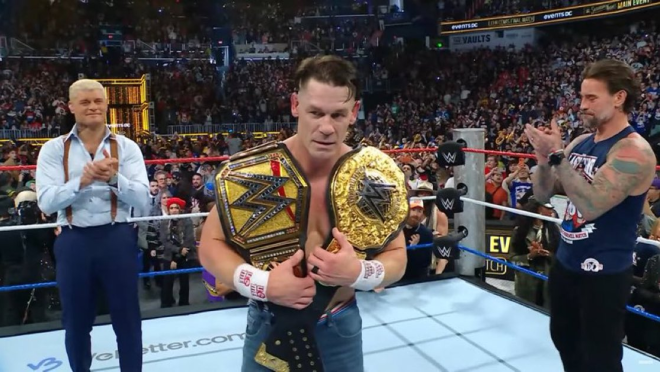
WWE Unreal Season 3 follows some retirement stories of John Cena to the WrestleMania clash of Liv Morgan and Stephanie Vaquer. Oftentimes, it feels like the show misses out on high-profile narratives and instead focuses on more low-stakes storylines. The show completely ignored Roman Reigns and the apparent retirement of Brock Lesnar from professional wrestling.
And after three seasons of Unreal, it feels like the wrestlers have settled into living without kayfabe. As a childhood wrestling fan, it breaks my heart. It is also worth noting that maintaining a persona while being recorded backstage can be quite difficult, particularly when you are portraying someone completely different in the ring and going through such intense physicality. For Triple H, however, this is less of an issue, as he does not need to maintain a distinct on-screen persona nor does he need to go through any physical punishments. Some critics have even described his backstage demeanour as performative.
Comparing this season of Unreal with the second season, the latter felt much sweeter, partly because of how deeply it explored the life of Seth Rollins and Becky Lynch as pro-wrestlers and real-life partners. While Season Two also focused on other storylines, it mainly stuck to Seth Rollins and Becky Lynch, which made it feel authentic at many stages. Much of its credit goes to Becky Lynch. However, this season did not have any central storyline which branched out like last season.
The problem with Unreal is not that it tells us wrestling is scripted; most fans already know that. The problem is that it shows us the process behind the illusion. WWE was magic to me, to all the wrestling fans. When you show your audience how the magic is done, the fascination around it disappears. It only sticks as a process then. Seth Rollins once said about Unreal, “I can’t watch it. It makes me feel dirty.” Sadly, the feeling is pretty mutual.