House of the Dragon season 3: The dance finally becomes a war
For two seasons, House of the Dragon has been telling us that war is coming.
House of the Dragon season 3: The dance finally becomes a war
For two seasons, House of the Dragon has been telling us that war is coming.
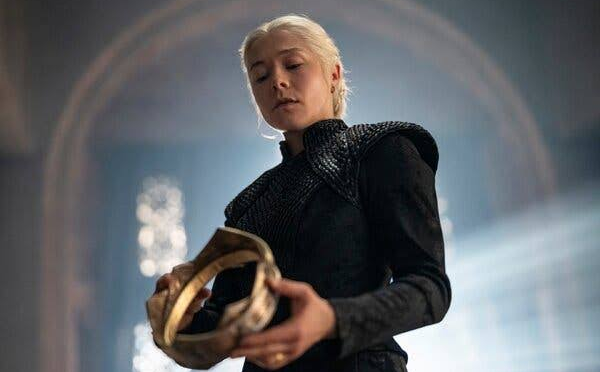
Season 1 built the succession crisis; season 2 set Westeros on fire; and season 3 finally lets the Dance of the Dragons become the war it was always destined to be. The difference is that the series no longer seems particularly interested in asking who deserves the Iron Throne. Instead, it asks a much uglier question: how much can a family, and a kingdom, lose before the throne stops mattering?
That shift is what makes season 3 the strongest season of House of the Dragon so far. The battles are bigger, the dragons are more prominent and the political stakes are higher, but the season’s real strength lies in what happens after the spectacle. The Battle of the Gullet, Tumbleton and the continuing fight for King’s Landing are not simply set pieces designed to give viewers their weekly dose of dragon fire. They are turning points that permanently alter the characters and the balance of the war. For the first time, the dragons no longer feel like mythical creatures belonging to a powerful royal family. They feel like weapons of war; counted, deployed and sacrificed.
And that comes with a cost. The Targaryens spent generations believing their dragons made them almost untouchable. Season 3 finally strips away that illusion. Dragons can die, riders can fall and victories can be almost as destructive as defeats. The Gullet is particularly effective because its spectacle is matched by consequence. The death of Jacaerys Velaryon turns the battle into something far more personal. Jace was not simply another dragonrider; he was Rhaenyra’s heir, a young man expected to inherit the throne and carry his family’s future forward. Instead, he becomes one of the war’s most important casualties. His death is a reminder that the Targaryens are not fighting for some distant generation, they are destroying the generation that was supposed to inherit what they are fighting over.
The same tension between dragons as symbols of power and dragons as living creatures runs through Rhaena and Sheepstealer’s story. Rhaena has spent much of the series watching other Targaryens claim the dragons that define their family’s power. Finding Sheepstealer finally gives her the connection she has been missing, but the wild dragon is unlike the creatures raised within the Targaryen fold. Sheepstealer cannot simply be treated as another weapon. Its eventual tragic fate turns Rhaena’s long-awaited triumph into another casualty of the Dance, reinforcing the idea that even the creatures at the centre of this war have little say in how they are used.
The Dragonseeds provide another fascinating look at what happens when ordinary people suddenly acquire extraordinary power. Ulf the White goes from an insignificant figure to a dragonrider almost overnight, but his rise exposes the weakness of Rhaenyra’s strategy. A dragon can be won. Loyalty cannot. Ulf’s betrayal is therefore one of the season’s most telling moments. He never has the deep political or personal investment of the Targaryens closest to Rhaenyra, and once his interests shift, so does his allegiance. The betrayal shows that giving someone a dragon does not automatically make them a reliable soldier, it can simply create another powerful player with his own agenda.
On the Green side, Aegon and Sunfyre offer one of the season’s more affecting relationships. Aegon is surrounded by people who want to use him, manipulate him or remove him, but his bond with Sunfyre is considerably simpler. As both are battered by the war, the dragon becomes a reflection of Aegon’s own decline. The relationship also gives the king a vulnerability that his political storyline often hides. Aegon remains deeply flawed, but his connection with Sunfyre reminds us that beneath the crown is a damaged young man who is capable of genuine attachment.
Away from the royal family, season 3 also gives more weight to the people fighting the war without any claim to the throne. Roddy the Ruin and the Greybeards arrive from the North with a sense of duty that feels almost foreign in a conflict dominated by betrayal and ambition. They are not fighting because they want power. They are fighting because they gave their word. Their presence provides a sharp contrast to the Targaryens, whose alliances constantly shift depending on who has the advantage. Roddy and his men represent an older idea of loyalty, one based on honour rather than opportunity.
Then there is Mysaria, whose possible connection to the Shepherd adds another intriguing layer to the season. The Shepherd gives voice to the anger of the smallfolk, who have spent years paying the price for wars fought by people they have never met. Mysaria has always understood how information and public sentiment move through King’s Landing, making the possibility of her involvement particularly compelling. If she is indeed connected to the Shepherd, her influence has evolved from quietly gathering information to potentially helping turn the powerless against its rulers. Whether the connection is ultimately confirmed or left ambiguous, the idea fits one of season 3’s biggest developments: the Targaryens are beginning to lose control not only of their war, but of the people they rule.
At the centre of all this remains Rhaenyra. Emma D’Arcy continues to give the series its most layered performance, particularly because Rhaenyra’s transformation is not presented as a simple descent into villainy. She began the story as a woman fighting against a political system that refused to accept her. By season 3, she is increasingly willing to use that same system’s cruelty to secure her position. The tragedy is not that Rhaenyra suddenly becomes ruthless; it is that she gradually becomes comfortable with ruthlessness. Jace’s death only makes that transformation more painful. The son who was supposed to inherit her cause is gone, leaving Rhaenyra with fewer reasons, and fewer restraints, to hold back.
Aegon, meanwhile, becomes surprisingly sympathetic without ever becoming particularly likeable. Tom Glynn-Carney has turned what could have been a one-note character into one of the show’s most compelling figures. The crown that once represented privilege increasingly becomes a burden as Aegon understands what being king actually means. He is injured, hunted and desperate, while Aemond’s growing confidence becomes its own threat. Ewan Mitchell continues to make Aemond one of the show’s most intimidating characters, but his certainty increasingly becomes a liability. He believes he knows what must be done, and that conviction makes him dangerous even to the people fighting alongside him.
Helaena’s story provides the season with its most painful contrast. While almost everyone around her is obsessed with controlling the future, she has spent the series seeing glimpses of it without being able to change it. Her fate reinforces one of the show’s recurring ideas: the people least interested in power are often the ones who suffer most from those who seek it. Daemon’s storyline, meanwhile, is less about redemption than reckoning. Matt Smith’s character has always been defined by violence, ambition and unpredictability, but season 3 forces him to confront the consequences of the world he helped create. He does not suddenly become a better man; he simply begins to understand that being the most dangerous person in the room does not mean you know where the room is going.
The same idea runs through Alicent Hightower’s story. Played once again with quiet desperation by Olivia Cooke, Alicent is increasingly trapped by a conflict she helped create but can no longer control. Tumbleton takes that theme even further, showing what happens when a political dispute becomes a war that no longer belongs to the people who started it. Loyalties collapse, violence spreads and the distinction between victory and destruction becomes almost meaningless.
That moral ambiguity remains the show’s greatest strength. House of the Dragon refuses to give audiences a comfortable side to support. Rhaenyra can be sympathetic and ruthless. Aegon can be cruel and vulnerable. Aemond can be terrifying and convincing. Alicent can be responsible for the conflict while also becoming one of its victims. Ulf can be empowered and then betray the people who empowered him. Even the dragons, once the ultimate symbol of Targaryen superiority, become casualties of the family’s ambition. After three seasons, the question of whether you are Team Black or Team Green feels increasingly beside the point. The more uncomfortable question is why we keep choosing teams when almost everyone involved has blood on their hands.
The season is not flawless. Its large ensemble sometimes makes the story feel fragmented, while some characters disappear for episodes at a time. The pacing is also uneven, particularly when the series moves between huge battles and slower political sequences. But that restraint is not always a weakness. Some of the show’s strongest moments come when the dragons are nowhere to be seen, when characters are left alone with the consequences of what they have done. A crown sitting in an empty room can sometimes say more about the Targaryen war than another dragon burning an army.
Visually, however, there is little to complain about. The dragons remain among television’s most impressive creations, the battles have finally reached the scale the story has promised since the beginning, and the production design continues to make Westeros feel both familiar and enormous. Yet the spectacle works because the series understands that the dragons are not the story. They are the mechanism through which the story’s real themes; power, inheritance, ambition and family, are explored.
That is ultimately why season 3 works. House of the Dragon is no longer a show about a war that might happen. It is a show about what happens when a family allows its struggle for power to consume everything around it. Jace is dead. Sheepstealer is lost. Ulf has betrayed his side. Aegon and Sunfyre are broken. Armies from the North have marched south. The Hightowers are fighting their own battles. And the smallfolk are beginning to turn against the very dragons that once made the Targaryens untouchable.
The Iron Throne was supposed to represent control. Instead, it has become the reason nobody is in control.
After three seasons, perhaps the biggest question is no longer who should sit on the Iron Throne.
It is whether there will be anything left to rule when the Dance is finally over.