Remembering Alfred Hitchcock: How ‘Psycho’ changed the language of horror
Remembering Alfred Hitchcock: How ‘Psycho’ changed the language of horror
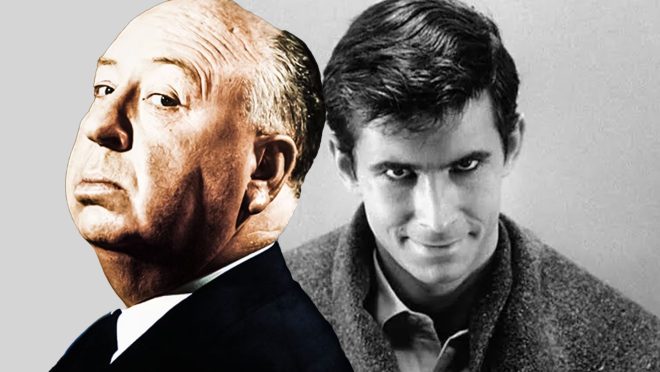
The Master of Suspense would have been 127 today. One of cinema’s most influential filmmakers, Hitchcock made films that were intimate, subversive and thematically complex. His influence is so lasting that “Hitchcockian” is a term that is used to describe films shaped by his techniques and tropes.
On his birthday, I revisited probably his most studied, analysed and parodied film of all time, Psycho (1960). Last semester, in my Visual Communication course, we had to explore its themes and I was not particularly taken by it, as with most assignments and exam material. Re-exploring it this time, I realised I was completely wrong. It is entertaining from beginning to end, constantly atmospheric, chilly and unsettling. It will stick with you in the most gleefully malicious way.
The story concerns a secretary, Marion Crane, who is fed up with the way life has treated her. One Friday, she steals $40,000 from her employer and flees the city in order to start a new life. Tired after a long drive and caught in a storm, she pulls over to spend the night at the Bates Motel. The motel is managed by a young man, Norman Bates, who appears to be very much under the dominion of his mother. And what happens next is what the story is all about.
Performances
Hitchcock makes us care about Marion even though she is not innocent, which makes what happens to her more shocking. Janet Leigh’s acting is nuanced and strong.
Norman Bates, for me, is the show-stealer. He is probably one of the finest villains to ever grace the silver screen. Phenomenally acted by Anthony Perkins in his career-defining role, Norman is a deeply complex and disturbed man and Hitchcock’s ultimate portrayal of a momma’s boy. We see the aftermath of his crimes from his perspective, which makes the screenplay even more intriguing.
I have seen many shows and documentaries where a nervous, shy and lonely guy is capable of committing horrific crimes. Norman Bates, in that sense, is remarkably realistic. We can see how nervous he becomes when things get out of his hands and start going against him. He starts out pretty calmly but steadily levels it up as the story progresses and is absolutely chilling in the film’s final moments.
Hitchcock’s voyeuristic eye
I really loved how Hitchcock creates a juxtaposition that creates both empathy for Marion and fascination with Norman Bates’ charisma. He layers the film with visual cues like mirrors and high-angle shots to evoke voyeurism and duality, drawing viewers deeper into Norman’s disturbed world.
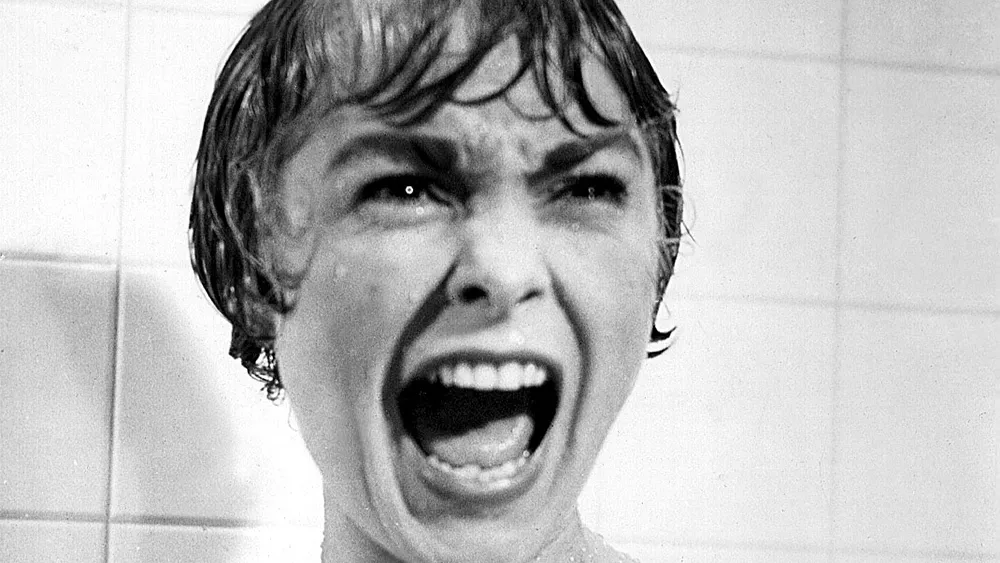
In particular, the conversation between Norman and his mother, heard from outside the bedroom door, is a perfect fit for Hitchcock’s voyeuristic eye and his love for long, quiet takes. We are essentially listening in on a private conversation, making us feel like intruders into Norman’s world. The famous shower scene is effective to this day. I had to study how the scene was shot and edited for my assignments in 2026, and even after all these years, it is still fascinating Even if you have never seen Psycho, you know about the scene. It broke the barriers of what cinema can show for that time.
The fame of the moment almost obscures the fact that the murder is only part of what might be one of the greatest twists in cinema history.
Production
Visually, it was an amazing choice to shoot the film in black and white. The imagery is iconic, from the Bates Motel and mansion to the interiors of the house, the cabins and the swamp. Its stark black-and-white photography is striking in the way it creates a menacing atmosphere.
The editing is also unquestionably good, particularly in the way the film controls what we see and, what we don’t. George Tomasini uses rapid cuts, graphic matches, and precise pacing manipulation. For instance, in the iconic shower scene he uses roughly 50 cuts across 77 camera angles to create visceral terror without explicitly showing a knife piercing flesh.
Bernard Herrmann’s Score
I saw a YouTube thumbnail titled “How Bernard Herrmann Saved Psycho”, which is, funnily enough, true. The score is a masterclass in building tension.
TOne of the reasons why the shower scene works is because of those high-pitched, jarring squeals. Herrmann’s score became one of the defining sounds of horror cinema and has inspired countless horror film music since.
Themes and Psychology
Psycho is a thematically rich film with many possible interpretations. Its portrayal of the Freudian Oedipus complex is disturbing but works.
Norman’s complex is closely tied to his relationship with his mother. Although she exists as part of his split personality, Norman seems unaware of this suppressed side of himself. His inability to accept his mother’s death leads him to kill her and eventually take on her identity. The film explores guilt, obsession, loneliness and a fractured mind in a way that still feels powerful today.
Psycho surely is Alfred Hitchcock’s magnum opus along with the masterpiece that is of course ‘Rear Window’. Other than these he made 50 feature films, Vertigo, The Birds, Rope, Rebecca, Dial M for a Murder and many other. They garnered him 46 Academy Award nominations, including six wins, five best director nominations. It’s not hard to see why people consider Hitchcock, subjectively, one of the greatest ever to do it.