How research paved Nishat’s way from Buet to MIT
Nishat, a Buet graduate who had never planned on becoming a researcher, found herself at MIT as a protein engineer. Her story shows how curiosity and openness to unexpected paths can change the course of a career
How research paved Nishat’s way from Buet to MIT
Nishat, a Buet graduate who had never planned on becoming a researcher, found herself at MIT as a protein engineer. Her story shows how curiosity and openness to unexpected paths can change the course of a career
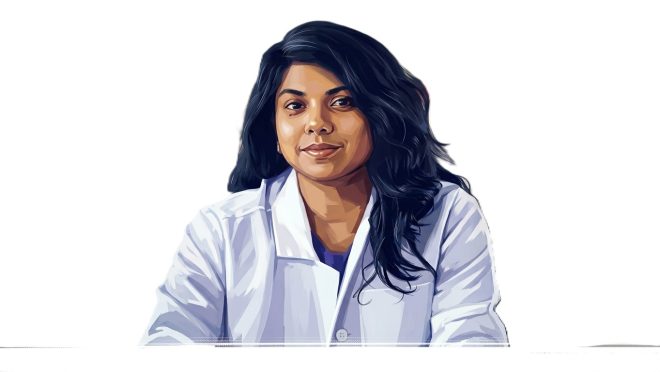
Every so often, a story comes along that reminds young undergraduates what a career in science looks like beyond the glossy acceptance letters: years of quiet, difficult work. Nishat Tabassum’s story is one of them.
A Buet chemical engineering graduate who now works on engineering proteins for therapeutic applications at MIT, she has followed a path thousands of Bangladeshi students dream of, but few see through to the end.
Nishat’s relationship with science began at home in Dhaka. Her father, who earned a diploma in electrical engineering in Sylhet, never had the chance to build a career around his love of mathematics and instead went into business. But that passion never left him.
“No matter how busy he was after work, he would sit with me to explain math concepts, check my homework, and encourage me to think through problems rather than simply memorise solutions,” she recalls. His patient attention turned mathematics into something she genuinely enjoyed, and her interest in physics and chemistry grew. Looking back, she says, “My father’s passion for learning was what made science feel personal to me.”
When entered Buet, Nishat was not pursuing a research career. She had qualified for both CSE and EEE but chose chemical engineering, partly because of her strong A-level chemistry result and mostly because she was curious about the subject. “My only goal was to do well academically because I genuinely enjoyed chemical engineering,” she says. Research, at that point, was nowhere on her map.
Her first real encounter with research came through her undergraduate thesis. Initially, it felt like another curriculum requirement, but her supervisor’s approach changed that. Rather than giving students predefined projects, he encouraged them to identify their own questions and design their own experiments. That freedom hooked her.
“I realised I enjoyed research because of the creativity and problem-solving involved in generating new knowledge,” she noted.
The thesis also taught her the difference between being a strong student and being a capable researcher. Her first experiment failed despite following a published protocol closely.
“I couldn’t simply repeat what the paper had done, I had to go back to first principles to understand why it wasn’t working and how to troubleshoot it.”
The experience taught her that research is not about following instructions but understanding science deeply enough to adapt when reality refuses to match the textbook.
Unlike many of her peers, Nishat did not apply to graduate school during her final year at Buet. She joined the university as a lecturer, completed her master’s degree and prepared her applications alongside teaching responsibilities.
“I relied heavily on time blocking and spreadsheets to track my work responsibilities, research milestones, and graduate application requirements,” she says. For her, organisation and time management matter regardless of when someone applies.
Even with an offer already in hand, waiting for MIT’s decision was agonising. She had heard that MIT often calls admitted students directly, so she carried her phone everywhere, sometimes imagining it was ringing. Eventually, she left it in another room for some peace.
Ironically, that was exactly when the call came.
“I picked up, heard the news, and immediately started dancing around the room.”
Most of her rejections arrived afterwards, which softened their sting. Her advice to applicants is simple, “Rejection is part of the process for almost everyone. It can be disappointing at the moment, but it doesn’t define your potential or your future.”
She is equally direct about what people rarely admit about PhD applications: the hardest part is not writing the perfect statement of purpose but figuring out where to apply. What matters, she says, is fit — understanding a department’s research, identifying faculty whose work aligns with your interests and finding an environment where you can thrive.
“Top programmes are also looking for fit — a well-targeted application that clearly demonstrates fit is much stronger than a generic application sent to every prestigious university.”
Nishat also has a nuanced view of difficult research problems. A hard problem, she says, is one where the underlying science is sound and you are still learning from the data. Genuine dead ends, meanwhile, can stem from an unsupportive research environment or a weak scientific foundation built on literature that was not read critically enough.
“You have to question the assumptions authors make, examine whether the experimental controls are appropriate, and think carefully about whether the conclusions are actually supported by the data.”
Her approach to burnout is equally practical. A researcher needs an identity outside research, she believes, because when your entire sense of self is tied to your work, a bad week in the lab can start to feel like a judgement on your worth.
At MIT, she stays involved with the Bangladeshi Students Association and departmental community-building initiatives, makes time for friends and pursues hobbies unrelated to research.
“I enjoy painting, I’m learning the piano, I work out, I bike, and I love exploring museums. None of these activities have to make me better at research, they simply help me recharge.”
For students struggling to map out their futures, Nishat’s advice is simple, “Don’t be so hard on yourself.” Life rarely moves in a straight line, she says, and setbacks are not always proof of inadequacy. Sometimes they are simply circumstances beyond anyone’s control.
“Talk to people outside your immediate field. Attend seminars that seem unrelated to your research. Explore different career paths. Take courses that simply interest you but are unrelated to your work. Get involved in your community.”
That outlook also shapes how she approaches uncertainty. Instead of dwelling on what cannot be changed, she asks what can be done to improve the reality in front of her.
“If a technology doesn’t exist yet, perhaps it’s an opportunity to help create it. If one path isn’t available, maybe there’s another path I haven’t discovered yet. If one door does not open, it’s a signal that I have to knock on others.”
Nishat also wants students to understand that a PhD can open possibilities far beyond the conventional academic or industry tracks she once imagined.
“One thing I wish I had known earlier is that a PhD opens far more doors than I ever imagined.”
Experiences such as Flagship Pioneering exposed her to a world where scientists build companies around bold scientific ideas.
“Research doesn’t have to end with publishing a paper; it can become a product, a company, and ultimately something that reaches patients.”
For Nishat, that is one of the greatest gifts of pursuing a PhD, especially abroad. It is not simply about the destination but about being exposed to ideas, people and opportunities one may never have imagined.
Her advice to aspiring researchers is to explore widely, “Talk to people outside your immediate field. Attend seminars that seem unrelated to your research. Explore different career paths. Take courses that simply interest you but are unrelated to your work. Get involved in your community.”
She also urges students not to underestimate themselves. “Remember that your perspective is just as valuable in a room. Introduce yourself to people you admire.” Such interactions, she says, can completely change how you think about your future.
Beginning a new life in another country is never easy, she acknowledges, but she hopes students remember that they have already done something brave by stepping into an unfamiliar environment and choosing to grow.
“Don’t shrink yourself because you feel intimidated. Don’t ever think a question is stupid. Be curious, explore widely, and make the most of every opportunity that comes your way.”
Nishat’s journey is not just about reaching MIT. It is about remaining curious, embracing uncertainty and having the courage to grow beyond the limits she once imagined for herself.