How sustainable is sustainability?
Can sustainability be understood simply as the ability of something to survive or continue over a long period? Or should it also encompass the ability to adapt to changing circumstances, use resources responsibly and create value for future generations?
How sustainable is sustainability?
Can sustainability be understood simply as the ability of something to survive or continue over a long period? Or should it also encompass the ability to adapt to changing circumstances, use resources responsibly and create value for future generations?
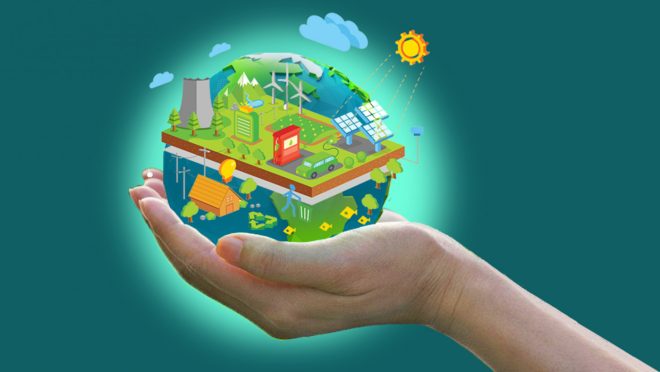
What kind of sustainability are we actually talking about?
The question may sound simple, but it opens up a much deeper debate about the relationship between the economy, the environment, development, human wellbeing and future generations. Ultimately, what exactly are we trying to sustain?
From sustainable development to sustainability
In 1987, the World Commission on Environment and Development (WCED), commonly known as the Brundtland Commission, presented a definition of sustainable development in its landmark report Our Common Future that has since become one of the most widely cited globally: development that meets the needs of the present without compromising the ability of future generations to meet their own needs.
The report placed particular emphasis on environmental limits and fairness between present and future generations.
The definition is undoubtedly historic and profoundly important. But the idea of sustainability did not begin in 1987. Its roots go much deeper, extending into longstanding debates about the relationship between nature, resources, economies and human civilisation.
At the heart of that debate is a fundamental question: Can the loss or degradation of nature ever truly be compensated for by human-made capital?
It is from this question that two important perspectives on sustainability have emerged: weak sustainability and strong sustainability.
Weak sustainability versus strong sustainability
Weak sustainability suggests that different forms of capital — such as natural capital and produced or human-made capital — can, to some extent, substitute for one another.
In other words, even if some natural resources or ecosystem services are lost, it may still be possible to maintain the overall stock of capital if equivalent or greater economic value is created through other forms of human-made capital.
Strong sustainability, on the other hand, cautions that not all forms of natural capital can be replaced by human-made capital. In particular, there are clear limits to substitution when it comes to critical ecological systems and essential ecosystem functions.
This may sound like a theoretical debate in economics, but its practical implications are profound.
Consider a forest cleared to make way for a residential area, industrial zone, agricultural land or recreational facility.
From an economic perspective, the value generated by the new development may exceed the direct economic value of the forest’s timber, land or other extractive uses. But have we really replaced the forest?
The economic value of timber can be calculated. The value of the land can be estimated. Even the economic value of carbon sequestration can be assessed.
But what about the forest’s soil structure, its capacity to retain and purify water, its role in regulating the local climate, its biodiversity, pollination services, habitat for countless species and its overall functioning as a complex ecosystem?
Can all these ecological functions truly be replaced by a human-made asset of equivalent monetary value?
The value generated by the new development may exceed the direct economic value of the forest’s timber, land or other extractive uses. But have we really replaced the forest? The economic value of timber can be calculated. But what about the forest’s soil structure, its capacity to retain and purify water, its role in regulating the local climate, its biodiversity, pollination services, habitat for countless species and its overall functioning as a complex ecosystem?
This is where the significance — and challenge — of strong sustainability becomes particularly important.
It reminds us that nature is not merely a resource. Some of nature’s ecological functions form the very foundation of our economies and our existence.
Research and economic analysis increasingly caution against assuming that natural capital can always be replaced by other forms of capital. In many cases, the scope for substitution is limited, particularly where ecological resources or services are difficult, if not impossible, to fully capture through conventional market valuation.
Is survival enough?
How long a system survives is certainly important. But perhaps an even more important question is: On what foundation does it survive, and what price are we paying for that continued survival?
An institution may survive for 100 years. A technology may remain successful for several decades. An economy may sustain economic growth over a long period.
But if, in the process, critical natural capital is degraded or depleted in ways that cannot be restored within a human timescale, how sustainable can we really consider that form of survival?
Or is it appropriate to call it sustainable at all?
This question becomes even more important when we move beyond viewing sustainability simply as the durability of an institution, project or business and instead connect it to the long-term capacity and resilience of the Earth system itself.
The economy is not separate from nature
In conventional economic thinking, nature is often treated as an input whose loss can, at least in principle, be compensated for through technology, infrastructure or other forms of economic investment.
But the reality may be quite the opposite.
The economy is not an independent system outside nature; it is embedded within nature.
Human production and consumption, food, water, energy, health and infrastructure — almost everything we do depends, in one way or another, on ecological systems.
The Economics of Biodiversity: The Dasgupta Review brings this relationship to the centre of economic thinking. One of its key messages is that the economy depends fundamentally on nature and that long-term prosperity cannot be properly understood if biodiversity and natural capital are excluded from economic decision-making.
In other words, nature is not simply another sector of the economy; it is part of the foundation on which the economy itself depends.
The sooner we understand this, the sooner our thinking about sustainability will need to evolve.
Infinite growth on a finite planet?
The resources of our planet are finite. Land is finite. Fresh water is limited. Natural resources have limits. Ecosystems have limits.
Biodiversity is under increasing pressure, and the loss of some species and ecosystems can be irreversible. Even the capabilities of technology cannot ultimately transcend the fundamental limits imposed by nature.
In 2009, Johan Rockström and colleagues introduced the concept of planetary boundaries in an influential paper published in Nature. The framework described a “safe operating space” for humanity within which critical Earth system processes could remain within limits that reduce the risk of large-scale environmental instability.
The concept confronts us with an uncomfortable question: Are we managing economic growth within the limits of nature, or are we trying to make nature’s limits accommodate our pursuit of economic growth?
This is not merely a question for environmentalists. It is a question for economists, business leaders, engineers and policymakers — and ultimately, for all of us.
The question we need to carry forward
Perhaps this is where the discussion needs to move beyond the simple idea of sustainability as survival, continuity or adaptation.
A system may survive. It may adapt. It may even become more economically successful.
But if that success depends on steadily eroding the ecological foundations on which it ultimately relies, we must question whether such success can genuinely be called sustainable.
This brings us to a more difficult question: What if sustainability itself becomes a language for protecting the status quo rather than a tool for transforming it?
That is where my reflection on Theophile’s comment takes me next.
Perhaps the real challenge is no longer simply to ask how we can make existing systems more sustainable. Perhaps we need to ask whether some of those systems need to change fundamentally — and what, exactly, we want to sustain.
That is the question I will explore in the second part.
Bidhan Chandra Pal is the Founder and Managing Director of Probha Aurora Ltd. He can be reached at bidhanchandrapal.com.
Disclaimer: The views and opinions expressed in this article are those of the author and do not necessarily reflect the opinions and views of The Business Standard.