La La Land: My favourite horror movie, and the quiet ache of almost
La La Land: My favourite horror movie, and the quiet ache of almost
I need to say this upfront, with full awareness of my own bias: I don’t think any film captures the actual texture of being alive quite like La La Land does.
I call it my favourite horror movie, only half joking, because nothing has ever unsettled me the way this one did, and yet nothing has ever felt more like coming home either. It returns to theatres on 16 August (only in the US, obviously), marking ten years since it first broke something open in audiences everywhere, and if you haven’t seen it, consider this your gentle, spoiler-filled warning to watch it first.
To be very honest, the first thirty-five minutes annoyed me. I remember thinking, ‘This is what won Oscars?’ Somewhere past that mark, something in my chest quietly cracked open, and I understood I wasn’t watching a musical anymore. I was watching a mirror held up to every quiet fear I carry about being left behind by the people who once mattered to me.
Because here is the thing about being young in your mid-20s that nobody prepares you for: the desperate, almost embarrassing need to prove your dreams are allowed to matter. Every opportunity arrives dressed up like destiny, and when it doesn’t end the way you prayed it would, the silence afterwards doesn’t just disappoint you; it makes you question whether you were ever worthy of wanting anything at all. And cruelly, the world never pauses to let you grieve. Life keeps moving even while you’re bleeding, and somewhere inside that motion is the question I think about more than I’d like to admit: will anyone actually stay long enough to see how the story ends for me?
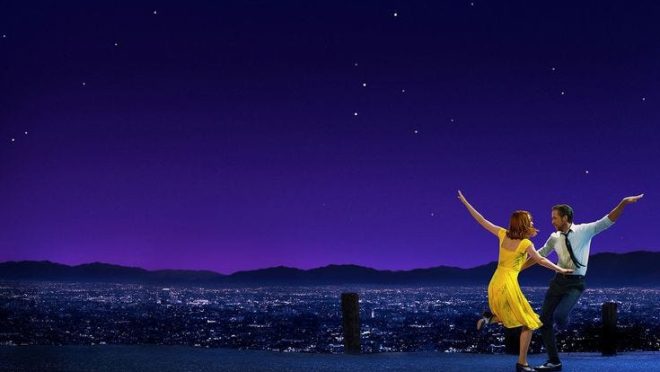
Mia chasing casting calls and Sebastian chasing the ghost of pure jazz begin as two whole, separate universes, needing nothing from each other. That’s such an underrated truth about human connection. You don’t need the people you haven’t met yet. You survive perfectly well without them, right up until some accidental collision rewires your definition of necessary. And if you haven’t paid attention to the film’s colour grading, please do; the palette itself breathes, warm golds bleeding into cool blues exactly when hope starts negotiating with heartbreak, the way hope always seems to in my own life too.
I loved watching two people so certain of their own ambitions, so unwilling to quit even while standing at the exact edge of quitting. Nobody rescued anybody at the start. But then they found each other, trading fragments of themselves, the small architecture of what shaped them, until something in each of them started reflecting the other’s light back at them.
Isn’t that the whole secret of being truly known, not just romantically but in any bond worth keeping? Someone meets you mid-collapse, unconvinced of your own brightness, and simply refuses to let that be the final verdict on you. I think that’s what I yearn for more than anything, not a single kind of love, but that specific refusal. Someone who looks at my worst, most uncertain season and decides to stay anyway.
Then comes the sweetness, the season where everything feels frictionless, before adulthood arrives uninvited and merciless, whispering that dreams must be paid for eventually, and often with each other. Sebastian abandons the idea of a pure, uncompromised career for something safer, and the bitterness of that quiet sacrifice eventually surfaces in one of the film’s sharpest lines, when he snaps at Mia: “Maybe you just liked me when I was on my ass because it made you feel better about yourself.”
It’s such a devastating accusation, because it mistakes someone’s belief in you for something smaller and crueler than it actually is. Mia never asked for his sacrifice. Her own defence of it is quieter, more practical, almost wounded in its restraint: “Of course, I wanted you to have a steady job so that you could take care of yourself and your life and you could start your club.”
Later, at her lowest point, after a show nobody attended, Mia’s despair spills out in fragments: “It’s all over. All of this. I’m done embarrassing myself. I’m done. I’m done. Nobody showed up.” It’s not a line delivered by an actor performing collapse; it’s someone genuinely questioning whether years of hope had simply been an expensive delusion. And then, quieter, more devastating still, she admits something I think about far too often: “Maybe I’m one of those people that has always wanted to do it, but it’s like a pipe dream for me, you know?… Maybe I’m one of those people, and I’m not supposed to.” I think about how many of us are quietly terrified we already know our own answer to that question, and how badly we want someone, anyone, to prove us wrong before we stop believing it’s possible.
Sebastian helps her back onto her feet after that, not as a saviour but as someone who still, despite everything, refused to stop showing up the only way he knew how. She gets her break. But somewhere in that stretch, they both quietly, painfully agree that love alone might not survive the particular cruelty of two competing dreams, and so they let each other go, gently, the way you release something you’re not ready to lose but also can’t keep holding without breaking it further.
Five years later, a familiar piano melody drifts through a bar, and there they are, everything unspoken filling the room without a single line of dialogue needed to explain it. People love to blame Mia in this scene, as though choosing to build a life instead of waiting indefinitely was some kind of betrayal. But I’ve come to understand it differently: she didn’t abandon anything; she simply stopped anchoring her future to uncertainty. Sebastian, meanwhile, got everything he once dreamed of, the club, the name she once suggested, and yet in that final wordless sequence, we watch the other life bloom silently across his face, the version where he walked over instead of staying frozen, where they married, where she was the one beside him and not a stranger in the audience, where the family he imagined actually had her face in it. He got the dream he chased. He just has to keep living beside the one he didn’t, the one that only ever existed in the space between two chords, close enough to ache, too far to ever reach.
That ending is the exact shape of what I fear most, not the heartbreak itself, but the particular tragedy of two people who cared for each other deeply and still ended up in separate lives, each wondering, alone, whether the other still thinks of them. I don’t want that ending. I want, somewhere, someone stubborn enough to wait through my uncertain seasons, to not give up on me simply because timing turned complicated, because I got quiet, because I disappeared into my own struggle for a while. I want to be someone worth waiting for, and I want to believe such patience still exists in the world, unafraid of inconvenient timing.
And maybe that’s really why this film terrifies me more than any horror movie ever has. It doesn’t show monsters. It shows how easily two people who were genuinely good for each other can drift apart without a single villain in the story, just time, just circumstance, just the slow accumulation of choices that felt small in the moment. That possibility, more than anything supernatural, is what keeps me up at night.
The soundtrack seems to grieve this in advance too, and I think it might be one of the most beautiful pieces of musical storytelling ever composed. “City of Stars” carries that same fragile, searching loneliness in its melody long before the lyrics even explain why, like the music already knew the ending before the characters did. “Mia and Sebastian’s Theme” builds so gently, so hopefully, that hearing it now feels almost unbearable, because you know exactly where those same notes eventually lead. Even “Audition (The Fools Who Dream)” carries this trembling, aching hope, the kind that dares to keep wanting something even after every rejection has told you to stop.
There’s one more exchange that lingers with me longer than almost anything else in the film, the moment Sebastian, half-joking, half-serious, tells Mia early on: “Here’s to the ones who dream, foolish as they may seem.” I think that line is the entire film compressed into a single breath, and maybe the entire ache of being young and hopeful compressed into it too. Because dreaming foolishly isn’t really about ambition alone; it’s about daring to believe someone will still be standing there when the dream either arrives or doesn’t.
Listening to that score now, I don’t just hear a film’s music; I hear my own quiet, ongoing prayer: that whatever waiting I still owe the universe, someone will be patient enough to wait alongside me, and that I won’t have to learn, the way Mia and Sebastian did, what it means to care for someone deeply and still lose them to nothing more dramatic than time.