How Tareque Masud’s films captured the questions Bangladesh still struggles with
Watch enough of Tareque Masud’s work in sequence and a strange thing happens: the films stop behaving like a filmography and start behaving like a syllabus. Each one takes up a different fault line running through modern Bangladesh, and together they read less like a director’s body of work than five chapters of the same unfinished social history.
How Tareque Masud’s films captured the questions Bangladesh still struggles with
Watch enough of Tareque Masud’s work in sequence and a strange thing happens: the films stop behaving like a filmography and start behaving like a syllabus. Each one takes up a different fault line running through modern Bangladesh, and together they read less like a director’s body of work than five chapters of the same unfinished social history.
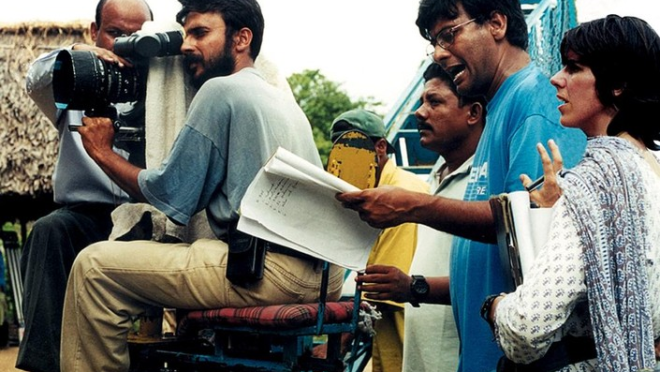
That history was cut short on 13 August 2011, when Masud passed away in a road accident in Manikganj while returning from a location scouting trip for his unfinished film Kagojer Phool. He died alongside filmmaker and cinematographer Mishuk Munier, leaving behind not just an incomplete film, but a body of work that continues to ask questions Bangladesh has yet to fully answer.
It is for this reason that, even eleven years following his passing, engaging with Masud’s cinema remains less an act of archival nostalgia and more an encounter with the shifting contours of a nation still in the process of defining itself.
Adam Surat – Folk art and the artist as witness: Tareque Masud spent seven years simply staying close to the painter S.M. Sultan before he made his first film, and the patience shows. Adam Surat (1989) isn’t really a biography; it’s an argument that Bangladesh’s serious intellectual and artistic traditions didn’t come only from Dhaka’s academies but also from a self-taught rural painter who absorbed folk cosmology into a singular visual language. What he found in Sultan, and later carried into every subsequent project, was a conviction that the texture of ordinary rural life – its labour, its beliefs, its inherited forms – was not background. It was the subject. He later said whatever he understood about rediscovering agrarian Bengal, he first saw through Sultan’s eyes. As a chapter, this is the one about where cultural authority actually lives in Bangladesh – and his answer, unfashionably, is the village.
Muktir Gaan – Recovered footage, restored memory: Built from 1971 footage shot by the American filmmaker Lear Levin, it follows a troupe of Bangladeshi musicians travelling from refugee camp to refugee camp along the India-Bangladesh border, singing songs meant to keep the resistance’s spirit alive. The war, in this telling, isn’t experienced through battle but through movement – a convoy carrying culture as a weapon, stopping wherever people needed to hear that the fight was still theirs. He then completed the argument by taking the finished film back into villages for free screenings, recording audience members’ own war memories – material that became Muktir Kotha (1999), an oral history assembled from the people who had lived it. This is about how a nation actually metabolizes a founding trauma: not through monuments, but through the ongoing, unofficial act of people telling each other what happened to them.
Matir Moyna – Faith, childhood, and a fractured religious identity: Tareque Masud’s most autobiographical film sends its child protagonist, Anu, to a strict madrasa by the river, away from his village’s older, more syncretic religious culture. The film is careful not to flatten this into orthodoxy versus modernity; its boatman character, at one point, notes that Anu’s rigidly religious father once lived as a self-declared Westernized secularist before his conversion – a detail he drew from his own father’s life. This is the one about how Bangladesh’s relationship with Islam has never been a single, stable thing, but a contested space between pluralist tradition and newer, harder-edged orthodoxy, fought out inside individual families as much as in politics.
Ontarjatra – Migration and the conditional nature of belonging: The title translates literally as “Inner Journey” – follows Shireen and her British-raised teenage son Shel as they return to Sylhet after fifteen years in London, for the funeral of Sohel’s estranged father. For Shireen, the return is reckoning with an old life; for Sohel, who has no memory of Bangladesh at all, it is closer to an arrival at somewhere he’s never actually been. The film moves between a recreated London home, Sylhet, and Dhaka, deliberately setting a diaspora’s psychological displacement against the physical fact of travel – as if the only way to dramatize what it means to lose a homeland is to literally send someone back to walk through it. As a chapter, this is about the diaspora as a permanent, structural feature of Bangladeshi identity rather than a side note – the way “home” becomes a place people carry conditionally, revisable, sometimes only accessible through someone else’s death.
Runway – Urban marginalization and the mechanics of radicalisation: His final completed film follows Ruhul, a madrasa dropout living with his family in a shack beside Dhaka’s international airport, watching planes take off for a little life he can’t access. His father is gone, working in Kuwait; his sister supports the household from a garment factory; and Ruhul, unemployed and adrift, is drawn in by a confident, well-groomed recruiter he meets at a cyber café. Inspired by the extremist violence that shook Bangladesh in 2005-06, the film refuses to treat radicalization as an imported ideology landing on a blank slate. It builds it, deliberately, out of unemployment, remittance economies, garment-sector labour, and a young man’s specific, local humiliation at being unable to provide. A setting he chose deliberately, reading the runway itself as a kind of metaphor for a life spent watching movement it cannot join. The mechanical, almost documentary precision of planes landing and taking off, and by contrast, unhurried, painterly attention to the family’s domestic and natural surroundings. One widely cited image, a child aiming a slingshot at a passing aircraft, has read as the film’s visual thesis in miniature: smallness measured against the machinery of a world moving too fast overhead.
Read together, the five films trace an arc that isn’t chronological so much as structural: from where cultural memory is stored, to how a nation remembers its founding war, to how faith gets contested inside a single household, to what happens when belonging becomes something you have to travel back for, to what happens when a young man is offered no path forward at all. None of this required Tareque Masud to make an explicitly political film in the pamphleteering sense. He simply kept training his camera on the specific, textured lives of people standing at each of these fault lines – and in doing so, left behind something closer to a social history of Bangladesh than most historians manage, five instalments long, unfinished only because his own road ended too soon.