The death of good food
“Je deshe nari beshi nirjatito, oi desher ranna toto mojar”
The death of good food
“Je deshe nari beshi nirjatito, oi desher ranna toto mojar”
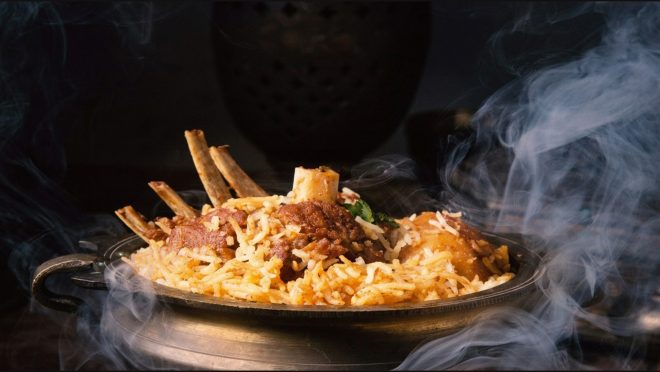
This historic quote was uttered by my mother while watching food vlogs from places like Kazakhstan, Uzbekistan. The biriyani there is called pilaf, the only difference is there were very little spices or “cooking complexities” compared to our kacchi or even tehari.
One reason for this simple cooking technique may be the very nature of Central Asian life. Nomadic in nature, societies for centuries moved around from one place to another, which resulted in people having a little less prejudice against women, as mandatory manual labour made their lives hard and their cooking quite simple.
Because building a delicious cuisine, in my view and in my mother’s, requires persistent time and effort, commonly referred to as “love” or according to my mother’s above quote, proper exploitation of a certain gender.
Now here’s the reason for this article.
Growing up, I had a special relationship with food. My best memories include my father taking me to new breakfast places every other week, while my best days were spent tasting Teharis from all over Dhaka whenever we, as a family, had some excuse to do so.
Every tehari from every corner of the city tasted unique, and so did every wedding invitation. I grew up in an era where even weddings in big convention halls required outside catering and demanded famous local chefs or baburchis.
We had one famous baburchi, named Sentu baburchi, who was a staple for every function from birthdays, akikas, circumcision parties, weddings to funerals. Each stage of life expressed his flavour. And I remember longing for specific wedding invitations just because I knew he was cooking there. In contrast, now I skip important social functions just because I know the food at that particular convention hall will be subpar.
So, why has food become so average now? Why can’t I distinguish the taste between two Tehari places located in two opposite corners of Dhaka?
I think the answer lies distinctly in my mother’s quote. The rise of ready-made garam masala is to be blamed for this downfall.
Let me explain the reason.
In my school picnics where Sentu baburchi was a central figure, I would see him stocking up on cinnamon, cardamom, nutmeg, mace, cumin, coriander seeds, raisins, plums and prunes in the back of the picnic bus. Right after arrival, he would start his work, blending and smashing the spices with his pestle and mortar; in no instance would he measure the spices using a scale. Just as Uncle Roger says, he used his “feelings” and his feelings were always remarkably consistent and unique. That was his identity and similar were the processes in every restaurant, no matter how small or fancy.
The advent of commercial garam masala has completely destroyed this uniqueness. In the gaze of convenience and pre-roasted characteristic, these companies provided us, the Bengalis, with comfort. A trait that inevitably made us lazy and our food, basic.
“Boshte dile shuite chai” is an apt term explaining this shift in cooking style.
I understand why households adopted this trend of mediocre acceptance. Cooking really is time-consuming, especially when it involves blending and roasting of uniquely orchestrated spices.
There’s also a matter of cost associated with making your own garam masala. I haven’t done the math, but ensuring a great blend of different spices surely will require a household spending a significant amount, rather than just one 500-gram ready-made packet.
What I don’t get is why restaurants have embraced the ready-made option. If I’m supposed to spend upwards of Tk200, I deserve the best you have, and when you’re producing in bulk, that too on a regular basis, asking for freshly grounded specified blends of spices shouldn’t be a luxury.
Even in “famous” convention halls, wedding food has become less of a celebration and more of an obligatory process of disposing meat and rice sacks. And that is another reason why I am furious.
I am not a professional chef, nor do I claim to understand the difficulties of cooking in bulk for hundreds of people.
But for God’s sake, if I put on tight underwear and a fancy shirt with a blazer in the summer heat just to attend a distant cousin’s or co-worker’s meaningless (to me) celebration, I at least should be compensated with good food, otherwise what’s the point of it at all? I’m not the one getting married, I’m not the one celebrating a milestone, but I am supposed to be the one who should be satisfied through good food.
I don’t know what the solution is. The companies will not stop producing ready-made garam masala, obviously, it sells really well. Maybe the solution is to go back to the dark ages, when cooking required a full day’s worth of dedication. If I had a time machine, I would certainly go back, mostly because as a male I wouldn’t be the one responsible for staying in the kitchen for 12 hours.
So, I accept the reality that it’s not worth accepting any dinner invitations anytime soon as each household is too immersed in convenience. But I do expect, and I believe I am in the right to expect good, unique blends of roasted and freshly smashed sets of cinnamon, cardamom, nutmeg, mace, cumin, coriander seeds, raisins, prunes, etc.
Otherwise, the already cruel world shall remain too cruel for people who appreciate the finer things in life.
And what would the world look like without heavily pretentious nerds like us? Well, you’re living in one currently, and I think you would agree that life sucks when biriyani becomes less tasty.