The death of humanity is happening on our screens
Are we still humane enough to be called human?
The death of humanity is happening on our screens
Are we still humane enough to be called human?
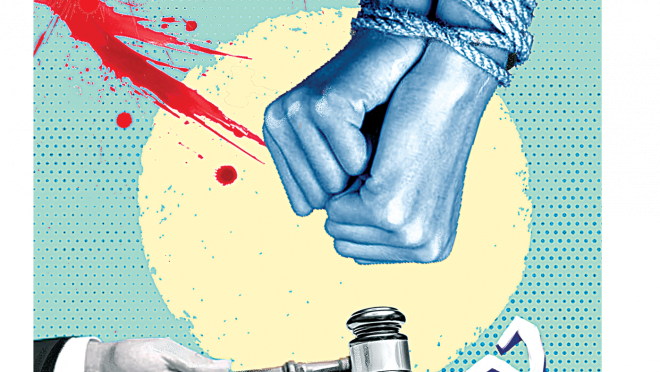
If you claim to still have a pulse, this should tear straight through you.
19 August fills up the internet with official statements for World Humanitarian Day, telling us to honour people stepping into battlefields to keep others alive. But outside those aestheticised press briefings, what have we actually achieved as humans? I sit here on my couch, watching mass slaughter happen live on a screen, feeling absolutely nothing.
Every single day, I, along with nearly 7 billion people, press my thumb over glowing glass, pretending everything is normal while scrolling past the dying. Right now, sandwiched between a luxury ad and an algorithm-driven clip, there’s a Palestinian person begging just to survive.
They’re running their own rescue operations in real time without waiting around for a saviour. They ask for the absolute bare minimum to sustain a breath: a loaf of bread, clean water, a piece of plastic tarp so their kids don’t get burned alive in a tent while sleeping. I see a father holding out empty hands for a handful of flour. I see a doctor operating on a filthy floor without anaesthesia. I see a child with terror in their eyes, recording a final goodbye from under pulverised concrete.
And I swipe past. We all do.
Just a quick flick of the thumb, and the algorithm buries their agony under mindless entertainment. I look right into the eyes of a shivering, bloodied kid standing over their murdered parents, and I catch myself deciding my peace of mind matters more than their existence. Humanity is essentially at its end, if not dead. Smothered by a gross, comfortable apathy that lets us watch an entire population get wiped out while we decide their survival is just too inconvenient for our day.
Calling what we see in Gaza a “conflict” or a “war” is pure cowardice. It’s a whitewashed language for comfortable audiences. I refuse to use it. Call it what it is: a live-streamed genocide. It is the calculated extermination of families and the aid workers trying to keep them alive. Hospitals turned to rubble. Marked ambulances shelled. Food blocked to starve people on purpose. I watch medics and doctors get hunted down while global powers offer rehearsed statements. An entire lineage gets wiped off public records hour by hour, and the silence from people in power matches the deliberate blindness of everyone watching from a smartphone.
Look at the Congo.
Another brutal genocide is tearing millions of lives apart right now. Displaced human beings are paying for global greed that demands the raw minerals under their dirt. The very phone I’m holding to read about dead children runs on a battery sourced through the blood of kids in the Congo. Aid workers navigate constant violence with zero protection, while global markets profit off the exact resources causing the bloodshed.
Look at the Rohingya, stripped of citizenship, hunted out of their villages to rot in overcrowded camps where aid gets cut off. Look at Sudan. Families are slaughtered in their living rooms while local volunteers, neighbourhood response groups stepping in because international organisations fled the scene, risk everything to feed people under a media blackout. Look across West Africa to places like Ghana, where economic collapse leaves young people with no choice but to risk drowning in the sea just to find a shred of dignity.
It is the exact same story everywhere: the vulnerable get crushed under power. The international systems built to protect life are hollow shells. They exist to shield the powerful and keep things as they are. But we can’t save all our rage for governments. The rage belongs to us, the spectators who have mastered the art of looking right at horror and feeling nothing.
We built a world that ranks human lives, deciding who gets our outrage and who dies in the dirt. We hide behind being “overwhelmed”, like our discomfort reading about a genocide compares to living through one. There is a massive gap between being tired of hearing about tragedy and actively ignoring a child screaming beside their dead family because looking at them ruins your mood.
When a child’s ruined life does not bring society to a dead stop, that society has lost any right to talk about morality. World Humanitarian Day means nothing when the world permits human destruction and targets the very people trying to save lives. Being human takes an active, unyielding refusal to accept the destruction of another life.
If we can scroll past Palestine, shut our eyes to the mass graves in the Congo, and turn our backs on the Rohingya, we need to face what we have become.
We are past the point of being called a civilisation. We are simply a collection of passive cowards staring into our phones, watching the murder of our fellow human beings, and moving on with our day.