Before online gaming, there was Mustapha
On a random school-free morning, a boy with clothes partially tucked and dressed somehow just woke up, got fresh and, without taking breakfast, rushed to the next door. A friend of his opened the door out of joy.
Before online gaming, there was Mustapha
On a random school-free morning, a boy with clothes partially tucked and dressed somehow just woke up, got fresh and, without taking breakfast, rushed to the next door. A friend of his opened the door out of joy.
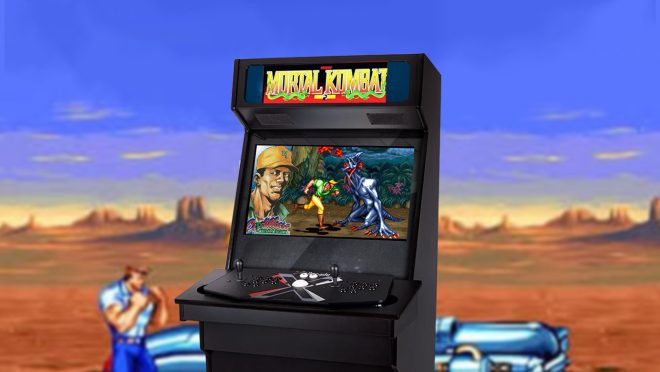
For many of us who grew up during the late 1990s and 2000s, Cadillacs and Dinosaurs was never really called Cadillacs and Dinosaurs. It was simply Mustapha for all.
Even today, if you walk into a room full of people in their 20s or 30s and ask, ‘Have you ever played Cadillacs and Dinosaurs?’ chances are someone’s face will immediately light up. They might not remember the game’s official title. They might not remember the storyline. But they will remember Mustapha, the blond-haired fighter in the green shirt and yellow trousers who became an unofficial superhero of our childhood.
And perhaps that is the beauty of rarely remembering facts. We remember feelings.
I often believe that every generation has its own language of happiness. For today’s children, happiness might be measured through online multiplayer games, high-end graphics, battle passes, Discord calls, and virtual worlds that span entire continents.
For us, happiness could fit inside a small gaming shop beside a stationery store with a cassette or real-life button gameplay. It smelled of dust. The room was warm. The television screen flickered. The controllers had wires. Yet somehow, that tiny room felt larger than the world itself.
The moment the game started, reality disappeared. Suddenly, dinosaurs were running through jungles, criminals were attacking villages, and Mustapha stood there, waiting for us to press ‘Start’. We never questioned why humans were fighting dinosaurs. We simply accepted it. Because childhood never demanded explanations. It only demanded imagination.
There was an unwritten rule among friends. Whoever reached the gaming shop first got to choose Mustapha. The others had to settle for Jack, Hannah, or Mess O’Bradovich.
Arguments broke out. Friendships were tested. Someone always insisted, ‘I will play Mustapha this time.’ And someone else inevitably replied, ‘You played him yesterday!’ At that very moment, a small word suddenly echoed: ‘Katti’, with finger to finger crossed.
Looking back, these were perhaps the most innocent conflicts we ever had. No egos. No social media. No competition over lifestyles. Only a competition over a pixelated character wearing green. The fascinating thing about Cadillacs and Dinosaurs was that it never relied on realism. Its world was absurd in the most beautiful way possible.
Even those without controllers somehow felt involved. Today’s games connect millions across continents. But very few recreate that feeling of sharing the same screen, the same laughter, the same disappointment when everyone lost together.
We weren’t meekly playing. We were growing up together. Perhaps what I miss most is not the game itself. It is the people who surrounded it. The friend who always knew secret shortcuts. The cousin who somehow defeated bosses without losing health. The older brother who never let anyone waste powerful weapons. The neighbourhood gaming shop owner who warned, ‘Last five minutes.’ Those five minutes somehow became another 20.
Time felt negotiable back then. Life itself felt slower.
As grown-ups, we often speak about technological progress. Graphics have become breathtaking. Artificial intelligence controls enemies intelligently. Games have become cinematic masterpieces. Yet I sometimes wonder whether something quietly disappeared along the way.
Convenience increased. Togetherness decreased. Back then, playing required presence. You had to leave home. Meet friends. Walk through familiar streets. Share one television and wait for your turn. Celebrate someone else’s success. Lose together. Win together.
Today’s multiplayer games connect devices. Yesterday’s games connected hearts. Perhaps that is why memories of Mustapha refuse to grow old.
Interestingly, many of us never knew the official title for years. We genuinely believed the game’s name was Mustapha. It wasn’t ignorance. It was affection. The character became so deeply associated with our experience that he replaced the identity of the entire game.
That says something remarkable about childhood. Children do not memorise titles. They memorise heroes. Just as some people remember Mario instead of Super Mario Bros., we remembered Mustapha instead of Cadillacs and Dinosaurs. And honestly, I don’t think either name is more correct.
One belongs to history. The other belongs to memory. There is something deeply comforting about revisiting old games.
Not because they are instinctively superior. Certainly not because they have better graphics.
But because they transport us to a version of ourselves that no longer exists. The child who rushed home after school. The child whose biggest concern was whether electricity would stay long enough to finish the final boss. The child who believed every weekend would last forever. The child who measured wealth not through money but through free afternoons.
Somewhere between university assignments, career ambitions, responsibilities, and endless notifications, that child quietly grew up. Yet every time Mustapha throws that familiar punch or performs his spinning kick, time briefly folds.
For a few precious moments, adulthood waits outside the door and knocks, saying, ‘Time is over.’
Sometimes I wonder where all those friends are today. The one who always chose Mustapha. The one who laughed the loudest after defeating a boss. The one who promised to meet again tomorrow. Life scattered us in different directions. Some moved abroad. Some became engineers. Some became teachers. Some started businesses. Some disappeared from contact entirely.
Yet if we ever meet again and hear the familiar soundtrack of Cadillacs and Dinosaurs, I have little doubt that within seconds we would become children again. Because nostalgia has an extraordinary power.
It does not erase the years. It simply reminds us that they once existed. Perhaps the greatest gift of Mustapha was never the excitement of defeating dinosaurs. It was reminding us that joy once came without subscriptions, internet speeds, expensive devices, or complicated expectations.
Every now and then, one screenshot, one familiar soundtrack, or one mention of the name ‘Mustapha’ is enough to take us back to a simpler world. A world where happiness cost a few coins, friendships were measured in shared victories, and the greatest achievement of the day was hearing a friend shout, ‘We have finally beaten the game!’
Perhaps that is why we still remember Mustapha. Not because it was the greatest game ever made. But because it quietly became the backdrop to some of the greatest days of our lives.