World's first live AI-assisted brain surgery successfully removes man's tumour in UK
World's first live AI-assisted brain surgery successfully removes man's tumour in UK
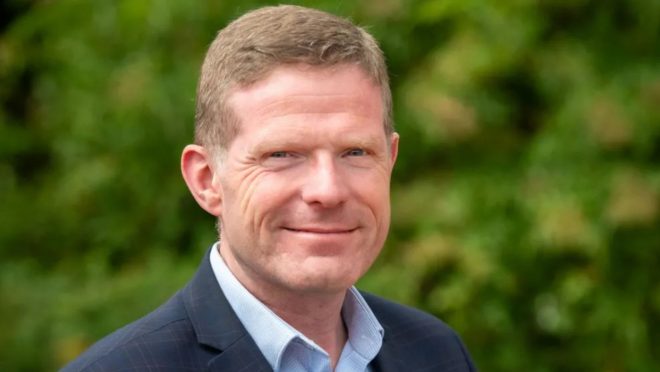
Surgeons at University College London Hospital have successfully removed a brain tumour from a patient using live artificial intelligence assistance, marking a global first in medical technology.
Rhys Hibbert, a 48-year-old customer services manager and father of two from Bedfordshire, could have lost his sight without the groundbreaking procedure, reports the BBC.
The bespoke AI system analysed a live video feed during the operation, advising surgeons on how to avoid crucial, hidden vessels and nerves to safely remove as much of the tumour as possible.
Until 18 months ago, Hibbert was fit and healthy.
However, during a routine walk, he lost consciousness and began fitting in the road. Subsequent brain scans revealed an 11mm non-cancerous tumour growing on his pituitary gland, a marble-sized organ at the base of the skull responsible for secreting vital hormones that regulate growth, metabolism, blood pressure, and temperature.
Because the pituitary gland sits in proximity to the carotid arteries — which supply blood to the brain — and the optic nerves, the growing tumour began pressing on Hibbert’s optic nerves, narrowing his peripheral vision.
Although he did not require immediate surgery, Hibbert soon experienced severe fatigue, dizziness, and frequent tripping.
When offered the opportunity to become the first patient to undergo the operation with the AI system, Hibbert agreed, stating that patient participation in research is essential for medical progress.
The procedure involved inserting an endoscope through the nose to reach the base of the skull, where the tumour was concealed behind layers of bone and tough membrane.
Identifying the safest point of extraction posed a significant challenge due to individual anatomical variations.
Standard complication rates for the procedure include a 25% to 50% chance of incomplete tumour removal and a 0.5% to 2% risk of injuring a major blood vessel.
Operating on a secondary screen, the AI tool tracked surgical instruments and mapped out the probable locations of vital blood vessels and nerves, highlighting the safest zones for tissue removal.
‘Surgical ChatGPT’
Utilising technology similar to smartphone facial recognition, the system was trained on hundreds of surgical videos where experts manually outlined anatomical structures.

Prof Hani Marcus and Mr Danyal Khan perform the world-first AI-assisted brain surgery at the National Hospital for Neurology and Neurosurgery. Photo: Collected
While an average UK surgeon performs 10 to 20 such operations annually, relying on pre-operative scans, the AI system has been trained on more operations than most surgeons witness in a lifetime.
Professor Hani Marcus, who helped perform the surgery, emphasised that the real-time system acts as an expert second pair of eyes to assist surgeons, who retain full control throughout the procedure.
The technology, funded by Google and the National Institute for Health and Care Research, underwent years of laboratory testing prior to the live trial.
The research team aims to eventually develop a “Surgical ChatGPT” to serve as an on-demand expert advisor during operations, with plans currently underway for a larger clinical trial.
Following the surgery, Hibbert reported immediate improvements in his peripheral vision, alongside a gradual recovery of his energy and complete resolution of prior symptoms over the subsequent eight weeks.
UK Health Innovation Minister James Frith welcomed the outcome of the government-funded research, noting that while proper safeguards must be maintained, the application of AI presents significant medical opportunities.