Why The Midnight Library demands to be read
We have only one life. Yet, most of us spend a startling amount of time trapped in the expectations of how our life should be, rather than engaging with the present reality.
Why The Midnight Library demands to be read
We have only one life. Yet, most of us spend a startling amount of time trapped in the expectations of how our life should be, rather than engaging with the present reality.
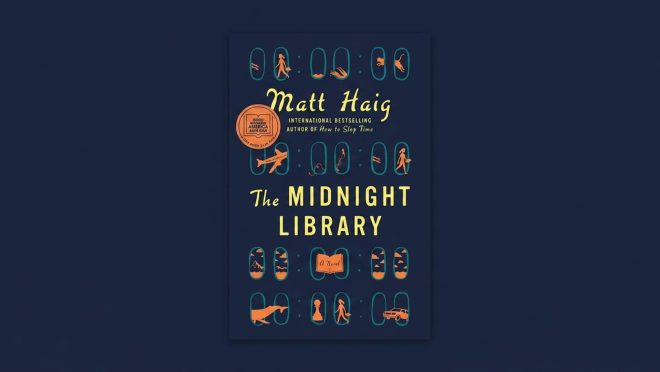
The Midnight Library by Matt Haig presents a space where one can wander through countless alternative versions of their life, only to discover what truly matters.
An unexpected discovery in Uttara
Two weeks ago, while browsing a local bookshop in Uttara to select a gift from an acquaintance, I found myself scanning shelves packed with the usual familiar titles. After ransacking the store for nearly an hour, one particular book stood out: The Midnight Library. Reading the back cover triggered a sudden intuition: this was a book I needed to read.
Classified as speculative philosophical fiction, the novel portrays Matt Haig’s exceptional ability to weave deep insights into accessible narrative form. Beyond his acclaimed work in non-fiction, Haig uses fiction here to address a question nearly everyone encounters at some point: What if I could go back and live the life I imagined? What if I hadn’t entered that relationship? What if I hadn’t left that job? What if I had simply been better?
What if this, what if that, the weight of unlived regrets…
What is ‘The Midnight Library’?
The story follows Nora Seed, a woman overwhelmed by disappointment and convinced that her life has been filled with wrong decisions. Reaching a breaking point, Nora finds herself in the Midnight Library (a twilight realm between life and death) supervised by her former school librarian, Mrs Elm. Here, every book on every infinite shelf represents a parallel reality, allowing Nora to undo her regrets and live out every choice she ever turned away from.
Through Nora’s journey, Matt Haig shows that even the lives we idealise from a distance may contain pain, loneliness and unexpected struggles. Success, fame, wealth or fulfilling old dreams do not automatically guarantee happiness.
The inevitability of human suffering
The tragic irony of life is that you cannot outsmart sadness. That we, sometimes, look forward to comparing our lives with the people who have so-called everything. It’s like waiting for people’s approval to get going with our own life, like a slip. This book demonstrates that no single choice acts as a permanent shield against suffering.
Throughout Nora’s multi-layered odyssey, Haig enriches the narrative with deep connections to Henry David Thoreau, along with Albert Camus, Friedrich Nietzsche and many more. Having studied philosophy in her youth, Nora repeatedly turns to Thoreau, whose masterpiece Walden serves as her personal compass throughout her journey. The inclusion of books, music and movie references is what makes this book more special.
The novel also resonates strongly with popular cultural touchstones in cinema and literature. Conceptually, it mirrors classic multiverse narratives. In my opinion, it matches with the cinematic reality-bending of Everything Everywhere All at Once, alongside the existential sci-fi brilliance of The Matrix.
I think, in literature, The Midnight Library sits comfortably alongside Paulo Coelho’s The Alchemist and Toshikazu Kawaguchi’s Before the Coffee Gets Cold from a philosophical perspective.
The novel is written in a simple and accessible style, yet it carries deep philosophical ideas. It encourages readers to reflect on their own regrets and to understand that life cannot be judged only by missed opportunities. One of the most meaningful messages of the book is: We often imagine our unlived lives as perfect because we never experienced their difficulties.
Ultimately, Matt Haig delivers a masterclass in empathy and human resilience. The Midnight Library demands to be read because it reminds us that perfection is an illusion and that no external success can substitute for self-acceptance. The true quest is not to find a life free of pain, but to appreciate the immense beauty, messiness and potential inherent in the single life we are actively living.
Grief can sometimes sit with us like regret. We wish we had spent more time with someone, but life doesn’t work that way. We only get the time that we get. I would recommend savouring this book slowly as you teleport from one page to another. This is a fine book for inner nourishment.