Madeline Miller introduces us to an Achilles we never knew
Through Nolan’s adaptation, most of us have a basic idea about the Iliad, the Trojan War, and Achilles, its greatest fighter, a man so strong that a whole nation is willing to sail across the sea just to keep him on their side.
Madeline Miller introduces us to an Achilles we never knew
Through Nolan’s adaptation, most of us have a basic idea about the Iliad, the Trojan War, and Achilles, its greatest fighter, a man so strong that a whole nation is willing to sail across the sea just to keep him on their side.
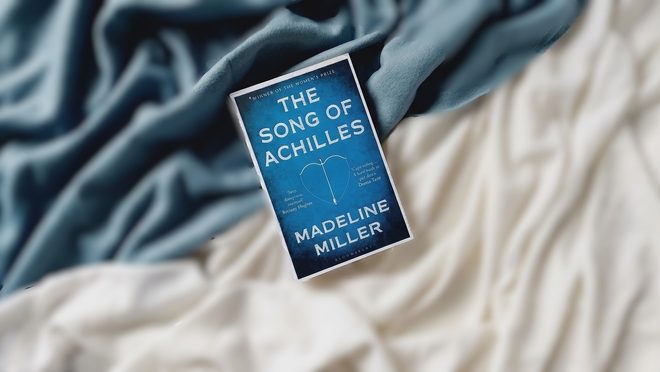
Achilles is the main character. He can only be hurt in one spot, his heel. He dies young, at Troy, and becomes the kind of name that gets remembered for thousands of years.
Madeline Miller took that same character and asked a very different question. What if we followed him not through his battles, but through his childhood? Her novel barely touches the actual war until two-thirds of the way through.
Before that, Achilles is mostly just a boy: living in his father’s house, training on a beach on the island of Scyros, hiding out in a cave on Mount Pelion with an old centaur named Chiron who’s trying, without much success, to teach him the lyre.
The real trick of the book is who’s telling it. The story isn’t narrated by Achilles. It’s narrated by Patroclus, a boy who barely gets mentioned in Homer’s original poem. In the Iliad, Patroclus exists mostly to die, because his death is what finally drags Achilles back into the fighting. Miller gives him the whole book instead. And because Patroclus is in love with Achilles, everything we learn about him comes filtered through someone paying very close attention. The way he sulks around his father.
The way he still gets nervous before a race he’s certain to win. These aren’t the details a poet writing about a legendary warrior would think to include, but they’re exactly the kind of thing you’d notice about someone you loved.
Miller keeps doing this throughout the book. She puts Achilles in scenes that have nothing to do with strength or glory: nursing Patroclus through a fever, breaking down after a hard lesson with Chiron, unable to sleep unless he knows exactly where his friend is. In Homer, Achilles is famous for his temper.
Miller makes you wait for it. So when it finally shows up, near the end, it doesn’t feel like a character trait. It feels like something snapping.
There’s also a structural choice worth noticing, especially if you already know how the story ends (and if you don’t, you will fairly quickly, since the book doesn’t try to hide it). Miller spends the entire middle section slowing everything down. Achilles and Patroclus grow up, fall in love, and build a quiet, ordinary life together, while a prophecy about Achilles’ death just sits in the background the whole time, waiting. That’s a difficult thing to pull off. Knowing the ending in advance can make a book feel like it’s just marking time until the sad part happens. Miller mostly avoids that, partly because she seems more interested in these early years than in the war itself.
Not every part of the book is equally strong. Thetis, Achilles’ mother, is a sea goddess who despises humans and resents her son for loving one. She’s meant to feel cold and frightening, but she mostly stays a symbol of that coldness rather than a fully realised character.
Some of the people around the war get the same treatment. Briseis, a woman captured during the fighting, is given far less inner life than Achilles or Patroclus. For a novel this focused on one relationship, that’s a fair trade, but it’s worth knowing going in.
Underneath all of it is a question about glory, or what the Greeks called kleos: the idea that dying in the right way, in the right battle, will make you remembered forever. Achilles has been promised that kind of immortality since he was a child. Patroclus has never cared about being remembered, and he spends much of the book quietly wondering what that promise is actually worth.
Miller never answers the question directly. She just keeps ending scenes with the two of them together, nothing heroic about it, just ordinary, and somehow those small scenes end up carrying more weight than any battle in the book.
By the time the funeral pyre is lit near the end, you’ve spent so long with this quieter, more human version of Achilles that the famous, mythic ending doesn’t feel like myth anymore. It feels like something that happened to two people you actually knew.
Readers new to Greek mythology will actually have an easier time with this book than they might expect. Miller explains what you need to know as you go, so you don’t have to read the Iliad first, and the story works as a love story on its own even if you’ve never heard of Achilles before.
People who like character-driven stories more than plot-driven ones will get the most out of it. A lot of the book is quiet: conversations, small routines, years passing between two people who care about each other. If you want constant action, the slower pace of the first two-thirds might test your patience.
Anyone who enjoys tragic romance will find this one hits hard, partly because you know from the start how it ends, and the book uses that knowledge on purpose instead of hiding from it.
Readers who like myth retellings that focus on the overlooked character (someone like Patroclus, who’s barely a footnote in the original) will find this a strong example of what that kind of retelling can do when it’s done well.