Inside Prapti’s journey to a fully funded PhD in New Zealand
A lot of us can relate to an incident from our childhood where a teacher told us that we might never succeed, that we may never be able to do anything meaningful in life. Mashiat Noor Prapti was told the same thing.
Inside Prapti’s journey to a fully funded PhD in New Zealand
A lot of us can relate to an incident from our childhood where a teacher told us that we might never succeed, that we may never be able to do anything meaningful in life. Mashiat Noor Prapti was told the same thing.
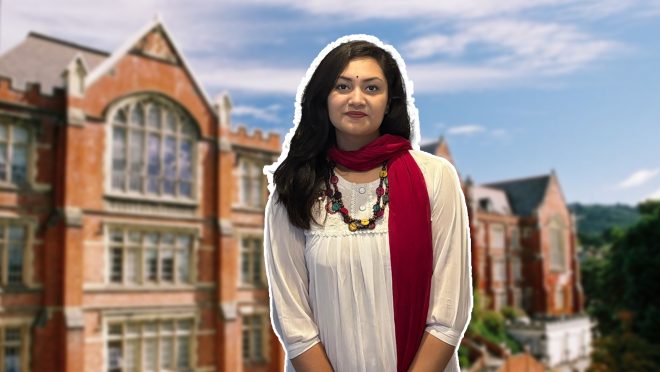
Today, the same Prapti is a PhD candidate at Te Herenga Waka, Victoria University of Wellington, in the School of Geography, Environment and Earth Sciences. Not only that, she also holds the Wellington Doctoral Scholarship, one of the most competitive fully funded scholarships available to international students.
Prapti completed both her undergraduate and master’s degrees at Bangladesh University of Professionals (BUP) in Development Studies.
What made her stand out was her activity outside the classroom. As an undergraduate, she was selected as a Research Fellow with the International Socioeconomics Laboratory (ISL), affiliated with Harvard University, where she had the opportunity to learn R programming aside from publishing papers.
By 2023, she’d stepped into teaching. She started her professional career as a Lecturer at UCSI University Bangladesh. From there, she moved into research, most recently serving as a Senior Research Associate at BRAC Institute of Governance and Development (BIGD), working within its Gender and Social Development cluster, where she learned NVivo under the qualitative stream.
Building her publication record
Today, her research looks at child marriage and feminist policy paradigms in the Global South, with Bangladesh as her primary case and Nepal as a comparative one.
But her research path started way back in COVID, when university classes moved online and she suddenly found herself with unstructured time she’d never had before.
Many of us spent that time binge-watching movie series while making Dalgona coffees. But Prapti used the time to apply to ISL and was selected for its Spring 2021 programme, where she published a research paper with authors from different countries. “Seeing my name on a paper for the first time gave me a kind of confidence I hadn’t had going in,” she says. “It made research feel like something I could actually do, not just something I admired from a distance.”
By 2024, that early confidence had grown into five publications, spanning youth education policy in the United States, paediatric healthcare policy in Nepal, Bangladesh’s readiness for the Fourth Industrial Revolution, the relationship between violence against women and economic participation, and a proposed Bangladesh-Malaysia free trade agreement. Her bachelor’s thesis, fieldwork on how the pandemic affected education in two remote Bangladeshi villages, was never published.
Most of these papers came from different places. Two grew out of her ISL fellowship. A third, on gender violence, was co-authored with her husband, a fellow researcher at the time. The rest came through professional connections built gradually.
“It wasn’t one uniform route to publication,” she says. “Each paper came out of a different relationship or opportunity.”
PhD pathway
Prapti’s approach to applying was direct. Her first step was emailing prospective supervisors at Victoria University. She started sending direct emails in November 2025. Along with her email, she attached a proposal focused on child marriage.
Her research proposal interview took place at the end of that same month. Then came the application process.
Out of the whole application process, the Statement of Interest gave her the most trouble. “It needs to clearly articulate your specific research focus, demonstrate genuine fit with the programme and your intended supervisor’s expertise, and convey your motivation and long-term academic goals, all while sounding precise and intentional rather than generic,” she says.
It took her nearly two weeks to complete. It’s worth noting that the book Write Ivy by Jordan Dotson helped her during the process.
Her advice to future applicants is to take the Statement of Purpose far more seriously than most people do.
One common mistake is repetition. Another is anything recycled.
“There is absolutely no room for plagiarised or recycled content in a SoP or research proposal, not from templates, not from other applicants’ successful statements, and not by over-relying on generic phrasing that could apply to anyone,” she says.
She added, “Supervisors and admissions committees are specifically looking for genuine alignment between an applicant’s research interests and their own work, and that authenticity is very easy to spot and just as easy to see through when it’s missing.”
When asked what made her application stand out, she said there was no single formula. She believed her research record, academics, and experience all played a significant role.
But one thing that surprised her was that, at the interview stage, the professors seemed to place real weight on her experience as a university-level lecturer, which she calls an underrated factor. “I think it signalled a certain level of academic maturity and classroom authority that goes beyond just being a strong student or researcher,” she says.
After all this, she successfully submitted the application right before the deadline, in February 2026. And then she waited for months and finally, on 1 May 2026, she got the confirmation of her scholarship.
It took exactly six months.
She started preparing seriously in January 2024, working through TOEFL and GRE preparation before sitting both exams in January 2025.
For her, starting early wasn’t just about getting ahead. “I think it means I’ll be able to bring my expertise back to the Global South earlier in my career rather than later, and it also puts me in a position to pursue postdoctoral opportunities sooner.”
Rejection was part of the process
The road there was not uninterrupted. Prapti received rejections from some other universities along the way. She even doubted whether she was competitive enough for a scholarship of this scale. She made a conscious decision not to let any single rejection define the outcome of the entire process. That persistence, continuing to apply, continuing to improve each subsequent submission based on what she had learned, is ultimately what led her to become a Wellington Doctoral Scholar.
“New Zealand itself was a significant part of the pull. It’s a genuinely peaceful country, and what struck me most is how diverse and welcoming it is towards international students and researchers. It doesn’t feel like a place where you’re treated as an outsider.”
The Wellington Doctoral Scholarship funds full tuition for up to three years and provides a stipend of NZD 32,000 annually, about NZD 2,667 a month. Costs outside that, including the student services fee, insurance and a hardship fee, add up to roughly NZD 2,183.80 per year, which needs to be covered separately. Another thing worth noting is that international student insurance typically excludes pre-existing medical conditions.
On housing and living expenses, she says the biggest financial pressure comes from New Zealand’s rental market, though living on her own, without her family, has kept her costs manageable. She is not taking on additional work for now, choosing to focus fully on her thesis.
Her advice to undergraduates who are considering development studies is grounded in the same lesson: seek out research opportunities early, rather than waiting until later.
Lastly, the belief underneath it all, from school to the PhD, was the same mindset: “I always knew, somewhere, that I would do one someday.”