Where's my mother on my birthday
Whether it’s a dawat or birthday party, we hardly see our most integral member of the family present at that gathering. She is present, but in a different room, making life convenient for us, and we easily take it for granted.
Where's my mother on my birthday
Whether it’s a dawat or birthday party, we hardly see our most integral member of the family present at that gathering. She is present, but in a different room, making life convenient for us, and we easily take it for granted.
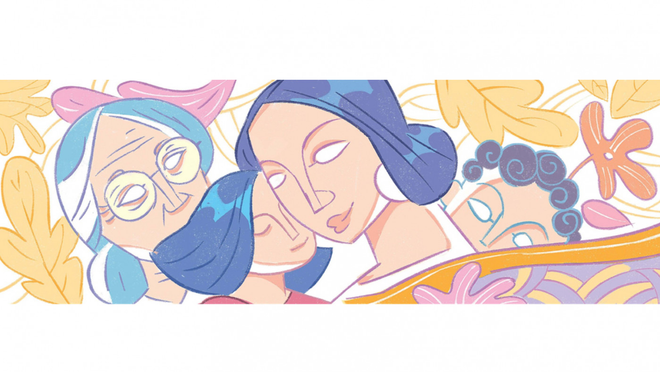
In every family function, I have seen my mother constantly working. It doesn’t matter if it’s a birthday celebration, Eid festival or a family gathering. When we were kids, we didn’t really notice it. But as we grow up, seeing my mother exhausted and tired in the kitchen, something just doesn’t feel right anymore.
A mother is expected to cook, clean, decorate and host, often all by herself. With this constant burden of working for the family, we slowly lose the mother we want to have beside us. She hardly gets the time to simply be there for her children. Imagine it is your birthday and the most important person in your life is not sitting beside you.
You cannot even blame her, because she is working for you. She is cooking your favourite food, preparing dinner, cleaning the house and making sure everything is perfect. But sometimes, you really wish it did not have to be this way. Sometimes you wish she had the luxury to sit beside you and enjoy the moment just as much as you do. Instead, her life becomes tied to the kitchen and the walls of her home.
I wonder how many of us have ever stopped to realise how much our mothers do for us. Despite a woman’s constant efforts, she is often given very little recognition or respect. Nobody asks if she is tired. Nobody asks if she is sick. Nobody asks if she needs a break.
What is the point of everything she does when I cannot have my mother beside me? I’m not being ungrateful, but I believe a mother’s role should not be reduced to cooking and cleaning. A mother’s role is to nurture and bring up her child, not to carry the entire household on her shoulders. We should not burden our mothers with responsibilities that should never have been hers alone. When she is sick, there is no sick leave.
No weekends. No vacation. She simply has to keep going. How many of us actually question this and try to make her life even a little easier? Sometimes, we become so used to everything our mothers do for us that we forget to notice the person behind all that work.
In physiology, it is taught that, in order to understand the function and importance of a body part, we have to cut it. Which means we can only understand the importance of something when it is gone. Until then, we are a bunch of ungrateful people.
The expectation is simple: she will do it.
She will take care of everyone, keep the house together and somehow keep going, without expecting anything in return. Maybe that is why they say a mother’s love is unconditional. She gives so much of herself without asking anything in return.
But after seeing all of this, what hurts me is seeing how easily she is still disrespected every day. After everything she does, she is rarely given the same importance she gives to everyone else. She does not always have an identity of her own, or something she can truly call hers. Even the house she spends her entire life taking care of is not really hers. She is the one who cooks in it, cleans it, looks after everyone in it and makes it feel like home. Yet somehow, she is the one who is made to feel like she only belongs there because she is needed.
And sometimes I wonder how painful that must be, to give so much of yourself to a place and still feel like nothing in it truly belongs to you.
Maybe it is not a sense of responsibility that makes her work day and night and provide for everyone around her. Maybe it is the burden she carries within herself. Maybe that burden makes her feel obligated to obey what others expect from her. Regardless, she is never a complete part of the family.
The thing that scares me the most is not the workload itself. It is what that workload slowly does to a mother.
It drains her, day after day, until exhaustion becomes a part of her identity. It isolates her from the outside world and makes her feel as though her entire existence begins and ends within the walls of her home. And perhaps the most frightening part is that the place where she is supposed to feel safest can sometimes become the place where she feels the most vulnerable.
When her work is treated as a duty rather than labour, when her exhaustion is ignored and her sacrifices are expected rather than appreciated, she slowly learns to stop thinking about herself. She puts everyone else’s needs before her own until asking for rest begins to feel like selfishness.
And this is not merely an emotional argument. Research increasingly shows the psychological cost of unpaid domestic labour. In Bangladesh, 21.5% of adult women were found to have a psychiatric disorder in a nationwide survey. It shows the link between burdensome domestic work and depression and other psychological disorders among women.
The tragedy is that we often call this sacrifice. We praise a woman for giving up pieces of herself for everyone else, without realising that sometimes, she is simply slowly disappearing inside her own home.
I believe we need to stop romanticising a mother’s suffering as sacrifice and start questioning what we have come to expect from a “good” mother. A woman should not have to lose herself, her freedom, her identity or her dreams just to be called a good wife, mother or daughter. Sacrifice should be a choice, not a role forced upon her.
I do not want her sacrifice.
I do not want her to spend her whole life giving pieces of herself to everyone around her.
I want her to live.
I want her to live for herself, for me. I want her to live beside me, happily. I want to see her enjoy the little things, have her own dreams, laugh without worrying about what needs to be done next. I want her to be there for my birthdays, my celebrations and all the ordinary moments in between.
I do not want to remember my mother for everything she did for me.
I want to remember her for all the moments she got to live with me.