Laughing at yourself isn't always a good thing
Laughing at yourself isn't always a good thing
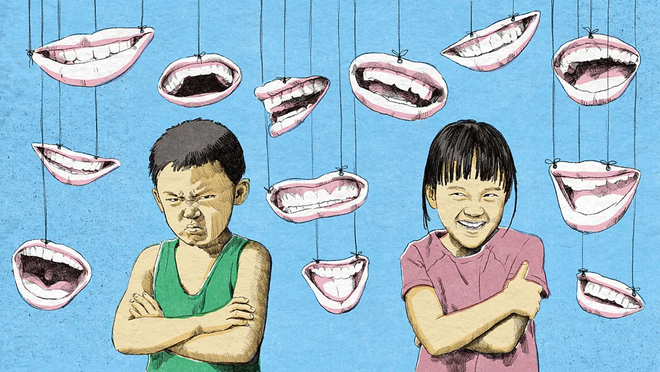
Being able to laugh at yourself may improve mental wellbeing, relationships and resilience, although research suggests that excessive self-deprecating humour can have the opposite effect.
Psychologists have long observed that people who struggle to take a joke can face difficulties in social situations. Research into rejected schoolchildren in the 1990s identified two broad groups: aggressive children who responded to teasing with anger, and withdrawn children who interpreted jokes as personal attacks. Both groups struggled to recognise humour as harmless.
By contrast, socially confident people tend to shrug off teasing or even find it amusing.
Researchers now believe that the ability to laugh at oneself can be an important part of psychological resilience. Sonja Heintz, a psychology lecturer at Plymouth University, said research has established that laughing at oneself is possible and can bring a range of benefits.
When humour becomes harmful
The idea of laughing at oneself has been debated for centuries. Ancient Greek philosopher Plato viewed humour largely through the lens of superiority, while Thomas Hobbes similarly argued that laughter was often directed at people perceived as inferior.
Modern psychology, however, has developed a more nuanced understanding of humour.
Some people experience an intense fear of being laughed at, known as gelotophobia. Those with the condition may interpret even innocent laughter or a smile as evidence that others are ridiculing them.
Researchers have linked gelotophobia to experiences such as harsh parenting and childhood humiliation, including prolonged bullying. Studies have also associated the trait with lower life satisfaction, loneliness and difficulties forming friendships.
At the other end of the spectrum is gelotophilia, or enjoyment of being laughed at. It is associated with greater social connectedness and a broader quality known as playfulness, which allows people to reinterpret mundane or difficult situations in a more amusing or interesting way.
Research has linked playfulness with higher self-esteem and greater relationship satisfaction.
Not all self-mockery is the same
A major development in understanding humour came in 2003, when Canadian researchers developed the Humor Styles Questionnaire. It categorises humour into four broad styles: affiliative, self-enhancing, aggressive and self-defeating.
Self-enhancing humour involves finding something amusing in difficult circumstances and using humour as a coping mechanism. Self-defeating humour, meanwhile, involves making oneself the target of jokes in an attempt to gain acceptance or approval.
Initially, psychologists considered self-defeating humour a potentially harmful behaviour associated with insecurity and poor mental health.
But later research challenged that assumption.
Psychologist Sonja Heintz found that people who frequently used self-defeating humour did not necessarily have poor mental health. In some cases, they reported that making fun of themselves helped them manage insecurities and build relationships.
According to a BBC report, research by Claire Fox found that children who relied exclusively on self-defeating humour tended to have lower self-esteem and become lonelier over time. However, children who used self-defeating humour alongside other forms of humour did not experience the same negative effects.
This suggests that making fun of yourself is not inherently harmful. Problems are more likely to arise when it becomes excessive or is driven by genuine self-hatred.
“If you make fun of yourself and it comes from a place of bitterness and self-hatred, then yes, it’s probably not good for you,” Heintz said.
Why laughing at yourself can help
Being able to laugh at your own mistakes can provide psychological distance from difficult experiences. Instead of responding to an embarrassing moment with anger or shame, humour can create a more positive emotional response.
Researchers describe this as a form of self-transcendence, allowing people to step back from an event and view it more objectively.
Humour can also make social interactions easier, particularly in unfamiliar settings. Making a harmless joke about yourself can be a relatively safe way to establish rapport without risking offence to someone else.
The benefits can also extend to professional relationships. Research by Fox found that lecturers who used self-defeating humour were viewed more positively by their students. Other research has suggested that people who laugh off minor mistakes, provided those mistakes do not harm others, can be perceived as warmer and more competent.
How to develop a lighter attitude
Psychologist Paul McGhee, who developed a seven-step programme for cultivating humour, argued that people could become more comfortable with self-mockery by confronting the things that normally embarrass them.
The process can begin with relatively minor insecurities. Someone who is not particularly interested in fashion, for example, might joke about repeatedly wearing the same clothes. Over time, the aim is to become less sensitive to personal imperfections.
But researchers stress that there is an important boundary. Self-deprecating humour works best when someone has already accepted the flaw or mistake they are joking about.
If the joke comes from genuine discomfort or self-loathing, others are likely to sense it.
Ultimately, the research suggests that laughing at yourself is less about putting yourself down and more about refusing to take every mistake, embarrassment or imperfection too seriously. The healthiest approach appears to be moderation: use humour to create distance from your flaws, rather than allowing those flaws to define the joke.