Final.pdf, Final Final.pdf and the campus print shop crisis
Every semester, the print shop near campus gets blamed for a crisis it did not entirely create.
Final.pdf, Final Final.pdf and the campus print shop crisis
Every semester, the print shop near campus gets blamed for a crisis it did not entirely create.
By evening, the queue has escaped the shop, the printers are running nonstop, somebody’s 63-page report has come out single-sided, and at least one person is leaning over the counter asking, “Bhaiya, amar ta ektu agey kore den?” as though the thirty people behind them are merely there for moral support.
None of this should be surprising. Submission dates are announced weeks in advance, and the shop knows exactly which week is going to be awful. Unfortunately, there is one extremely unreliable variable in the system: university students.
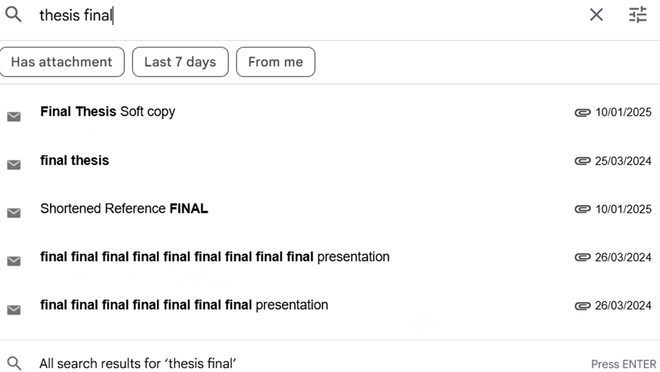
Knowing the bad week is not the same as knowing when the work will arrive. At 6 pm, a report can still be “basically done”, which in university language means one supervisor comment, two formatting fixes and the sudden reappearance of a group member missing since Tuesday. Final.pdf becomes Final Final.pdf, then FINAL_USE_THIS_ONE.pdf. The confidence of the filename is rarely supported by the evidence.
For the print shop, demand is predictable in volume but chaotic in timing. Instead of arriving steadily, half the campus materialises within the same few hours. A shop that looked normal at 7 pm can look besieged by 9.
Nothing even has to break. Once work arrives faster than it can be completed, queues grow and lead time stretches. Your report may take ten minutes to print, but first someone has to receive the file, confirm the instructions and put it behind everyone else’s “just one report”.
Then comes the most offensive moment: your report is already printed. There it is. Complete. Beautiful. Technically yours. And you still cannot leave because it needs to be bound.
Five printers can produce pages quickly, but if everything eventually passes through one binding machine, the entire process begins moving at the speed of that machine. That is the bottleneck: the stage with the least capacity, which ultimately determines how fast the whole operation can move. This is how you end up staring at your finished report from three feet away, separated from freedom by a plastic spiral.
It also explains why adding another printer may solve very little. If binding is already the slowest stage, a sixth printer simply creates a bigger pile of reports waiting to be bound. Making one part faster does not help much when everything still has to squeeze through the same narrow point.
Sometimes the problem is even less glamorous. Paper runs low. Toner disappears. The good covers finish. Binding combs suddenly become a valuable natural resource. A carefully colour-coordinated report ends up inside a fluorescent-green cover because, “Bhaiya, ar colour nai.” At that stage, aesthetic principles tend to weaken.
That is inventory management in its least glamorous form. The shop needs enough paper, toner, covers and binding materials to survive submission season, but keeping huge amounts of stock for one terrible week means leaving much of it unused for the rest of the semester.
Capacity creates the same trade-off. The shop could add workers, printers or another binding machine for peak periods, and it probably should prepare more aggressively for known submission weeks. But building the entire operation around the worst night of the semester would leave much of that capacity sitting idle for most of the year. There is only so much a tiny campus shop can expand because half the university has collectively decided Thursday evening is the ideal time to print.
Students are not always late because they spent three weeks doing nothing, either. University work has dependencies. A supervisor has to approve something. A group member has to send their section. Data needs correcting. Formatting changes. Every delay upstream eats into the time available at the end.
By the time the file finally reaches the print shop, there may be almost no buffer left. One printer jam, missing cover or twenty-minute binding queue becomes a crisis. The shop is simply unlucky enough to be the final stage, so it receives the full emotional weight of everything that happened before it.
That is why the chaos looks so dramatic. Hundreds of individual delays become one visible queue. Demand arrives unevenly, capacity gets stretched, inventory gets tested and one heroic binding machine ends up dictating the pace of everything around it.
Supply chain sounds much grander when discussed through ports, factories and warehouses. On campus, the same ideas are sometimes easier to understand at 10:55 pm, when your completed report is sitting three feet away and the man behind the counter has just heard “Bhaiya, urgent” for the sixth time in ten minutes.