Why dashcams could be useful on Bangladesh’s unpredictable roads
Why dashcams could be useful on Bangladesh’s unpredictable roads
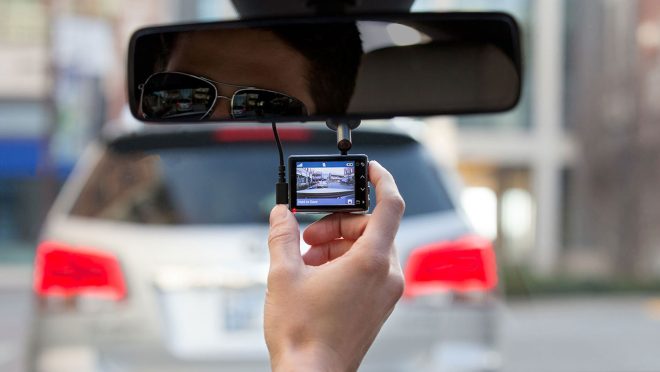
From sudden lane changes and reckless overtaking to collisions involving buses, motorcycles, CNG-run autorickshaws and rickshaws, driving in Bangladesh can be unpredictable. A dashboard camera can provide something increasingly valuable in such situations: a record of what happened.
Dashcams are small cameras mounted inside a vehicle that continuously record the road ahead. Some models also have rear cameras, GPS, night vision and sensors that automatically save footage when they detect a collision.
For Bangladeshi motorists, the appeal is straightforward. When an accident happens, memories and eyewitness accounts can differ. A recording can provide a clearer account of the moments leading up to an incident.
Why dashcams matter on Bangladesh’s roads
Road crashes remain a major concern in Bangladesh. The Road Safety Foundation reported that 438 people were killed and 561 injured in 472 road accidents across the country in June 2026 alone. Motorcyclists and pillion riders accounted for the highest number of fatalities that month.
In some cases, footage from a vehicle can also help establish how a crash occurred. Recent reports have shown how video footage can capture dangerous overtaking and reckless driving that leads to fatal crashes.
Dashcams can be particularly useful when dealing with:
- Road crashes: Footage can document the vehicles, road conditions and events immediately before a collision.
- Hit-and-run incidents: A camera may capture the vehicle or number plate of another road user.
- Reckless driving: Dangerous overtaking, wrong-way driving or sudden lane changes can be recorded.
- Insurance and disputes: A recording may provide additional evidence when accounts of an incident differ.
- Night-time driving: Cameras with good low-light performance can capture details that ordinary footage may miss.
- Parking incidents: Some models can continue monitoring a vehicle while it is parked, although this may require additional hardware.
Not all dashcams are the same
Buying a dashcam is not simply about choosing the camera with the highest resolution. Image quality also depends on the sensor, HDR or other low-light technology, field of view and the camera’s ability to preserve footage during an impact. Dual-channel cameras, which record both the front and rear of a vehicle, provide broader coverage.
For Bangladesh, number-plate visibility should be one of the key considerations. A camera that produces sharp footage during the day but struggles in heavy rain or at night may be less useful when an incident actually occurs.
A wide-angle lens can capture more of the surrounding road, while a G-sensor can automatically protect footage when a sudden impact is detected. GPS can also record information about a vehicle’s location and route.
What should Bangladeshi drivers look for?
For regular city driving, a reliable 2K camera may be enough. Drivers who frequently travel on highways or at night may benefit from a higher-resolution camera with stronger low-light performance.
A front-and-rear setup is particularly useful because incidents do not always happen directly in front of the vehicle. Drivers should also consider storage capacity, ease of transferring footage and whether the camera can withstand Bangladesh’s heat and humidity.
Parking mode can be useful for vehicles left unattended, but it often requires a separate hardwire installation.
A camera is not a substitute for safer driving
Dashcams cannot prevent crashes, nor should motorists assume that having a recording automatically settles a legal or insurance dispute. Their main value is documentation.
Bangladesh is also moving towards greater use of technology in traffic enforcement. Dhaka Metropolitan Police has introduced AI-powered cameras to detect violations such as red-light jumping, wrong-way driving and illegal parking, while CCTV coverage has also been expanded along major highways.
As more cameras watch Bangladesh’s roads, having a camera inside the car could give motorists their own record of what happened when the road suddenly becomes chaotic.