A home of her own: Not her father’s, not her husband’s, hers
I have never lived in a house that was truly mine.
A home of her own: Not her father’s, not her husband’s, hers
I have never lived in a house that was truly mine.
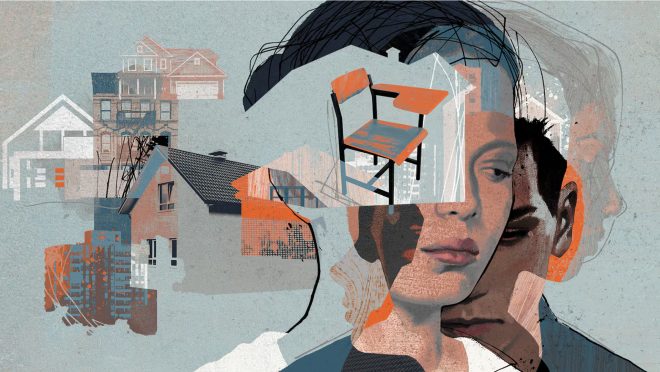
The house I grew up in was my father’s. The house I visited every winter, smelling of mustard oil and old saris, was my Nani’s. Although on paper, it was never really hers. And if I marry one day, I already know what people will say about the next house, “Your new home.” Ours, they will call it. But I know how these things work. It will most likely be my husband’s home, and I will be expected to make it mine by making everyone else comfortable in it.
This is not self-pity. It is a question I have started asking myself: Why is a woman’s life so often a journey between other people’s homes?
We talk about home in a strange, gentle way. Ask a family where they are going for Eid and they may not give you a street name. They will say, “Dadi’s house.” “Nani’s bari.” “Ammu’s home.” We remember houses through the women who made them feel like home. Through their kitchens, their prayer mats, their food, their voices and the way they somehow knew where everything was.
Home runs through a woman’s hands. But the papers that actually say, “This belongs to me”, often tell a different story.
She is the address. She is the memory. She is the person who keeps the house running. But she is not always the owner.
That is the contradiction I cannot stop thinking about. Growing up, I was taught softly, lovingly, almost without anyone noticing, that a good girl does not necessarily build her own home. She settles into one. Even our language gives it away. A son builds a house. A daughter settles into her husband’s house. One is associated with creating something. The other is associated with fitting into something that already exists.
Nobody had to sit me down and explain this. It was everywhere. It was in conversations about marriage, in wedding rituals, in the approving comments about a newly married woman that, “She has settled well.”
Not, “She has done well.”
Not, “She has built something.”
She has settled.
The word sounds harmless. But sometimes I think it says too much.
We are very generous with our praise for women, as long as the praise does not require us to give them real power. We call her the soul of the home. The heart of the family. The queen of the household. We call her mother and mean it with respect. We call her daughter and mean it with love. But ask whose name is on the flat, the land or the family property, and the soft language often disappears.
Bangladesh has laws recognising women’s inheritance rights, but having a right and being able to exercise it are not always the same thing. Family pressure, social customs and the fear of damaging relationships can make women reluctant to claim what is legally theirs. A daughter may decide not to ask for her share because her brother “needs it more”. She may be reminded that her parents already spent money on her education or marriage. She may be made to feel that asking for property is somehow asking for too much.
The most painful part is that this pressure does not always look like oppression. Sometimes it sounds like love.
“You’re our daughter. Why would you need your share?”
“Your brother will look after the family.”
“You will have your husband’s home.”
And just like that, a woman learns to confuse being cared for with being secure.
I think of my grandmother, who spent decades running a household. She fed people, cared for children, managed family problems and held generations together. Emotionally, she was the centre of that home. But legally, her name was nowhere.
That story is not unusual. Women can spend their whole lives maintaining a house without ever having the security that comes with owning one. This is why I think our definition of independence needs to become bigger.
We often define an independent woman as someone who has a job, earns money, travels alone or makes her own decisions. All of these things matter. But independence is not only about going outside. Sometimes independence is having somewhere to return to. It is having a door you can close. It is having a room where you do not have to justify your presence.
It is knowing that if a marriage ends, a husband dies, a family relationship breaks down or life simply takes an unexpected turn, you are not left asking, “Where will I go?”
A home does not have to mean owning a luxury apartment. It could be a small flat, a rented room, a shared house, a piece of inherited land or even a modest space arranged entirely according to a woman’s own choices.
The point is not property for the sake of property. The point is choice. A woman who has somewhere to go has a different kind of freedom from a woman who has nowhere to go.
And yet, when we talk about women’s empowerment, we often stop at employment. We celebrate a woman when she gets her first job, earns her first salary or becomes financially successful. But we should ask what happens after she earns that money.
Can she save it? Can she invest it? Can she buy property? Can she inherit without feeling guilty? Can she decide where she wants to live? Can she leave an unhappy situation without becoming completely dependent on someone else?
These are also questions of empowerment.
I do not want women to be loved only as mothers, respected only as daughters, protected only as wives or praised only for their ability to sacrifice.
Women are people before they are someone’s relationship. They need love. They need respect. But they also need money, choices, space and security.
We often put women on a pedestal and then forget to give them a floor to stand on. Perhaps that is the real problem. We tell girls that one day they will have a beautiful home. But we rarely tell them, “One day, build a place that belongs to you.” The difference between those two sentences is enormous.
A home should not be a reward for marriage. Marriage should not be the condition through which a woman receives security, belonging or stability. If a woman chooses marriage, let it be because she wants that relationship, not because it is the only path society has given her towards having a permanent home.
I think of the homes I have known through women. My mother’s home. Dadi’s home. Nani’s home. These women taught me what home feels like. Perhaps the next generation deserves to learn something else as well: what it feels like to have one.
Not her father’s home. Not her husband’s home. Not her son’s home. Hers.
Because women have spent generations making homes for everyone else. They have cooked in them, cleaned them, raised children in them, cared for husbands and parents in them, and turned houses into memories that entire families carry for decades.
The least we can do is stop telling them that their reward is simply to settle into somebody else’s four walls. A good woman should not be measured by how beautifully she fits into another person’s home. She should also be allowed to dream of four walls that carry her name. Because perhaps real independence is not always about walking away from home.
Sometimes it is simply knowing that you have somewhere to go. Somewhere you belong. Somewhere nobody can tell you that you are only a guest.
A home of your own.