How much of us is choice?
There is a strange comfort in saying, it happened by chance. It allows us to believe that some things in life were never really in our hands. On the other side of the coin, there is an equally powerful satisfaction in saying, I chose this. It gives ownership over our stories.
How much of us is choice?
There is a strange comfort in saying, it happened by chance. It allows us to believe that some things in life were never really in our hands. On the other side of the coin, there is an equally powerful satisfaction in saying, I chose this. It gives ownership over our stories.
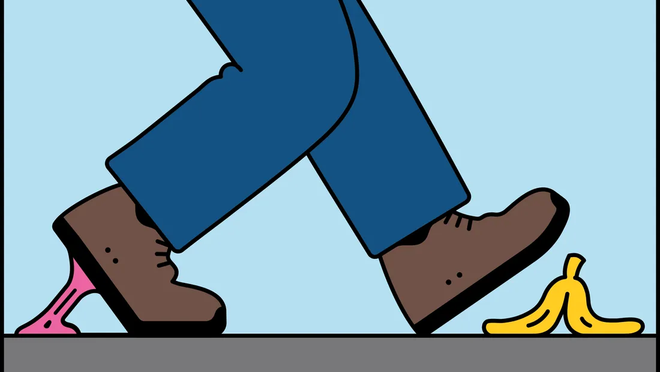
Somewhere between these two statements lies one of the most complicated dilemmas of growing up: How much of our life is actually chosen, and how much of it simply happens to us?
While debating between these dilemmas, I realised more after my admission season when I was opting to study “by chance” and not “by choice”. It’s not about being ungrateful, but with choice, things could have been different.
Perhaps the uncomfortable truth is that most of us live somewhere in between truth and pacification, not falsehood. That is where the dilemma begins.
Growing up, I was often fascinated by the idea that success was primarily a matter of choice. Study hard, work harder, make the right decisions, leave out things that don’t provide outputs and things will eventually fall into place. It is an attractive philosophy. If everything depends on choices, then the future is supposedly in our own hands.
Which is probably not entirely true. If it were, then subjects such as Philosophy wouldn’t come into being.
Alongside, as I have grown older, I have realised how incomplete that entire idea is.
We do not choose where we are born. We do not choose our families, our first schools, our name, our earliest influences, the people we encountered, the opportunities that appeared before us, or the moments that fundamentally altered our way of thinking.
We cannot even choose the circumstances in which we are forced to make decisions.
Yet, once those circumstances arrive, we still have to choose what to do with them. That is perhaps the most important distinction between chance and choice.
Chance determines the cards we are handed. Choice determines how we play them. My own academic and personal journey has made this distinction particularly visible. There have been moments when I found myself questioning whether I arrived somewhere because I genuinely wanted it or simply because circumstances pushed me. Choosing the field of study, imagining a career, becoming involved in projects, writing, mentoring others, working with social initiatives, none of these things exist independently of the circumstances surrounding me.
At times, things compelled me to wonder whether I am following a carefully designed plan or merely constructing a plan around whatever happened along the way.
We are taught to find passion as though passion is a hidden object waiting somewhere inside a black dark room. But sometimes passion is not discovered but developed. We enter something because of chance, remain because of necessity, become interested because of exposure, and eventually convince ourselves that it was our choice all along.
And maybe that is not necessarily a negative factor.
There is a tendency among young people to romanticise the idea of a perfect choice. We believe there is one university, one subject, one career, one person, or one path that is objectively right for us. Consequently, whenever we make a decision that later feels uncertain, we assume that we have made a mistake.
I have learned that a choice can be precise even when its outcome is uncertain. Likewise, a choice can be erroneous even when it seemed perfectly rational at the time.
This is especially relevant to students standing at the crossroads of education and career. We are constantly asked questions like, ‘What do you want to become?’ as if a 17- or 20-year-old is supposed to have a complete blueprint for the next 40 years.
But how can a person make a permanent decision while they themselves are still changing and in the phase of continuous development?
The dilemma becomes even greater when society starts interpreting choices as indicators of worth. Choosing a prestigious subject is considered ambition. Choosing a less conventional path is sometimes interpreted as failure. Changing one’s mind is treated as inconsistency. Remaining uncertain is treated as weakness.
We rarely acknowledge that changing direction can itself be a sign of maturity. There is nothing inherently noble about remaining committed to a choice simply because we made it years ago and not even a decade.
At the same time, blaming everything on chance can become another form of escape. ‘I had no choice’ is sometimes easier to say than ‘I was afraid to choose.’ Circumstances influence us, but they do not always completely determine us. There comes a point when we must stop asking what happened to us and start asking what we are going to do about it.
This is where responsibility enters the conversation. If everything is choice, there is a practice of blaming people for circumstances beyond their control. If everything is chance, we risk removing human agency altogether. Neither extreme is sufficient.
An opportunity may arrive by chance, but preparation determines whether we can recognise it. A competition, an article, a research opportunity, a leadership role or a project may appear unexpectedly. We cannot control when the door opens. But we can decide whether we are prepared to walk through it.
This is why I increasingly believe that chance creates possibilities, while choice creates direction.
And perhaps the biggest misconception is that these two forces are competing against each other. While they are not. Choice itself is often built from chance.
The people we meet influence the choices we make. The failures we experience reshape our ambitions. The criticism we receive changes our perspective. The opportunities we encounter introduce us to possibilities we did not know existed. Even the things we initially consider setbacks can redirect us towards something meaningful.
Sometimes the detour becomes the destination. There is also a psychological burden attached to believing that everything is a choice. When things go wrong, we immediately ask, ‘Where did I make the wrong decision?’ We replay conversations, academic decisions, friendships, opportunities and missed chances, imagining alternative versions of ourselves.
What if I had chosen differently? What if I had said yes? What if I had said no? What if I had taken another path? These questions can become exhausting as they create another hypothetical life which is, on the other hand, overwhelming.
There will always be another version of ourselves living inside our imagination. The person who studied somewhere else. The person who pursued another discipline. The person who accepted another opportunity. The person who never made a particular mistake. But that person does not exist in reality. We do. And our responsibility is not to mourn every possible life we could have lived. It is to make something meaningful out of the life that actually happened.
Maybe that is the understanding of life which is neither completely designed nor completely accidental.
I have come to appreciate this idea more through writing and working with people. Every conversation, every project, every student I have taught, every person I have encountered has contributed something to the person I am becoming. Some experiences were deliberately pursued. Others simply appeared. Yet, looking back, it is difficult to separate one from the other.
The dilemma of by chance and by choice may therefore never really be solved. Perhaps it is not supposed to be. It is a tension to carry throughout life.
We should neither become conceited enough to believe that everything we achieve is solely the result of our choices, nor deserted enough to believe that everything is predetermined by circumstances.
It may be about choosing what to do with the fortuitous.
And perhaps that is the closest thing we have to control. Maybe some things happened by chance. Maybe some things happened by choice.
But what we become afterwards, that part, at least, is still being written by us.