Collateral: A refreshing 'non-heroic' Tom Cruise
Tom Cruise and heroic action roles have become an inextricable pair made for each other.
Collateral: A refreshing 'non-heroic' Tom Cruise
Tom Cruise and heroic action roles have become an inextricable pair made for each other.
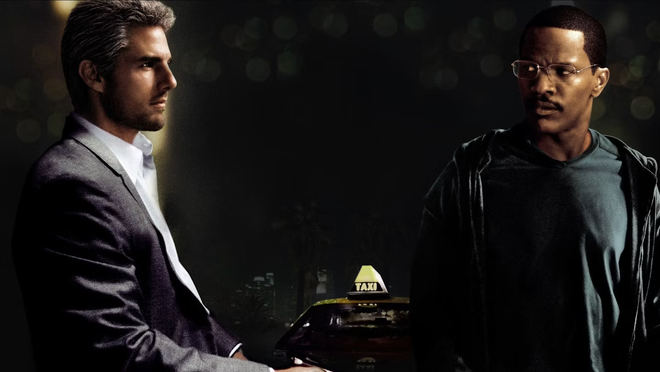
From Top Gun to Mission Impossible, Cruise has carved out his legacy in playing the morally grounded and protective hero who will relentlessly oppose wicked ideologies to prevail.
But back in 2004, he stepped out of his comfort zone to reveal the duality of his core identity. Collateral, a neo-noir film by Michael Mann, brought out Cruise’s never-before-seen antagonistic role, portraying an assigned cold-blooded assassin named Vincent.
The screen rolls out with Vincent touching down in Los Angeles silently with a laser focus on his job, unfazed by the bustling crowd. On the other hand, well-mannered Max navigates tirelessly under the lights of the L.A. city to pay his bills and nurses his dreams of starting a luxury limousine company.
Coincidentally, Vincent gets into Max’s cab for the epidemic long night drive, something Max could never conceive. When Vincent convincingly presents himself as the amicable businessman whom Max could trust, have open conversations with, and take him around, this tricks Max into falling into the trap of dangerous first impression bias. This illusion shatters when the first victim shot down by Vincent exposes his true motive. Terrified, Max offers to surrender his car, but Vincent quickly senses his betrayal to the police and coerces him into being the personal driver for his mission.
Michael Mann terrifically uses an unsettling night-long cab ride through the city to reveal the contrasting philosophies of two characters. Vincent is calculative and remarks himself as a nihilist, who perceives this sprawling metropolis as where millions co-exist but remain indifferent to each other. This motivates him to be a hitman with no concern for moral bounds. He appraises himself as the wolf that moves domineeringly to hunt its prey and Max as his submissive sheep. He rationalises his lack of humanity through his traumatic past, marked by the absence of warmth from his deceased mother and an abusive alcoholic father.
Max’s empathy and quiet integrity directly collide with Vincent’s worldview. He strives to protect and uplift the people with whom he shares genuine emotional connections. Rather than being active, he holds immense patience about achieving his big dreams. Although Vincent torments him through his perfectionism, rigidity and stagnant ambitions, Max plays more like a sheepdog who has a character of elastic nature. Even if Vincent uses him to progress on his rogue mission, Max resiliently confronts Vincent’s apathy out of deep-rooted humanity.
The film boasts Michael Mann’s distinct visual style and forward-thinking. By utilising a high-definition digital camera, Mann captures the L.A.’s nocturnal skyline in unprecedented detail. It renders the ambient city lights, distant smog and deep grainy shadows with haunting clarity. This reinforces the nihilist outlook of Vincent, emphasising that the vastness of Los Angeles has little significance in social connections. Moreover, the gunshots seem shockingly real to the ear, elevating the film into a standout within its own genre.
The story eventually ends with a moment of irony. Vincent’s thrilling pursuit of his final target in the dimly lit metro train is disrupted by Max’s last-minute boldness, taking down the nihilist to save the helpless lawyer. As the succumbed wolf slumps into a seat, the philosophical hitman finally realises his fate mirrors the story he shared earlier about a dead man who went unnoticed in the L.A. train for hours.
The takeaway from Collateral is that empathy and benevolence are essentials to truly live a meaningful life. While being apathetic and cold is a choice, it comes with severe repercussions. The entire film works as a proponent for Tom Cruise’s versatility, displaying his spectacle ability to translate any role into a commendable performance.