Why we start missing things before they are gone
The Psychology of Anticipatory Grief
Why we start missing things before they are gone
The Psychology of Anticipatory Grief
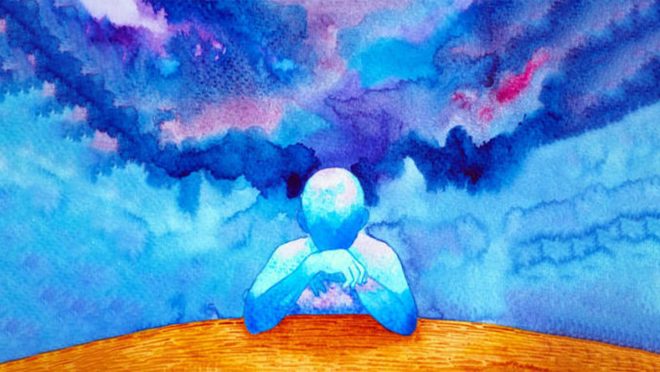
There is a desk in my university classroom where I have sat for almost four years. I never paid much attention to it before. It was just another desk in another classroom where lectures happened, assignments were discussed, and deadlines felt endless. But sometime during my final semester, I caught myself looking at it differently. I realized that one day, without any announcement, I would sit there for the last time. Someone else would occupy that seat next semester, and I would simply become another graduate who used to belong there.
That wasn’t the only moment.
Whenever I packed my bag to go home for the last semester break, I found myself thinking, “These holidays will end too.” I would return to campus, attend another few classes, and suddenly there would be no next semester waiting for me. For years, university had always promised another beginning after every break. This time, it promised an ending.
Around the same period, a close friend began preparing to move to the United States. We still talked almost every day, laughed about ordinary things, and made plans as if nothing had changed. Yet I had already started imagining the distance. I was grieving conversations that had not ended and memories we had not even made yet.
Then there was something much smaller, yet surprisingly powerful.
A television series I had been following became a highlight of my week. I waited for every new episode, watched behind-the-scenes clips, discussed theories with friends from different countries, and even wrote fanfiction inspired by its characters. Around the same time, I was also listening to an audiobook series that uploads new chapters only occasionally. Instead of simply enjoying them, I caught myself wondering what it would feel like when there were no more episodes to wait for, no new chapters to listen to, nothing left to anticipate.
At first, I dismissed all of this as overthinking. Why was I feeling sad about things that hadn’t even ended?
But the more I paid attention, the more I realized this feeling had been quietly following me for years.
It wasn’t really about university, it wasn’t about my friend nor was it about a television series or an audiobook.
Those were only different doors leading to the same room.
We begin missing people, places, routines, and even versions of ourselves long before they are actually gone.
Psychology has a name for that feeling: anticipatory grief. It refers to the sorrow and anxiety people experience when they expect an important loss, a concept first introduced by psychiatrist Erich Lindemann in 1944 and still recognized by the American Psychological Association today. Traditionally, it has been used to describe expected death or terminal illness, but psychologists also note that similar emotional patterns can appear during major life transitions, where we begin mentally preparing for change before it arrives.
Reading about anticipatory grief felt strangely comforting.
For days, I had convinced myself I was simply being too emotional. Maybe I was overthinking my final semester. Maybe I was becoming unnecessarily attached to a television series. Maybe I was worrying too much about changes that had not even happened.
Instead, I discovered that psychologists have been studying this feeling for decades.
Anticipatory grief is most often discussed in the context of terminal illness or the expected loss of a loved one. Those experiences are profound and incomparable, and it would be unfair to place graduating from university or a television series ending in the same category. But what interested me wasn’t the event itself. It was the emotional pattern behind it.
The American Psychological Association describes anticipatory grief as the sorrow and anxiety people experience when they expect a significant loss. Researchers like counseling psychologist Heather Servaty-Seib have also explored how grief can emerge from important non-death losses and major life transitions. The situations may be different, but the mind often responds in surprisingly similar ways: it quietly begins preparing for a future that will not look the same.
That explanation made me look back at my own life differently. I realized I wasn’t just sad because university was ending. I was grieving the version of myself that existed there.
The student who knew exactly which corridor to take between classes. The person who complained about assignments but secretly loved the rhythm of having somewhere to go every morning. The version of me who belonged to a particular routine, a particular place, and a particular stage of life.
Perhaps that is what makes endings so emotional. We are not only losing situations. We are also saying goodbye to identities that existed within those situations.
A place is never just a place. A university campus carries the memories of friendships, late conversations, stressful deadlines, celebrations, and ordinary days that seemed unimportant at the time. A home is not only walls and furniture; it holds childhood, family routines, and versions of ourselves that cannot be recreated somewhere else.
The same is true for relationships. Sometimes people do not disappear from our lives, but the shape of the relationship changes. A friend who once met us every day may become someone we speak to across time zones. A family member may move away and become part of a different daily rhythm. Nothing is completely lost, yet something familiar has changed.
That is why some endings feel complicated. We are not always mourning something that has vanished. Sometimes we are mourning something that is slowly transforming.
When stories become emotional spaces
This realization also changed the way I understood my attachment to stories.
For a long time, I thought feeling emotional about a television series ending was simply a strange habit. After all, it was fictional. The characters were not real people in my life. Why would the possibility of not seeing them again feel so personal?
But communication research explains why such connections can feel meaningful.
In 1956, communication scholars Donald Horton and Richard Wohl introduced the concept of para-social interaction, describing the emotional connections audiences develop with media personalities and fictional characters. They described it as “intimacy at a distance” a relationship where audiences feel familiar with people they have never personally met.
In today’s digital world, these connections have become even more complex. People no longer only watch stories. They discuss theories on social media, create fan edits, write fanfiction, join online communities, and build friendships with people across the world who share the same emotional attachment.
A story can become more than entertainment.
It can become a routine; it can become a place we visit when life feels overwhelming, it can become a community we belong to.
This is why the ending of a long-running series can feel surprisingly emotional for many people. Viewers are not only saying goodbye to characters. They are saying goodbye to the conversations they had every week, the friendships formed around the story, and the version of themselves who experienced that chapter of life alongside it.
My own experience with a television series made me understand this in a very personal way. What I feared losing was not only the story itself. It was the small world built around it—the anticipation of a new episode, conversations with people who cared about the same fictional universe, the creativity that pushed me to write, and the comfort it provided during a quieter phase of my life.
The same feeling existed in something as simple as waiting for the next chapter of an audiobook. The story was still continuing, but knowing that updates would eventually stop reminded me that even the smallest routines we create have endings.
Maybe that is why we become attached to temporary things.
Not because we believe they will last forever.
But because, for a certain period of time, they made life feel a little more meaningful.