From Captain America to CRISPR: How close are we to superhumans?
If science and fiction were not superimposable, then science was a felony against human nature.
From Captain America to CRISPR: How close are we to superhumans?
If science and fiction were not superimposable, then science was a felony against human nature.
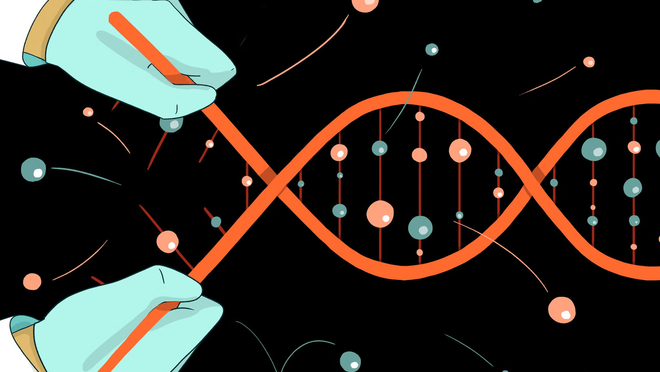
Now that “I am something of a scientist myself” (Dr Norman Osborn’s wise recognition) blurring the lines between science and fiction is something palpable for me.
X-Men are mutants, and Captain America was the first super soldier originating from a dose of the super soldier serum. The serum did him good in-vivo genetic arts, the closest thing I could associate it with was gene doping or gene therapy, which I will tell you in a short while. Overexpressing genes like IGF-1, ACTN3 for brute strength and speed, along with ACE, EPO for endurance on a chase with the mobs sounds like superhero genetics. Now that we have the best tool for DNA technology, CRISPR-Cas, any scientist can ever think of, gene therapy with a proper CRISPR system is what can blur this boundary between science and fiction. Similar to making the super soldier serum from the Marvel Cinematic Universe, gene doping is exactly what our cannon world needs.
Things would’ve been so much easier if you could just add genes into your body and get new features, right? Well, in a way, that’s already doable by the grace of gene therapy or gene doping, as I have mentioned before. Gene therapy is now clinically used to cure diseases, and Ashanthi De Silva was the first patient to receive it for her ADA deficiency, a rare genetic form of severe combined immunodeficiency (SCID) or “bubble baby disease”. The treatment introduced a functional copy of the ADA gene into some of her T cells, making her the first documented gene therapy success story.
What happens here is simple. Retroviruses or adeno-associated viruses are notorious for their ability to insert their genes into your cells, but can be harmless based on the fact that they don’t cause diseases or are attenuated. In genetic engineering, we just swap the viral genes with our desired genes and inject the virus into our subject, resulting in the desired genetic feature. If it’s a retrovirus, then the gene is even incorporated into our genes. And that is how gene doping works. So, in principle, gene-doping approaches could use gene-delivery vectors to alter expression of genes associated with traits such as muscle growth or oxygen transport, but translating that into a safe, predictable enhancement is another matter entirely.
In 1998, the athletic community was especially spurred by the creation in a university lab of a “mighty mouse”, created by administering a virus carrying the gene expressing insulin-like growth factor 1 to mice. The mice were stronger and remained strong even as they aged, without exercise. This insulin-like growth factor 1 (IGF-1) is responsible for higher muscle mass and power. On the flip side, the ACTN3 gene codes for a sarcomeric protein called α-actinin-3, which is specifically present in type II muscle fibres, known as fast-twitch myofibres. These fibres play a crucial role in generating rapid forces during explosive or high-power activities. A particular single nucleotide polymorphism (SNP) has been identified within this gene, resulting in a premature stop codon (X) rather than the normal arginine (R) at position 577.
The presence of the R allele confers advantages in power-oriented sports, and the RR genotype is disproportionately prevalent among elite power athletes. Among the various genetic variations associated with elite power and sprint performance, the α-actinin-3 R577X polymorphism consistently yields significant findings across diverse population groups. Much correspondence to Captain America’s superpowers and speed? Here’s more, the ACE gene encoding the angiotensin-converting enzyme-1 has association with cardiorespiratory efficiency. The I allele has repeatedly been associated with endurance performance and has been reported at higher frequencies in some groups of elite endurance athletes. This leads to a corresponding increase in muscle efficiency seen in endurance athletes like elite marathon runners, rowers, mountaineers and long-distance swimmers.
A German track and field coach recently faced legal scrutiny for allegedly supplying the rEPO gene (Repoxygen) to athletes, highlighting the growing concern over gene doping in elite sports, including the Olympics. Despite advancements in detection technologies, identifying athletes using gene therapy remains exceptionally challenging.
Modern stem-cell biology is providing even more powerful ways to reconstruct and study phases of human development in the laboratory. Together with genome editing and reproductive technologies, that brings questions once limited to science fiction into the domain of scientific discussion, even if deliberately engineering enhanced children is still far beyond what can be done safely, predictably or ethically right now.
A cocktail serum containing all these gibberish words I just spoke is easier said than done. Other than the intricacy that makes it hard to achieve, there are ethical and regulatory restrictions that make such studies tough to achieve. Just like how I keep facing this one question from my other peers, “If human cloning is possible or not”, and I keep saying “yes but…”, my reaction to this piece I just wrote is also a “yes but…”. No matter what the “but” is, as long as humans are on this planet to assure you, “yes” is always the answer.
Mohammad Nazmul Islam Nafiu is an MS student and researcher in the Department of Genetic Engineering and Biotechnology at the University of Dhaka.