Bangladeshi student wins Students Biz Innov Challenge 2026 in Malaysia
Bangladeshi student wins Students Biz Innov Challenge 2026 in Malaysia
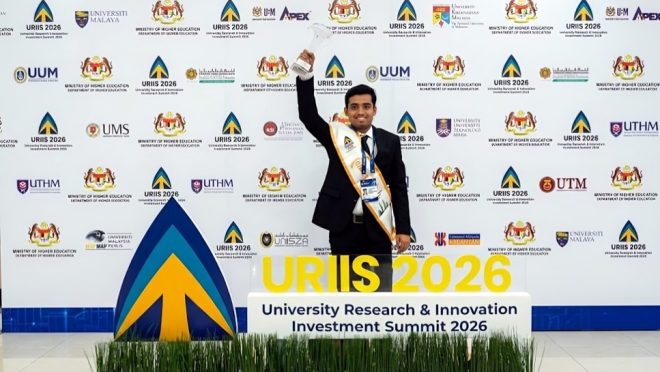
Bangladeshi student and young innovator Iftekhar Safin has won the Students Biz Innov Challenge 2026, held as part of the URIIS 2026 summit in Kuala Lumpur, Malaysia.
Safin independently applied to the competition from Bangladesh and progressed through several stages before reaching the final round. He travelled to Malaysia with fully funded participation and presented his project, SkillBridge ISA, at the grand finale at the World Trade Centre Kuala Lumpur on 23 September.
His project proposes an income-sharing model aimed at addressing two challenges faced by students and young graduates: the gap between conventional education and job-ready skills, and the financial barriers to accessing industry-focused training.
Under the proposed model, students would be able to access professional training without paying the full cost upfront. Corporate partners would finance the training based on their workforce needs, while students would repay the cost through instalments from their income after securing employment.
The model is designed to connect education, skills development and employment while reducing the upfront financial burden on students.
URIIS 2026, organised with the involvement of Malaysia’s Ministry of Higher Education, brought together more than 1,000 participants from over 20 universities, along with industry representatives, investors, government agencies, researchers and innovators.
The summit was officially opened by Malaysian Deputy Prime Minister Ahmad Zahid Hamidi.
Safin’s achievement adds to a growing number of Bangladeshi students participating in international innovation and entrepreneurship competitions, while his SkillBridge proposal focuses on a problem particularly relevant to young graduates — how to finance the transition from education to employment.
For Safin, the competition also provided an opportunity to present a Bangladesh-originated idea to an international audience and explore how alternative financing models could make industry-ready training more accessible to students.