Operation Varsity Blues: Cheating has no passport
You’ve probably seen one of those college decision reveal videos online, the ones where someone sits in front of a camera and records the exact moment they find out if they got in.
Operation Varsity Blues: Cheating has no passport
You’ve probably seen one of those college decision reveal videos online, the ones where someone sits in front of a camera and records the exact moment they find out if they got in.
Some celebrate with families. Some scream. Some cry before they’ve even finished opening the portal. What none of them know is whether the seat they are hoping for was ever really up for grabs in the first place.
What if the person who got your dream seat never actually earned it?
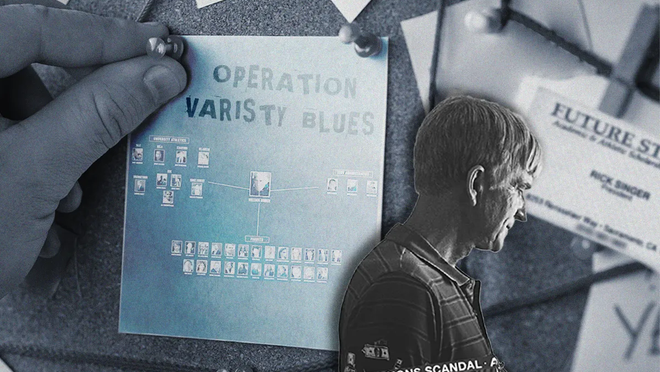
If you sit down to watch “Operation Varsity Blues: The College Admissions Scandal”, you will think about this question several times. The director, Chris Smith, uses real wiretapped phone calls between college counsellor Rick Singer and his wealthy clients.
What makes this documentary interesting and almost like a movie is that instead of just playing the audio, the actors perform it. Matthew Modine plays Singer, and he plays him as calm, friendly and almost boring (which is the scariest part). He talks about faking a child’s athletic record the same way one might talk about booking a train ticket or buying groceries.
Singer had two names for how rich families got their children into top universities apart from the front door, which was the normal way to get in that ordinary people use. The “back door” was legal, where you donate a huge amount of money to a university and your child’s application gets special treatment. The “side door” was Singer’s own invention, and it was not legal at all. He faked test scores, photoshopped kids’ faces to create fake extracurricular activities, created fake sports records and paid off coaches so unqualified kids could walk in labelled as recruited athletes. Some children didn’t even know their own parents had done this for them, and some of the parents made sure their kids stayed in the dark.
The cruelty of that system is not only in who gets caught cheating. It is in how normal the cheating sounds when the person doing it has enough money. Nobody in these phone calls sounds nervous. Nobody sounds like a criminal. They sound like people solving a small and boring problem, like buying a dress or toy for their children. When cheating becomes this easy to talk about on the phone, it tells you that somewhere along the way, these parents stopped seeing it as cheating at all. In their minds, they were just being good parents who knew how the world really works.
They probably felt proud, like they had protected their child from a system that could have failed them. Being a “good parent” had turned them into being a parent who removes every obstacle, even the ones their child was supposed to face and grow from.
One of the people interviewed in the documentary points out that in this whole process, it was never really the child applying to college. It was the parent. The child had simply become the name written on the application, while the real need to win belonged to the adult holding the pen. Once you see it that way, the entire scandal stops looking like parents helping their children and starts looking like parents living out their own anxieties through them.
The most interesting part was listening to the part where they discuss why this “side door” system is even needed. There are so many schools to choose from if you just want to get a higher education. And what do these families even need when they have everything already? Smith successfully shows that the psychology behind this scandal is that people have started treating universities more as a social position and brand than an actual place to learn. It is just a matter of prestige and a symbol of status for them.
The greed of being able to say their kid goes to an Ivy League takes these people to a point where they forget about ethics, morality, honesty and, most importantly, about the people who actually put in effort, wasted their teenage years trying to look like the perfect, straight-A student while managing hundreds of extracurriculars and questioned their worth every now and then.
The documentary is strongest when it shows this through footage of ordinary students opening their admission results, some crying with joy, some breaking down from rejection, having no idea that somewhere else, a seat had already been bought before they even hit the submit button. However, to me personally, the dramatic reenactments in between started to feel a little too polished, like a crime thriller, which took away some of the anger the story deserves. A documentary like this barely needed Hollywood-style dramatic music or polishing.
Finally, if you think from a Bangladeshi perspective, every time a scandal like this comes up in Bangladesh, you’ll hear people say that it’s because we are Bangladeshis or Bengalis. This documentary shuts down that discussion entirely. Cheating is not a Bangladeshi habit or an American habit. Be it the Bangladeshi BCS exam leaks or the IELTS corruption, they are simply a smaller and more visible version of exactly what Rick Singer was doing with Ivy League families.
The difference is in the price tag and the size of the cover-up. A rich American family can hide behind a “donation” just like a rich Bangladeshi family can hide behind a “connection”. The poor student on both sides pays the same price either way, which is losing a seat they actually deserved.
By the end, Singer betrays almost everyone who trusted him to save himself a lighter sentence, and the documentary does not try to make him look sympathetic. It also does not pretend that catching one man fixes a system built on this kind of privilege. The universities, however, keep their donations. The rankings also keep rewarding the same schools. And somewhere, another student is sitting nervously in front of their laptop, waiting for a result they think depends only on how hard they worked.