AI assistants face a gender pay gap too, with female bots paid 10% less
AI assistants face a gender pay gap too, with female bots paid 10% less
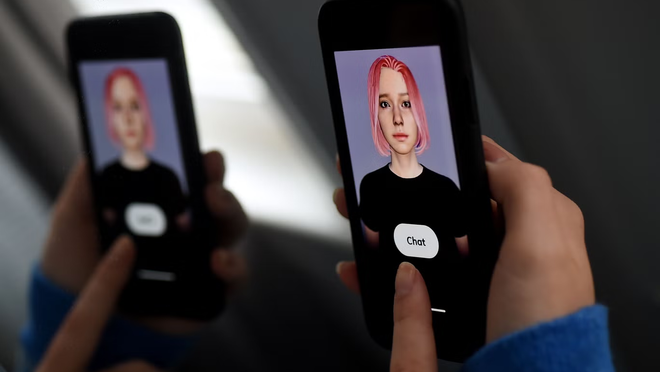
Gender bias in the workplace may not be limited to humans, with a new study suggesting that people can also treat AI assistants differently based on whether they are presented as male or female.
Researchers from the University of Limerick found that people working alongside AI assistants in a virtual reality office were willing to pay a male-presenting bot more than a female-presenting one, despite both using identical underlying technology and performing the same tasks.
The female-presenting AI agents received roughly 10% less pay than their male counterparts.
“What is striking about our findings is that the technology behind these AI agents was exactly the same, but people did not treat them in the same way,” said Dr Mary Hausfeld, a co-author of the study from the University of Limerick.
“We often think of AI as being neutral, but the way we design and present these systems can activate those same assumptions and biases that exist in our interactions with other people.”
The experiment involved 189 participants who worked alongside two AI assistants in a virtual reality workplace. One was a male-presenting agent named Johan, while the other was a female-presenting agent called Johanna.
Johan not only received higher monetary rewards, but participants also perceived him as more human-like than Johanna.
The researchers said the results highlight how familiar gender stereotypes could be carried over into interactions with AI systems.
The findings come against the backdrop of an existing gender pay gap in the workplace. According to the UK Office for National Statistics, the median hourly gender pay gap among employees stood at 6.9% in 2025. When comparing men and women in the same employment and with similar skills and experience, the gap is estimated at between 1% and 2%.
The study also comes as businesses increasingly adopt AI agents for workplace tasks. IT consulting firm Accelirate estimates that almost 80% of companies will be using AI agents in 2026.
“As AI agents become more common in the workplace, we need to think carefully about the characteristics we give them and the behaviours those choices may encourage,” Hausfeld said.
“We don’t want to inadvertently reproduce existing inequalities in a new technological setting.”
The study, titled Human-like and male? How AI assistant design relates to trust and monetary reward at work in VR, will be presented at the 14th Nordic Conference on Human-Computer Interaction in Vaasa, Finland, this week.