'Why don't you just help me die'
A friend asked me this a few weeks ago, and I have not stopped hearing it since.
'Why don't you just help me die'
A friend asked me this a few weeks ago, and I have not stopped hearing it since.
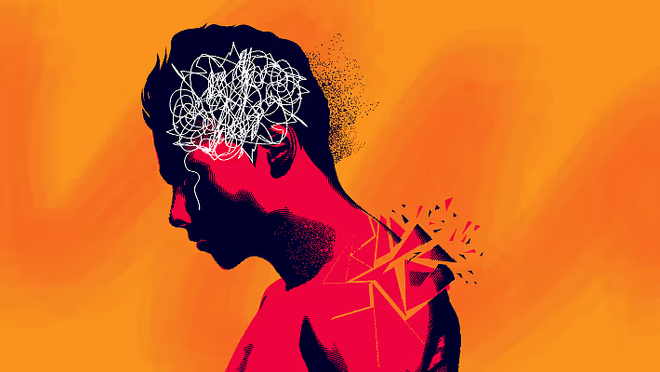
It has been a very long time since I last wrote anything, and if I am honest, I did not come back to writing because I wanted to. I came back because of her, because there was nowhere else to put what I was carrying.
On Mental Health Day, I think we owe the same attention to something that sits quietly beside it and is spoken about far less, which is self-harm. We talk about the people who do it, usually in whispers or with judgment, and almost never about the pain that makes them do it.
She is someone I have known for most of my life, though she remains mysterious to me in ways I cannot explain.
We went to the same school and the same college, and now we are in the same university. She was the kind of person you always wanted to be around, or at least I did, and I still do. She had a self-respect that was strangely high for someone so shy, and most of us misread it as something else.
She wanted to be part of every group but never knew how to begin a conversation, so she would walk over to us and stand in a corner, quietly hoping someone would notice she was there. She cried easily and often, and she was the most emotional person I have ever met.
She also could not hide anything. If she liked you, she told you to your face and made you feel seen, and if she could not stand someone, she would simply leave the room. Once I asked her why she walked away instead of staying and ignoring them, and she said, “If I stay here, I might hurt them, so I have to leave.” That sentence was her whole philosophy: she would rather remove herself than become the reason someone else hurt. She was a precious soul, and I say that without exaggeration.
She was a mediocre student, much like me, even though she had been among the brightest during admission, and she never took any pride in it, which I admired more than I ever told her. One day she showed me her diary, and I had never seen anyone so deeply involved in writing alongside such a demanding degree. It was creative and raw and alive, and I wish more than anything that I could show you a page of it.
When we reached university, all of us quietly wondered how she would survive in a field so dominated by men. She called me and cried, saying how wholesome her classmates were and how incompetent and out of place she felt next to them. I told her to be patient, that she would find her own people.
And she did. She joined clubs, made friends, and became known across departments for her kindness and her notes, and I felt proud of her from a distance. We drifted after that, the way friends do when adult life takes over, but whenever we did talk, it was warm, and it was always nice to be with her.
Then the rumours began. In a male-dominated space, a woman who behaves like a normal, friendly human being is never allowed to just be one. She is labelled, and the label she was given was “characterless maiyamanush”. The first rumour I heard about her was exactly this, and I knew it was untrue because I knew her, and it was.
But a rumour does not need to be true to do its damage. After that she became unreachable, and when I finally got through to her after a lot of effort, she was not herself anymore. She was a changed woman, and I did not recognise the girl I had known.
She was skipping meals, she was not sleeping, and her studies were falling apart. She was also hurting her own body. When I asked why, she said, “This is my stress management system. I feel guilty. I feel ashamed of my own existence.”
I did not understand, so I asked her what she meant, and what she told me I will carry for the rest of my life. “People say I am inherently a bad person. I hurt others, and that is why people leave me halfway. I feel like I am just time-pass material to everyone I meet, everyone I talk to. I feel discardable. I feel overwhelmed that I am taking up time and space in this world that was never meant to be mine in the first place, because I hurt them. They told me I am a bad person.”
Then she began to cry, and I began to cry with her, because I could not understand how anyone could say such things to her without knowing her side of the pain, or how broken a person must be made to believe them.
She told me she cannot keep friendships, that people are busy or no longer interested, so she stays quiet and does not reach out. And then, even in that moment, even as she was breaking in front of me, she said, “That does not mean I left you. I will be there for you if you ever need me. I have not left you all, trust me, I am still your friend.”
Think about that for a second. A person is drowning, and her first fear is that the people on the shore might feel abandoned by her.
Then she said the thing I cannot unhear: “I hate myself. Hurting myself gives me a sense of punishment for hurting others, for not being the person I should be. I do it so that I do not hurt anyone, and yet I hurt everyone. Do you see me now? Can’t you see that I am a bad person? Why are you even here? I am a bad person, so why don’t you just help me die?”
I went completely numb. Every tear she cried felt like it was landing directly on my heart. She kept going, saying that everyone was giving up on her and that she had given up on herself long ago, so what was the point of anyone caring. She told me that whatever she does is now seen either as the act of an insane person or as something to call her a slut for, that no one sees how hurt she is, and that all she needs is a little reassurance that they want to keep her close.
I tried everything I knew. I told her that others cannot define her, that she is an individual who deals with each friend individually, and that if she ever feels she has hurt someone she can take accountability and work on it, but that does not mean she has to decide she deserves to die.
She looked at me and asked, “Do you think I am a bad person? Do you think there is any future for me?” I understood then that this is the question her entire existence is fighting over right now. I told her I thought she was one of the nicest friends I have ever come across, and she said, “But they said it, I AM A BAD PERSON!” When I asked if she would not believe me, even when I was telling her she was good, she said, “No.” She said it simply, as if she were stating a fact, and that was the most frightening part.
I understand where she is coming from, and that is what hurts the most. People broke her from the inside. We feared she would not survive in a place like this, and now I am watching my friend slowly die under a guilt she should never have had to bear, if only people had tried to see her properly.
Even now, every time I speak to her, she thinks of the people around her first and herself last. So why is she the one being punished? Why is she not being heard by the very people she wants to hear her? I keep telling myself I have failed her, and I think some part of me will carry that guilt for the rest of my life.
Self-harm is not something people do out of interest or for attention. The people who genuinely suffer do it to cope, because the pain inside has grown too large to hold and this is the only way they have found to make it quieter.
Every scar on their body is a record of a time they wanted to die and somehow did not let it happen. But those of us who have never been there will never fully understand it, because we are too busy accusing them of causing us pain, breaking them until they have no choice left, and then calling them “oshustho”.
That is what we do. When someone says they want to die, it is not drama but the most serious sentence a human being can say, and it deserves to be heard and not argued away.
I know this piece will not reach everyone. Some will read it and say, “Think of your family,” or “Fear God”, and I understand that those words come from a place of fear and love. But I have watched her break, and it does not work like that.
To a person who already believes she is a burden, those words become one more weight. What helps is checking on them again and again, not once, and slowly helping them believe in themselves again, and if possible, by the very people who broke them. You do not leave someone to heal alone. If someone tells you they are hurting themselves or that they want to die, stay calm, stay close, and take it seriously every single time, and help them reach a counsellor, a doctor, or a helpline, because no friend should have to carry this alone and no friend can. And if you have ever been part of the reason someone began to doubt their own worth, remember that you can also be part of the reason they begin to believe in it again.
If you are reading this and you see yourself in her, please hear me: the voice telling you that you are a burden is lying to you. You are not time-pass material and you are not discardable, and you do not have to carry this by yourself. Please tell someone today. In Bangladesh, Kaan Pete Roi offers emotional support, and I would ask you to check their current contact details before reaching out.
It was a difficult piece to write, harder than I expected. If you can, please pray for my friend. She does not deserve this pain.